Escalating Violence Rocks Bangladesh: Political Clashes and Minority

Escalating Violence Rocks Bangladesh: Political Clashes and Minority
In the chaotic streets of Dhaka on January 7, 2026, the fragile peace of Bangladesh shattered once more with the brutal shooting of a prominent political figure. For Ayesha Begum, a 45-year-old Hindu widow and mother of two, the Bangladesh political clashes 2026 hit terrifyingly close to home. Living in a modest neighborhood in Narsingdi district, Ayesha was preparing dinner when rumors spread of fresh violence targeting minorities. “The mob came suddenly, shouting slogans and banging on doors,” Ayesha recounted, her voice breaking. “I hid my children in the back room as they smashed windows and set fire to nearby Hindu homes. The smoke choked us, the flames roared like monsters, and the fear… it was worse than anything I’ve known.”
The acrid smell of burning wood mingled with cries for help, as Ayesha clutched her 10-year-old daughter and 12-year-old son, praying silently. When the attackers moved on, her home was spared, but neighbors were not—looted, beaten, and left in ruins. “We’ve lived here peacefully for years, but now every noise at night makes my heart race,” she said. Ayesha’s ordeal reflects the deepening terror faced by many during the Bangladesh political clashes 2026, where political instability has spilled into targeted communal violence.
This wave of unrest, building through late 2025 and exploding into 2026, comes amid preparations for national elections on February 12, 2026—the first since the 2024 student-led uprising ousted former Prime Minister Sheikh Hasina. Political assassinations, student rivalries, and attacks on minorities have claimed dozens of lives, with reports of over 50 incidents targeting Hindus in December 2025 alone. The Bangladesh political clashes 2026 have displaced families, heightened tensions with neighbors like India, and raised alarms about the country’s democratic transition.
The Mounting Crisis of Bangladesh Political Clashes 2026
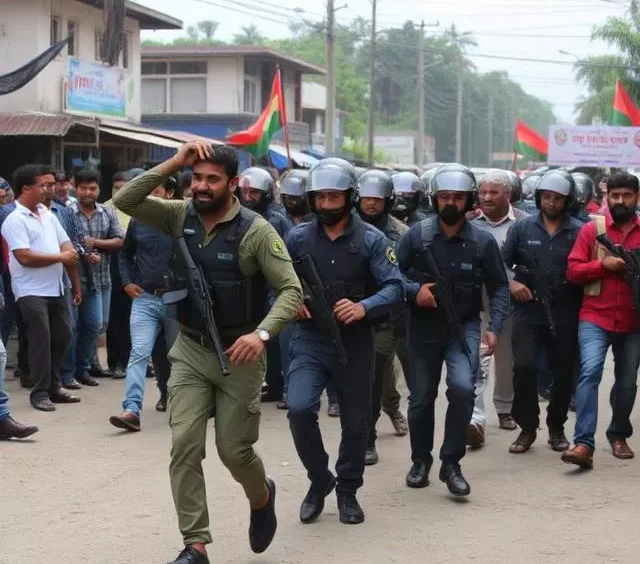
The Bangladesh political clashes 2026 are rooted in a toxic mix of power struggles and unresolved grievances from the 2024 revolution. Rival student groups, once united against Hasina’s regime, now clash over influence, while opposition parties face persecution. The killing of BNP leader Azizur Rahman Musabbir on January 7 in Dhaka marked a grim escalation, following a pattern of targeted shootings and mob violence.
Experts point to rising religious extremism and intra-party rivalries as fuel. “The interim government is struggling to maintain order as elections approach,” noted political analyst Dr. Imran Hossain. “Clashes between factions and attacks on minorities are undermining stability.” Economic strain, with inflation and joblessness, adds to the volatility, turning protests violent. Security forces have been deployed widely, but accusations of bias persist, deepening divisions.
The human cost is profound: Families torn apart, communities fractured, and a nation on edge as the Bangladesh political clashes 2026 threaten free and fair polls.
Survivors’ Tales: Courage and Heartbreak in the Bangladesh Political Clashes 2026
Amid the turmoil of the Bangladesh political clashes 2026, stories of survivors reveal raw pain and remarkable bravery. Ayesha’s narrow escape continued into the night as she and her children fled to a relative’s home, navigating dark alleys filled with the echoes of chants and breaking glass. “My son kept asking why people hate us,” she shared. “I had no answers, only tears.” In a glimmer of hope, a Muslim neighbor risked his own safety to guide them to safety, embodying fleeting acts of unity.
One heroic figure emerged from the chaos in Shariatpur district during late December attacks. Rahman Khan, a 40-year-old local shopkeeper, became an unlikely savior when a mob targeted Hindu homes. Step by step, his courageous intervention unfolded: First, hearing screams from next door, he assessed the danger from his rooftop. “I saw flames rising and people running,” he recalled. Step one: Grabbing a bucket brigade with neighbors, he doused fires threatening to spread.
Step two: Forming a human barrier, he confronted the mob, pleading for calm and invoking shared community ties—the tense standoff filled with shouted threats, the heat of nearby fires, the sweat of fear. Step three: Helping evacuate an elderly Hindu couple and their grandchildren, carrying the frail woman on his back through backstreets as stones flew overhead. Rahman saved at least five lives that night, earning quiet gratitude from survivors. “We are all Bangladeshis,” he said modestly, but his actions highlighted the community spirit resisting the Bangladesh political clashes 2026.
Adding emotional depth is the tearful reunion of the Das family, separated during a violent protest in Dhaka. Mother Priya Das, 38, a schoolteacher, was caught in a clash while picking up her daughter from tuition when tear gas and batons dispersed the crowd. Her husband, Arjun, a factory worker, was blocks away, frantically searching amid the chaos—the stinging eyes from gas, the deafening noise of slogans and sirens, the bitter helplessness.
Days of separation followed, with phones down and roads blocked. Their reunion at a temporary shelter was overwhelming. “When I saw him running toward us, covered in dust, I collapsed into his arms,” Priya described. The warmth of his embrace cut through the lingering smell of smoke. “We lost belongings in the looting, but finding each other… it’s everything,” Arjun added. Their story captures the profound loss and resilient hope amid the Bangladesh political clashes 2026.
These accounts from the Bangladesh political clashes 2026 illustrate suffering tempered by humanity’s enduring light.
Surprising Facts About the Bangladesh Political Clashes 2026
Did you know that over 70% of recent attacks on minorities in Bangladesh have gone unpunished, according to human rights groups, fueling a cycle of impunity?
Another startling revelation: Since the 2024 uprising, minority representation in safe areas has dropped sharply, with many Hindus fleeing to India amid the Bangladesh political clashes 2026. Psychological trauma affects an estimated 40% of those in affected communities, leading to long-term mental health crises often overlooked in recovery efforts.
What Happens Next? Recovery Tips Amid Political Unrest
As the Bangladesh political clashes 2026 continue, survivors need practical strategies. Prioritize safety: Avoid protest areas, travel in groups, and secure homes with community watches.
Document incidents thoroughly—photos, witnesses—for reporting to authorities or NGOs like the Bangladesh Hindu Buddhist Christian Unity Council. Seek legal aid for protection and compensation.
Emotionally, connect with support networks; talking reduces isolation. “Sharing stories helps heal,” noted one survivor.
For communities, foster interfaith dialogues to rebuild trust. Stay informed via reliable sources, prepare emergency kits with essentials, and advocate for fair elections.
Financially, access relief from international organizations and consider temporary relocation if threats persist.
These recovery tips offer pathways to resilience in the face of unrest.
In the shadow of the Bangladesh political clashes 2026, voices like Ayesha’s, Rahman’s, and the Das family’s remind us of profound vulnerability and unyielding strength. Loss abounds, but acts of courage and unity provide glimmers of hope for a peaceful future.
Share your story in the comments to support those affected—your words can foster understanding and aid.