



Qatar LNG Production Halt Triggers 50%+ Surge in European Natural Gas Prices – Winter Energy Crisis Escalates

By World Report Press Desk | March 2, 2026
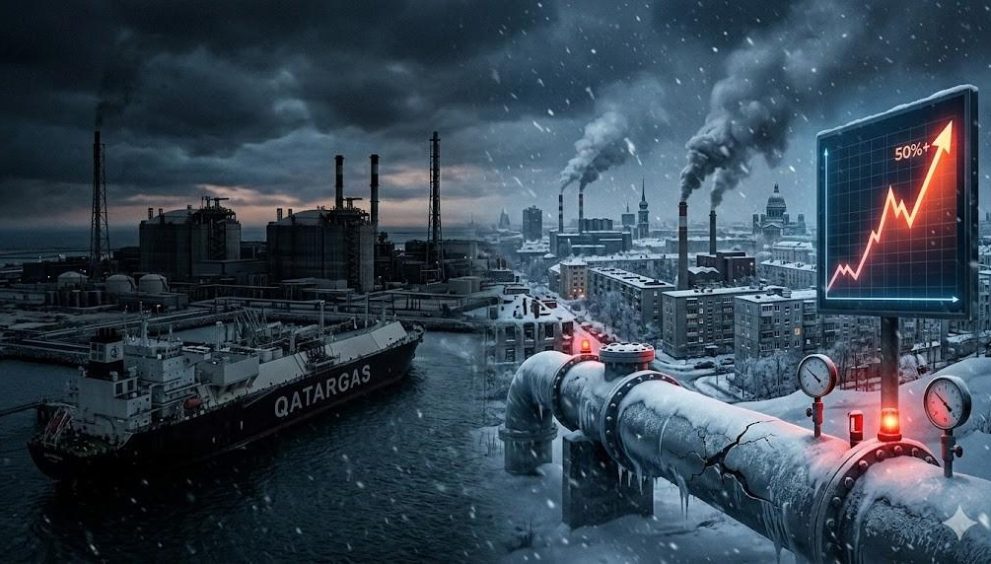
European natural gas prices have exploded more than 50% in just 48 hours after QatarEnergy declared force majeure and suspended production from several major LNG trains at the North Field expansion projects. The abrupt supply shock — removing up to 25–30 million tonnes per annum of global LNG capacity — has sent the benchmark TTF Dutch gas hub soaring from €38/MWh to over €58/MWh, marking the sharpest weekly percentage gain since the 2022 Russia-Ukraine energy shock.
Qatar’s Force Majeure: What We Know
On February 28, 2026, QatarEnergy notified long-term buyers of “critical safety and integrity issues” discovered during routine inspections on multiple liquefaction trains at North Field East and North Field South. No firm restart date has been provided; industry sources estimate repairs could take 4–12 weeks, depending on the severity of the technical faults.
Qatar remains the world’s largest LNG exporter, shipping approximately 77 million tonnes in 2025. Europe has relied on Qatari cargoes for 15–18% of its LNG imports during the winter heating season. The sudden loss of this flexible, spot-market-friendly supply has left buyers scrambling in an already tight global LNG market.
Price Action – Fastest Rally in Years
- TTF March front-month: +52% since February 27 close
- TTF April–June curve: +38–45% in sympathy
- UK NBP benchmark: Crossed £5.00/therm — highest since March 2023
- Asian JKM spot LNG: +28% — tightening global liquidity further
The move has pushed equivalent oil-indexed prices well above $20/MMBtu in some contracts — levels not seen consistently since the 2022 peak.
Amplifying Factors Driving the Crisis
Several elements have turned a supply disruption into a full-blown market panic:
- Critically low storage — European gas inventories sit at ~38% of capacity (well below the five-year average for early March) after an unusually warm December–January drew stocks down aggressively.
- Norwegian pipeline constraints — Unplanned outages and scheduled maintenance have reduced Norwegian exports by 15–20% this week.
- U.S. LNG terminals at maximum utilization — No meaningful spare capacity to redirect cargoes from Asia to Europe without spiking Asian spot prices even higher.
- Aggressive cold snap forecast — ECMWF and GFS models project a strong Scandinavian high-pressure block next week, pushing temperatures 4–7°C below normal across Germany, France, Benelux, UK, and Central Europe.
- Power-sector fuel switching — Coal plants are reaching emission limits; gas has become the marginal fuel for electricity, amplifying gas demand.
Immediate Fallout Across Europe
- Household impact — Suppliers in Germany, Netherlands, France, Italy, and the UK have issued force majeure notices on fixed-price contracts and signaled emergency surcharges or variable-rate adjustments.
- Industrial shutdowns — Fertilizer, chemicals, glass, ceramics, and paper producers in Germany and the Netherlands have begun curtailing output or idling lines.
- Electricity market shock — Day-ahead power prices in Germany and France jumped 70–110% intraday on March 1–2.
- Political response — EU energy ministers will hold an emergency virtual meeting on March 4. Calls are growing for coordinated release of strategic reserves, accelerated permitting for renewables, and emergency demand-reduction measures.
Global LNG Market Implications
The Qatar disruption has tightened the entire Atlantic and Pacific basins:
- U.S. Gulf Coast terminals are already running flat-out.
- Australian projects are heavily committed to long-term Asian contracts.
- Spot charter rates for LNG carriers have surged >60% in the past week as buyers compete for available vessels.
If the outage extends beyond mid-April, Europe risks entering the summer injection season with a structural deficit — a scenario that could keep prices elevated into 2026–27 winter.
What to Watch Next
- QatarEnergy repair timeline — A 4–6 week fix would allow partial recovery by late April; longer delays could force rationing.
- U.S. cargo redirection — Will U.S. terminals prioritize Europe over Asia, or will Asian buyers outbid?
- Weather trajectory — A prolonged cold spell through mid-March could trigger emergency measures in Central Europe.
World Report Press will continue monitoring developments, including any emergency EU actions, LNG cargo flows, and official statements from QatarEnergy and major buyers.
WorldReport.press delivers real-time global energy and geopolitical analysis. How is the gas price surge affecting your household or business in Europe? Share your experience in the comments below.
#EuropeanGasCrisis #QatarLNG #NaturalGasPrices2026 #EnergySecurity #TTFSurge