



Holi 2026 Celebrations Around the World: Complete Country-Wise Guide to the Global Festival of Colors

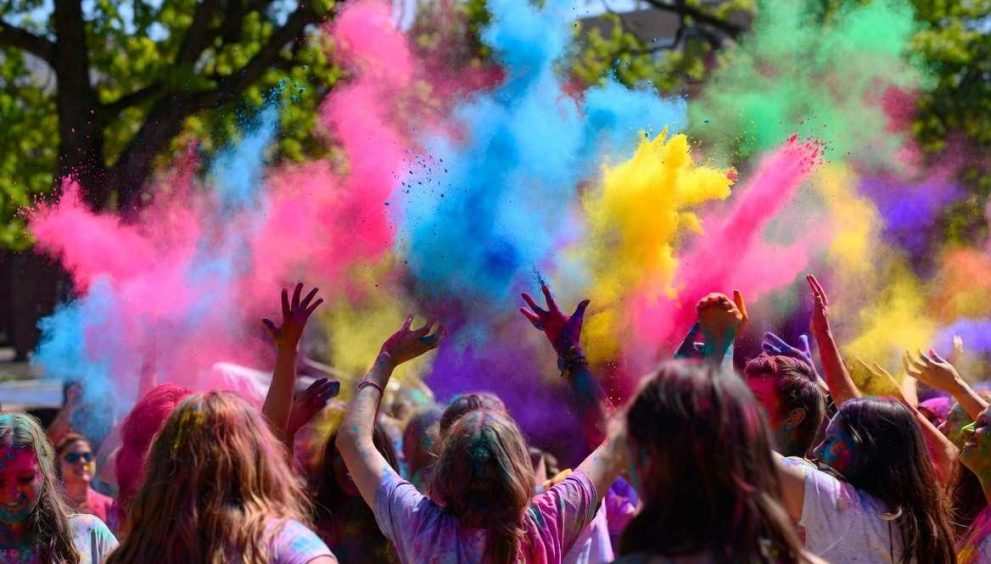
Holi, the vibrant Festival of Colors, transcends borders and unites millions in a joyous explosion of gulal, music, dance, and love. Celebrated primarily on March 3-4, 2026 (Holika Dahan on March 3 evening in most regions, Rangwali Holi on March 4), this ancient Hindu festival marks the triumph of good over evil, the arrival of spring, and the divine love of Radha-Krishna. In 2026, a rare total lunar eclipse on March 3 has caused slight regional variations in India—some states observe Holika Dahan on March 2 and Holi on March 3, while others follow March 3-4—but the spirit remains unchanged worldwide.
For www.hindutone.com readers seeking authentic cultural insights, this exhaustive guide explores Holi celebrations country by country. From the sacred streets of Mathura-Vrindavan in India to beach bonfires in Mauritius, Phagwah processions in Guyana, and massive color runs in the USA and UK, Holi has evolved into a global phenomenon. With over 1.2 billion Hindus and a vast Indian diaspora, the festival now draws non-Hindus too, promoting forgiveness, renewal, and unity.
Whether you’re planning a trip, hosting a community event, or simply soaking in the cultural richness from home, this 2026 guide covers history, legends, unique traditions, must-visit spots, foods, safety tips, and eco-friendly practices. Dive deep into how Holi paints the world in rainbow hues every spring.
The Timeless History, Legends, and Spiritual Significance of Holi
Holi’s roots trace back over 2,000 years to ancient Vedic texts like the Purva Mimamsa Sutras, Kathaka-Grhya-Sutras, Narada Purana, and Bhavishya Purana. The term “holikotsav” appears in the 7th-century Sanskrit drama Ratnavali by King Harsha. European travelers in the 17th-19th centuries documented it as “Houly,” “Hooly,” or “Hoolee,” highlighting its vibrancy even then.
The most popular legend is that of Prahlada and Holika. Demon king Hiranyakashipu, granted near-immortality by Brahma, demanded worship as a god. His son Prahlada remained devoted to Lord Vishnu. Enraged, the king ordered Prahlada burned on a pyre with his sister Holika, who possessed a fire-proof shawl. Holika sat with Prahlada, but divine intervention saved the boy while Holika perished. Lord Vishnu later appeared as Narasimha to slay the tyrant. Holika Dahan bonfires symbolize this victory of devotion and good over evil.
In Braj mythology, Holi commemorates Krishna and Radha’s playful love. Dark-skinned Krishna, teased about his complexion, colored Radha’s face at his mother Yashoda’s suggestion. This act of divine playfulness birthed the tradition of smearing colors. The Garga Samhita details these leelas, making Mathura and Vrindavan the epicenter.
Another Shaivite legend links Holi to Kamadeva (god of love). Parvati sought Shiva’s attention; Shiva burned Kamadeva with his third eye. Rati’s 40-day penance led Shiva to revive him, celebrated 40 days after Vasant Panchami.
Spiritually, Holi signifies renewal: ending quarrels, forgiving debts, welcoming spring harvests, and embracing equality. People wear white clothes symbolizing purity, then transform into living canvases of color. It breaks social barriers—rich and poor, young and old, friends and strangers play together. In modern times, it promotes inclusivity, mental health through joy, and environmental awareness with natural colors.
Rituals begin with Holika Dahan (Chhoti Holi): families gather around bonfires, circumambulate, offer coconuts and grains, and sing devotional songs. The next day, Rangwali Holi (Dhulandi) involves gulal (powdered colors), pichkaris (water guns), music, dance, and sweets like gujiya, malpua, and bhang-infused thandai. Post-play, people bathe, visit relatives, and share meals.
Holi’s agricultural roots celebrate fertile fields. In scriptures, it resets societal bonds, ridicules impurities, and invokes prosperity. Jains, Sikhs (as Hola Mohalla with martial arts), and Newars also observe variants. This profound philosophy explains its global appeal—Holi isn’t just fun; it’s dharma in full color.
(Word count so far: ~850)
Holi Celebrations in India: The Sacred Heartland and Regional Wonders
India hosts the most intense and diverse Holi celebrations. The Braj region (Uttar Pradesh) turns into a 16-day riot of colors, but every state adds its flavor.
Mathura and Vrindavan – The Holi Capital Birthplace of Krishna, these towns celebrate for over a week. Phoolon ki Holi at Banke Bihari Temple showers devotees with flower petals. Laddu Holi in nearby Barsana involves throwing sweets. Holika Dahan at temples precedes street color play with kirtans and bhajans. ISKCON Vrindavan offers clean, devotional events. In 2026, expect massive crowds on March 3-4 with organic gulal.
Barsana and Nandgaon – Iconic Lathmar Holi Women of Barsana playfully beat men with lathis (sticks) while men shield themselves with shields and sing teasing songs—a reenactment of Krishna’s leelas. Matki Phod sees men forming human pyramids to break butter pots. Radha Rani Temple is the epicenter. Celebrations start days early (Laddu Holi around late February 2026).
Jaipur – Royal and Heritage Holi Rajasthan’s Pink City blends palace elegance with folk music in City Palace courtyards. Elephants parade during related festivals. Organic colors and traditional sweets create a regal vibe. Private hotel parties with DJs add modern flair.
Varanasi – Spiritual Ghat Holi Colors meet the Ganges at Assi Ghat and Dashashwamedh. Post-Ganga Aarti, devotees splash gulal amid chants. Boat rides offer breathtaking views of colored reflections. Tulsi Ghat provides calmer celebrations.
Goa – Beachside Holi Bash Part of Shigmo festival, Ukkuli includes Holika Dahan followed by beach color parties at Anjuna, Calangute, and Baga. DJs, trance music, and pool parties at Club Cubana mix Konkani folk dances with vibrant fun—perfect for young crowds.
Shantiniketan (West Bengal) – Artistic Basanta Utsav Rabindranath Tagore’s legacy shines in this spring festival. Students in saffron and white perform dances, sing Rabindra Sangeet, and use natural abir. Cheena Bhavana hosts cultural programs one day before main Holi.
Pushkar – Sacred and Backpacker-Friendly Near Brahma Temple, Holi mixes spirituality with EDM and folk beats at Pushkar Lake. Multi-day events draw international travelers.
Rishikesh – Yoga and Sattvic Holi Peaceful ashram celebrations with herbal colors, bhajans, and Ganga Aarti. Parmarth Niketan offers soul-soothing events ideal for families and spiritual seekers.
Anandpur Sahib – Sikh Hola Mohalla Martial Gatka displays, processions, and langar feasts replace traditional colors with warrior spirit.
Delhi – Urban Melting Pot Mohalla plays in old Delhi lanes mix with massive ticketed events like Holi Moo Festival at Jawaharlal Nehru Stadium (DJs, rain dance, food stalls).
Other highlights: Gujarat’s Dhuleti with temple music, Maharashtra’s month-long Shimga, Manipur’s Yaosang sports and dances, Punjab’s chowk-poorana art, Karnataka’s Kamadahana bonfires, and Uttarakhand’s folk songs. In 2026, expect record tourism with guided tours to Braj.
India’s Holi isn’t one day—it’s a cultural marathon celebrating Krishna’s leelas, spring, and community bonds.
(Word count so far: ~2,200)
Worldwide Holi Celebrations: Country-Wise Guide to the Global Diaspora Phenomenon
Holi has spread via indentured laborers and modern migrants. Here’s how it shines globally in 2026.
Nepal – Phagu Purnima or Fagu As a Hindu-majority nation, Nepal celebrates nationally. A week-long festival begins with erecting the Chir (wooden pole with colorful cloths) in Kathmandu’s Durbar Square. Participants throw powders, water balloons, dance, pray, and exchange food. On the final day, the Chir burns in Holika Dahan. Hilly regions (Kathmandu, Pokhara) celebrate March 2-3, Terai on March 3. Tudikhel grounds host massive concerts. Free street parties and paid events blend sacred rituals with modern fun—truly a national festival of unity.
Mauritius – National Holiday with Beach Vibes Two-thirds Indian-origin population makes Holi a public holiday. Beach bonfires commemorate Prahlada’s story, followed by folk singing, dancing, and street color play. Gifts and sweets exchange adds warmth. Holika Dahan on March 3 evening, main Holi March 4. Massive crowds in Port Louis and rural areas create an electrifying atmosphere. It preserves Bhojpuri roots while embracing island culture.
Guyana – Phagwah with Chowtal Songs Indo-Guyanese (descendants of indentured laborers) call it Phagwah—a national holiday. 40 days prior (Basant Panchami), they plant a castor oil tree honoring Saraswati. On Phagwah (March 3, 2026), a pyre burns around it. Processions, chowtal singing (traditional folk songs), color throwing, and feasts of gulab jamun, gulgula, and pholourie follow. Public parades and community events unite all ethnicities.
Trinidad and Tobago – Phagwa Since 1845 Bihar-origin migrants brought Holi (Phagwa) in 1845. Now celebrated by all faiths with dholak drums, manjeera cymbals, folk songs, dances, and colors. Main events on March 3-4, 2026 include massive public gatherings. It symbolizes cultural resilience in the Caribbean.
Fiji – Phagwa with Island Joy Indo-Fijians (over 37% population) celebrate with phaag gaaian songs on Radha-Krishna love, colors, music, and community feasts. Public events across islands blend Indian traditions with Fijian warmth.
Suriname – Vibrant Indo-Caribbean Style Hindus (35-40% population, mostly from UP/Bihar) celebrate Phagwa nationally with bonfires, colors, chowtals, and processions. Similar to Guyana, it fosters national pride.
United States – Massive Scale and Diversity The US hosts some of the world’s largest Holi events outside India, thanks to South Asian communities.
- Spanish Fork, Utah: Sri Sri Radha Krishna Temple’s Festival of Colors (since 1989) attracts 70,000+ with two days of music (hip-hop, Bhakti fusion, BollyPop), yoga, vegan food, and eco-colors. One of the biggest globally.
- New York City: Holi NYC events in Brooklyn and Manhattan feature rooftop parties, color throws, and skyline views. Lincoln Center offers family-friendly options; party cruises add uniqueness.
- Los Angeles: Holi & The Beach at Redondo Beach (March 7, 2026) mixes spiritual elements with DJs, food vendors, and beach color play. Other hotspots: New Jersey, Texas, California, Chicago, and Virginia host temple events and color runs. In 2026, search “Holi NYC 2026” or “Rang De” events for tickets.
United Kingdom – London and Beyond Indian diaspora (second-largest ethnic group) organizes park festivals, Bollywood performances, and street events in London (House of Holi, London Ki Holi), Leicester, Birmingham, and Manchester. Color throws, music, and Indian street food create inclusive vibes. Advance tickets essential.
Canada – Multicultural Unity in Toronto and Vancouver Large Indian communities host public parties with colors, music, dance, and food. Toronto and Vancouver events promote cross-cultural harmony.
Australia – Sydney, Melbourne, Brisbane Enthusiasm Diaspora gatherings in parks and beaches feature colors, DJs, and traditional sweets. Students and professionals keep traditions alive vibrantly.
South Africa – Gujarati and Community Fervor Indian-origin populations (especially Gujaratis) celebrate with music, dance, and colors in Durban and Johannesburg, preserving roots.
United Arab Emirates and Qatar – Expat Extravaganza Dubai and Doha host massive events in parks and hotels with colors, Bollywood nights, and family zones. High enthusiasm among Indian expats.
Singapore and Malaysia – Organized Community Events Indian communities organize controlled color plays, music, and feasts—family-friendly and vibrant.
Other Nations: Bangladesh and Pakistan (Hindu minorities) light bonfires and play colors quietly. Indonesia’s Balinese Hindus and South African, UK, and European diaspora add local twists. Even Germany (Berlin Holi in summer) and global Color Runs adapt the festival.
Holi’s diaspora story proves Indian culture’s resilience—indentured laborers carried it across oceans, modern migrants amplified it via temples and social media.
(Word count so far: ~4,800)
Modern Adaptations, Eco-Friendly Practices, and Global Fusion
Today, Holi includes foam parties, celebrity DJs, 5K color runs (The Color Run, Holi Run), and virtual events. Western adaptations like music festivals (Holi One) use timed powder throws. Yet, traditionalists emphasize natural colors from flowers, turmeric, and beetroot to protect skin and environment.
Eco-tips: Use organic gulal, avoid water wastage, clean up afterward. Many temples now provide herbal powders.
How to Celebrate Holi Safely and Inclusively in 2026
- Wear old white cotton clothes, apply coconut oil to hair/skin, and carry sunglasses.
- Respect boundaries—no forced colors.
- Avoid bhang if unsure; stay hydrated.
- Families: Choose temple or organized events.
- Photography: Ask permission.
- Inclusivity: Invite neighbors—Holi is for all!
Traditional Sweets, Recipes, and Festive Songs
Gujiya (sweet dumplings), malpua, laddus, thandai, and puran poli define Holi feasts. Simple gujiya recipe: Knead maida, stuff with khoya-nuts, fry, and sugar-coat. Songs like “Holi Khele Raghuveera,” “Rang Barse,” and regional chowtals fill the air.
Conclusion: Holi’s Universal Message of Love and Renewal
From India’s sacred Braj to Mauritius beaches and Utah temples, Holi 2026 reminds us that colors erase differences. It teaches forgiveness, joy, and devotion. For HinduTone readers, celebrate responsibly, honor traditions, and spread the festival’s light globally.
Share your Holi plans in comments or tag #Holi2026 on social media. Visit www.hindutone.com for more festivals, rituals, and travel guides. Happy Holi—Rang Barse, Bheega Chaman!