


How Trump’s 2026 Tariffs & Greenland Row Affect India: Oil


How Trump’s 2026 Tariffs & Greenland Row Affect India: Oil
As President Donald Trump’s aggressive “America First” policies unfold in his second term, India—particularly in bustling hubs like Hyderabad—is closely watching the ripple effects. From the January 2026 Greenland dispute sparking 10-25% tariffs on European nations to ongoing U.S. trade pressures, these developments influence India’s energy security, currency stability, global trade flows, and even tech talent mobility via H-1B visas.
For Indian audiences searching Trump tariffs impact India 2026, Greenland news India, and US India relations January 2026, this article explores the indirect but significant ties. Trump’s Greenland push—threatening tariffs on allies like Denmark, Germany, and the UK unless they cede the Arctic island—highlights his willingness to use trade as leverage. While India isn’t directly targeted in this round, the broader tariff environment (including 50% duties on Indian goods over Russian oil purchases) creates uncertainty. Meanwhile, U.S. influence in Venezuela’s oil sector offers potential upsides for India’s energy imports.
Trump’s Greenland Row: A Geopolitical Flashpoint with Trade Weapons
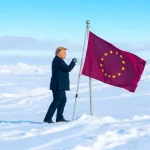
Trump’s renewed demand to purchase Greenland escalated dramatically on January 17, 2026, when he announced 10% tariffs on imports from eight European countries (Denmark, Norway, Sweden, France, Germany, Netherlands, Finland, and the UK) starting February 1, rising to 25% by June 1 unless a deal is reached. He framed it as essential for U.S. Arctic security, rare earth minerals, and countering Russia/China.
European leaders condemned it as “blackmail,” with the EU prepping retaliatory measures. For India, this isn’t direct involvement, but it serves as a stark reminder of Trump’s unpredictable trade tactics. As one analyst noted in Times of India coverage, even close U.S. allies face sudden economic coercion— a lesson for India’s ongoing bilateral trade negotiations amid existing high tariffs.
The Greenland news India angle underscores how U.S. unilateralism could fragment global alliances, potentially pushing India toward diversified partnerships (e.g., with the EU or BRICS) to hedge risks.
Energy Security: Venezuela Oil Shift and Potential Benefits for India
Trump’s Greenland ambitions tie into broader U.S. energy dominance, including post-2025 interventions in Venezuela that secured preferential access to its massive Orinoco Belt reserves. U.S. firms like Chevron gained concessions, stabilizing supplies and influencing global flows.
For India, a major oil importer (over 85% of needs met externally), this shift offers mixed signals. Venezuelan crude imports to India were marginal in recent years due to sanctions—dropping to under 1% of total—but refiners like Reliance Industries are exploring resumption if U.S. approvals ease. Reports indicate Reliance sought permits in early January 2026 for heavy crude suited to its Gujarat facilities.
If U.S. control stabilizes Venezuelan output, discounted heavy grades could return, benefiting Indian refiners and potentially lowering import costs amid volatile Middle East supplies. CRISIL Ratings noted minimal near-term disruption but medium-term upside if investments boost production. This aligns with India’s push for diversified sourcing beyond Russia (pressured by U.S. secondary sanctions) and OPEC.
Rupee vs Dollar: Indirect Pressures from Global Trade Turbulence
Trump’s European tariffs triggered market jitters, with the dollar sliding as investors sought safe havens like the yen. However, broader U.S. protectionism—including 50% tariffs on India (doubled in 2025 over Russian oil buys)—has already weakened the rupee, contributing to volatility.
In January 2026, rupee pressures persist from trade deficits (up 21.4% in December 2025) and export shifts—shipments to the U.S. declined while China surged as an alternative market. If European retaliation escalates into wider trade wars, global growth slowdowns could hit Indian exports (textiles, pharma, gems) indirectly, pressuring the currency further.
Hyderabad’s IT and pharma sectors, reliant on global supply chains, face compounded risks if dollar strength persists amid uncertainty.
Indirect Trade Hits: Export Diversification and MSME Challenges
India faces no new Greenland-linked tariffs, but the episode amplifies existing strains. U.S. 50% duties (implemented 2025) hit MSMEs hard—textiles, diamonds, chemicals most affected—prompting calls for a “Trump shock absorber” in Budget 2026.
Exports to the U.S. declined sharply post-tariffs, with India pivoting to China and others. Retaliatory moves, like India’s 30% duty on U.S. pulses (October 2025), complicate talks. The Greenland row warns that even negotiated deals offer no ironclad protection under Trump’s approach.
Positive note: Accelerated EU-India FTA talks could offset U.S. hits by reducing duties on textiles (currently ~10%) and boosting $76 billion in goods exports.
H-1B Visa Context: Ongoing Restrictions for Indian Tech Talent
Trump’s immigration reforms add another layer. A September 2025 proclamation restricted new H-1B entries unless accompanied by a $100,000 payment, aiming to curb alleged abuses and protect U.S. workers. This affects the 2026 lottery and beyond, hitting Indian professionals hard—India supplies the majority of H-1B holders for tech roles in Silicon Valley and beyond.
For Hyderabad’s booming IT corridor (home to TCS, Infosys, Microsoft campuses), this raises barriers to U.S. opportunities, potentially slowing talent flows and prompting firms to localize or explore alternatives like Canada or Europe.
US-India Relations in January 2026: Navigating Uncertainty
Despite frictions, strategic ties endure—defense cooperation, Quad alignment, and shared China concerns. Trump’s Greenland focus and European tariffs test alliances, but India maintains balanced diplomacy.
As January 19, 2026, progresses, New Delhi watches for de-escalation while pushing diversification. For everyday Indians in Hyderabad and nationwide, these developments mean monitoring rupee trends, fuel prices, job markets in tech/export sectors, and visa pathways.