




What Is the Insurrection Act? Global Ramifications of a Potential U.S. Invocation in 2026

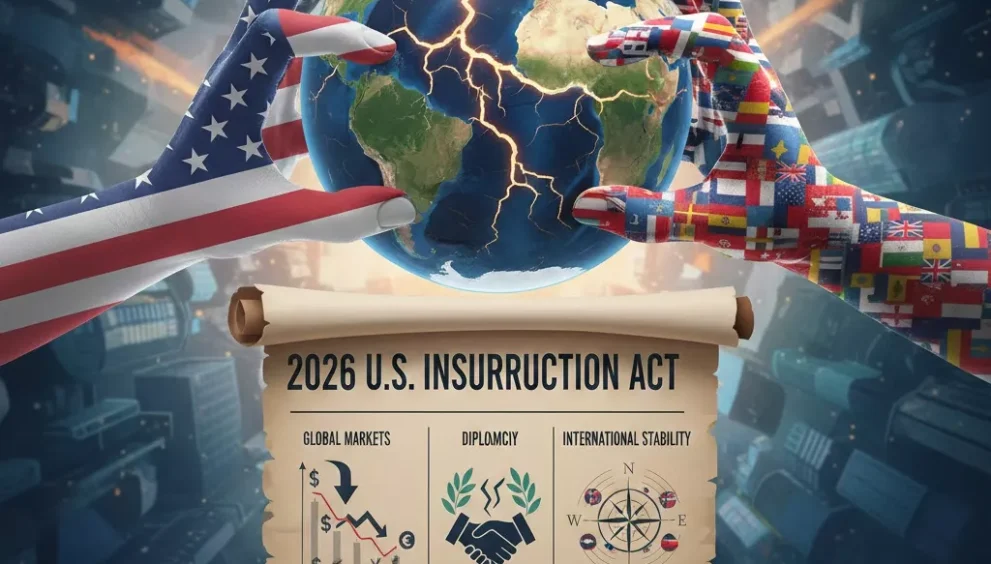
What Is the Insurrection Act? Global Ramifications of a Potential U.S. Invocation in 2026
As President Donald Trump threatens to invoke the Insurrection Act amid escalating protests in Minnesota over aggressive Immigration and Customs Enforcement (ICE) operations, the world watches closely. On January 15, 2026, Trump posted on Truth Social that he would deploy the act if Minnesota officials fail to stop “professional agitators and insurrectionists” from targeting ICE agents—labeled as “Patriots”—following incidents including the fatal shooting of activist Renee Good and another involving a Venezuelan man. This rare 1807 law could allow military deployment for domestic law enforcement, raising alarms far beyond U.S. borders.
For WorldReport.press, this post examines the Insurrection Act’s mechanics, history, and profound global implications if invoked—potentially signaling a shift toward militarized domestic policy in the world’s leading superpower.
Understanding the Insurrection Act: Core Powers and Triggers
The Insurrection Act (10 U.S.C. §§ 251–255) empowers the U.S. President to deploy active-duty military forces or federalize National Guard units inside the country to suppress insurrections, rebellions, or domestic violence that obstructs federal laws or overwhelms state authorities. It overrides the Posse Comitatus Act (1878), which normally prohibits military involvement in civilian policing.
Key conditions include:
- Rebellion against U.S. authority.
- Unlawful combinations hindering law enforcement.
- Obstruction of constitutional rights or federal laws when states cannot or will not act.
The President must issue a dispersal proclamation first, but “insurrection” lacks strict definition, granting broad executive discretion—subject to potential court review.
Unlike recent National Guard federalizations in cities like Los Angeles or Chicago under other statutes, invocation would enable troops to perform arrests, searches, and direct enforcement—escalating federal intervention dramatically.
Historical Precedent: A Tool for Crises, Not Routine Use
Enacted in 1807 (roots in 1792 militia laws), the act has been used about 30 times:
- George Washington (1794): Whiskey Rebellion.
- Abraham Lincoln (1861): Civil War.
- Eisenhower (1957) and Kennedy (1962): School desegregation enforcement.
- Johnson (1967): Detroit riots.
- George H.W. Bush (1992): Los Angeles riots (most recent, at state request).
No use since 1992 marks the longest gap. Traditionally invoked for genuine emergencies or civil rights protection—often with state cooperation—its modern application in politically polarized contexts would be unprecedented.
The 2026 Minnesota Crisis: Trigger and Threats
Protests in Minneapolis intensified after ICE surges tied to mass deportation efforts, with clashes following shootings by federal agents. Trump blamed “corrupt politicians” and vowed the Insurrection Act to restore order, overriding state opposition from Governor Tim Walz and Attorney General Keith Ellison, who pledge legal challenges.
This differs from prior threats (e.g., 2020 George Floyd protests, 2025 anti-deportation unrest), as advisors previously dissuaded action. Invocation now could mark the first use in over three decades—and the first without state invitation in modern times.
Global Implications: How a U.S. Invocation Could Reshape the World
An Insurrection Act deployment would reverberate internationally, affecting alliances, perceptions of American democracy, and global stability:
- Erosion of U.S. Democratic Image: Critics abroad already view threats as authoritarian drift. Military use against domestic protests—especially immigration-related—could fuel narratives of declining U.S. exceptionalism, emboldening autocrats who cite American precedents to justify crackdowns.
- Impact on Alliances and Soft Power: NATO partners, EU nations, and Indo-Pacific allies rely on U.S. leadership rooted in democratic norms. Domestic militarization might strain relations, prompting questions about reliability in crises abroad. Allies could hesitate on joint operations or intelligence sharing if U.S. focus turns inward.
- Immigration and Diaspora Effects Worldwide: Heightened U.S. enforcement could deter migration globally, disrupting labor flows to the U.S. economy. Remittance-dependent nations (e.g., in Latin America, Asia, Africa) face economic hits from deportations or reduced opportunities. Indian diaspora communities, already navigating H-1B uncertainties, might see broader ripple effects.
- Geopolitical Opportunism: Rivals like China and Russia could exploit footage of U.S. troops in streets for propaganda, contrasting with their own stability claims. It might accelerate multipolar shifts, with countries seeking alternatives to U.S.-led institutions.
- Economic and Market Volatility: Uncertainty could spike global markets, affect the dollar’s reserve status, and influence trade policies. Investors might flee if civil unrest escalates, impacting supply chains and energy prices.
- Human Rights and International Law Precedent: Invocation risks accusations of disproportionate force, drawing scrutiny from UN bodies or human rights groups. It could complicate U.S. advocacy on global issues like democracy promotion.
Legal experts warn of constitutional challenges, but initial deployment authority remains presidential—potentially setting a dangerous precedent for future administrations worldwide.
Why This Matters on the World Stage
The Insurrection Act’s potential use underscores tensions between federal power and democratic safeguards in America’s federal system. For the international community, it tests whether the U.S. can manage internal divisions without compromising its global role as a beacon of rule of law.
As Minnesota tensions unfold, WorldReport.press will monitor developments and their worldwide fallout. Could this mark a turning point in U.S. governance with lasting global consequences? Share your perspective in the comments.
Stay informed with WorldReport.press for in-depth analysis of international affairs and breaking global stories.

