



Last Week’s Major World Events: March 9–15, 2026 – Escalating Global Tensions Dominate Headlines

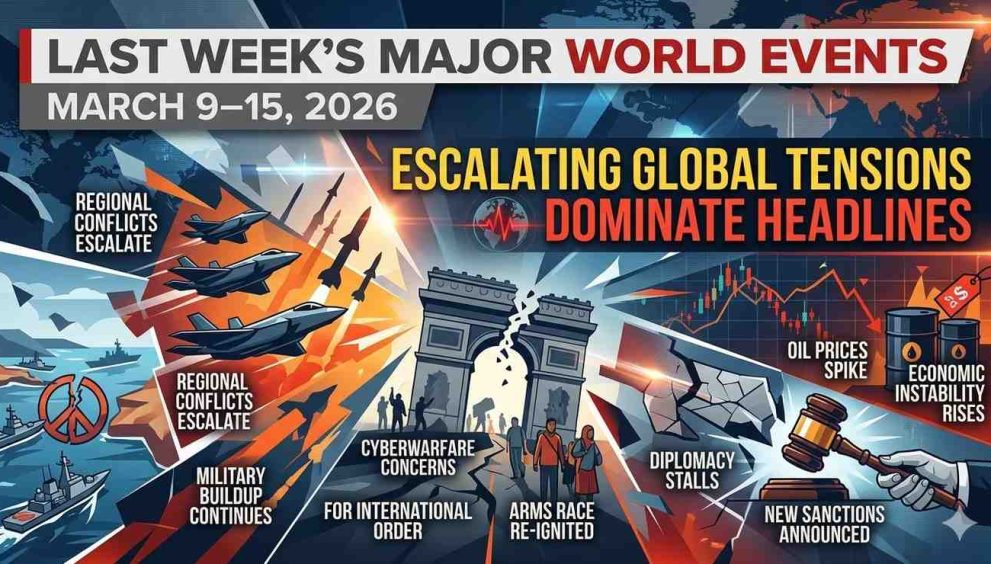
Dubai, United Arab Emirates – March 16, 2026 — The past week (March 9–15, 2026) was defined by the intensifying U.S.-Israel war against Iran, now in its third week, alongside ripple effects on global energy markets, regional security, and humanitarian crises. As the conflict shows no signs of abating, world leaders grapple with soaring oil prices, disrupted shipping, and fears of broader escalation.
U.S.-Israel-Iran War Enters Third Week with No End in Sight
The dominant story throughout the week remained the ongoing military campaign launched on February 28, 2026, against Iran. U.S. and Israeli forces continued heavy airstrikes targeting Iranian military infrastructure, missile production sites, internal security forces, and key oil facilities.
- Key developments:
- U.S. strikes hit Iran’s main oil export hub on Kharg Island multiple times, with reports of 90 targets struck in one wave. President Donald Trump urged allied nations to deploy warships to secure the Strait of Hormuz, which Iran has effectively closed, disrupting global oil flows.
- Iran retaliated with missile and drone attacks on Israel, Gulf states, and U.S. assets in the region, including strikes on Saudi Arabia, UAE, and others. Iranian Supreme Leader Mojtaba Khamenei (son of the late Ayatollah Ali Khamenei, killed in early strikes) vowed prolonged resistance and demanded compensation from “enemies.”
- Casualties mounted: Iran’s Health Ministry reported hundreds killed, including civilians, women, and children. In Lebanon, Israeli operations against Hezbollah displaced over 830,000 people and caused thousands of deaths and injuries.
- Trump administration officials predicted a swift end to major combat, while Tehran insisted it could outlast adversaries. Trump rejected immediate ceasefire talks and threatened further action unless Iran surrendered unconditionally.
The war has crippled Iran’s ballistic missile capabilities and navy, but retaliatory strikes have caused civilian harm and widened regional involvement.
Global Energy Crisis and Economic Shockwaves
With the Strait of Hormuz closed and Iranian oil exports halted, crude prices surged above $114 per barrel at points during the week. Emergency stock releases were discussed, and shipping reroutes increased costs worldwide.
- Trump warned oil-dependent nations to help secure sea lanes, with plans for a multinational coalition to escort tankers.
- Disruptions raised fears of supply chain breakdowns and potential food crises in vulnerable regions.
Other Notable Global Developments
- Lebanon humanitarian crisis: UN launched a $308 million flash appeal amid mass displacement from Israeli strikes.
- Regional incidents: Drone and missile exchanges affected Gulf aviation and infrastructure, with partial airspace recoveries interrupted by new threats.
- Diplomatic moves: British PM Keir Starmer discussed Hormuz disruptions with Trump; UN officials condemned civilian impacts and called for de-escalation.
- Other headlines: Flooding in Kenya killed dozens; minor unrelated events included storms in the U.S. and political developments elsewhere, but overshadowed by the Middle East crisis.
Broader Implications
The conflict has reshaped global security dynamics, with Europe emerging as a top arms importer amid uncertainty. Aviation hubs like Dubai faced repeated disruptions, including drone incidents near airports. Travelers and businesses worldwide continue monitoring for updates.
As the war drags into its third week, questions loom over potential regime change in Iran, oil market stabilization, and risks of wider involvement involving Russia, China, or other powers.
This summary draws from reports by Reuters, Al Jazeera, The New York Times, BBC, Jerusalem Post, UN News, and other international sources covering developments from March 9–15, 2026. Stay tuned to World Report Press for ongoing coverage of this fast-moving story.