


US-Israel Iran War Deepens Global Oil Crisis

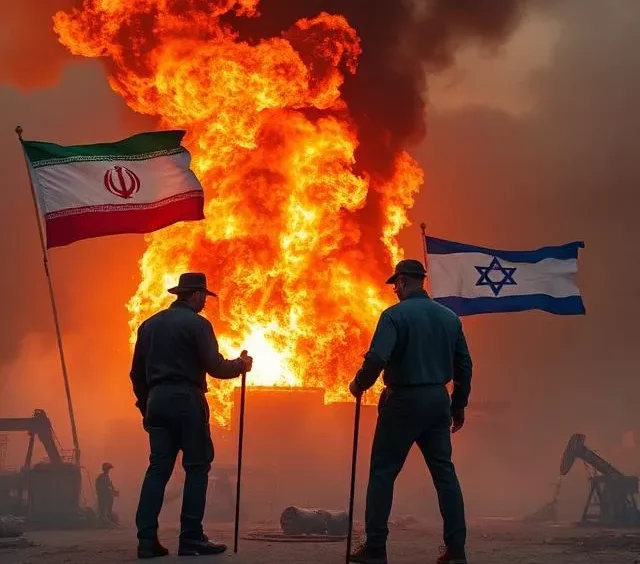
US-Israel Iran War Deepens Global Oil Crisis
The conflict between the United States, Israel, and Iran has entered a dangerous new phase as it approaches the end of its fourth week. What began as targeted airstrikes has evolved into a sustained military campaign involving ballistic missiles, drone barrages, and threats to critical global infrastructure. Hundreds of civilians have reportedly been killed, oil prices have surged to levels not seen since 2022, and fears of a wider regional war are mounting. Despite signals of possible negotiations, both sides continue exchanging blows while issuing ultimatums.
As of March 28, 2026, the combined US and Israeli forces have conducted thousands of strikes on Iranian targets, including nuclear facilities, missile bases, military command centers, and sites in Tehran and other provinces. Iran has responded with missile and drone attacks on Israel, US-linked bases in the Gulf, and attempts to disrupt shipping in the Strait of Hormuz — a narrow waterway that normally carries about 20% of the world’s seaborne oil and liquefied natural gas.
Timeline of Escalation
The current round of hostilities intensified after initial US-Israeli strikes on February 28, 2026. In the early days, reports emerged of significant damage to Iranian nuclear sites such as Natanz, with Israeli and US officials claiming degradation of Iran’s enrichment capabilities. Iranian officials denied major setbacks but acknowledged civilian casualties.
By mid-March, the conflict spread. Iran launched retaliatory missile strikes on Israeli cities, including southern areas near Dimona and Arad, injuring dozens of civilians. Cluster munitions were reportedly used in some attacks, raising concerns about indiscriminate harm. Israel responded by targeting Iranian ballistic missile infrastructure, with the Israel Defense Forces (IDF) claiming over 3,000 strikes on IRGC (Islamic Revolutionary Guard Corps) assets, including underground facilities and launch sites.
This week (March 22–28), overnight strikes hit residential neighborhoods in Tehran and northwest Iran. Iranian state media released images showing damaged buildings and emergency response teams in action. The Iranian Red Crescent reported emergency operations in affected areas. Meanwhile, Israel ordered the destruction of bridges along the Litani River in southern Lebanon to curb Hezbollah activities, signaling concerns about a multi-front escalation involving Iran’s regional proxies.
US President Donald Trump has played a central role in both military and diplomatic messaging. He issued ultimatums to Iran, threatening to “obliterate” power plants and energy infrastructure if Tehran did not reopen the Strait of Hormuz or agree to terms. Deadlines were extended — first to March 23, then to March 27 — as Trump claimed Iran was showing signs of wanting a deal but feared domestic backlash or further US action.
On the diplomatic front, the US reportedly delivered a 15-point proposal to Iran via Pakistani intermediaries, including Army Chief Asim Munir. The plan reportedly demands that Iran dismantle key elements of its nuclear program, end uranium enrichment, surrender enriched uranium stockpiles, grant full IAEA (International Atomic Energy Agency) access, limit ballistic missiles, cease support for groups like Hezbollah and the Houthis (collectively known as the Axis of Resistance), and ensure freedom of navigation in the Strait of Hormuz.
Iranian officials have dismissed direct negotiations while reviewing the proposal. Tehran issued its own conditions for a ceasefire: complete cessation of US and Israeli attacks, a mechanism to prevent future conflicts, war reparations, an end to strikes on allied groups, and international recognition of Iran’s authority over the Strait of Hormuz. Foreign Minister statements emphasized that Iran would “exact a heavy price” for perceived Israeli crimes and warned of “zero restraint” if power plants were targeted.
Trump, speaking at events this week, described the campaign as creating a “new Middle East” free from Iranian “nuclear blackmail.” Secretary of State Marco Rubio indicated the US expects the operation to conclude “in weeks, not months,” without needing large-scale ground troops. However, reports suggest the Pentagon is preparing to deploy additional forces, including up to 10,000 troops and elements of the 82nd Airborne Division, to the region.
Iranian Retaliation and Regional Spillover
Iran has not limited its response to direct strikes on Israel. This week, Iranian missiles and drones targeted a US-linked air base in Saudi Arabia (Prince Sultan Air Base), injuring at least 12 American service members, two seriously. The attack highlights the risk to US personnel stationed across the Gulf.
Iran has also intensified efforts around the Strait of Hormuz. Traffic has been severely disrupted, with some days seeing only limited tanker movements under Iranian “safe passage” conditions. Attacks on vessels and threats to energy infrastructure have caused oil prices to spike dramatically. Brent crude closed this week at levels above $110 per barrel in some sessions — the highest since 2022 — while West Texas Intermediate (WTI) hovered near $99–100. Analysts warn that prolonged disruption could push prices much higher, with Goldman Sachs suggesting elevated levels could persist into 2027 if the crisis drags on.
The economic fallout extends far beyond energy. Global markets have shown volatility, with concerns over inflation, supply chain disruptions, and impacts on oil-importing nations. Remittances to countries like India from Gulf workers could be affected. Agrifood systems face risks from potential fertilizer shortages tied to energy price spikes. The UN has warned that the war is “out of control” and threatens broader instability.
In Lebanon, renewed Israeli actions against Hezbollah-linked targets have raised fears of a second front. Hezbollah has fired rockets into northern Israel, killing at least one civilian in recent days. In the broader Gulf, countries are navigating delicate balances — some offering humanitarian aid to Iran while hosting US forces.
Cuba, facing its own energy crisis exacerbated by regional tensions and US policies, experienced repeated nationwide blackouts this week, leaving millions without power.
Casualties and Humanitarian Concerns
Casualty figures remain contested. Iranian sources and some international reports cite hundreds of civilian deaths, with earlier tallies reaching 550–787 across strikes. Israel and the US emphasize targeting military and nuclear sites, claiming efforts to minimize civilian harm, but images of damaged residential areas in Tehran have fueled criticism.
The UN and humanitarian organizations have called for de-escalation, protection of civilians, and access for aid. The International Maritime Organization has engaged Iran on safe passage for seafarers, who continue operating in a high-risk environment.
Anti-regime voices inside Iran and diaspora communities have used the chaos to highlight long-standing grievances, while Iranian leadership rallies domestic support by framing the conflict as resistance against aggression.
Diplomatic Maneuvers and International Reactions
Behind the scenes, multiple channels are active. Egypt, Turkey, and Pakistan have reportedly passed messages. Israeli Prime Minister Benjamin Netanyahu has coordinated closely with Trump, viewing the campaign as an opportunity to achieve long-term strategic goals against Iran.
NATO allies have faced criticism from Trump, who called some “cowards” for not assisting more actively with the Hormuz situation. European nations are monitoring energy impacts and discussing nuclear policy adjustments, with France’s Macron emphasizing strength in recent speeches.
In Asia, China has opened probes into US trade practices amid broader tensions, while India navigates its own energy and diaspora concerns. A potential Trump-Xi summit in May is being watched for any indirect influence on the Middle East.
Russia, focused on its ongoing war in Ukraine, has launched large-scale air attacks there this week, prompting NATO jet scrambles. Ukrainian President Zelensky expressed concerns that the Iran conflict is diverting global attention and resources. Russia has benefited somewhat from higher oil prices but faces its own sanctions dynamics.
Economic and Global Impacts in Detail
The Strait of Hormuz crisis is the most immediate economic threat. Normally, around 20 million barrels per day of oil transit the waterway. Disruptions have already caused price surges of 40% or more from pre-conflict levels. If the closure extends, models suggest WTI could average near $98 in the short term, with longer scenarios pushing Brent toward $115 or higher.
Airlines like United are already planning for $175 oil scenarios, which would mean higher ticket prices and reduced flights. Global GDP growth could take a hit of several percentage points in affected quarters. Developing nations dependent on imported energy face inflation spikes and potential food security risks.
Stock markets have corrected in some sessions, with energy stocks gaining while travel and consumer sectors suffer. The partial US government shutdown — now affecting DHS operations, TSA staffing, and causing long airport lines — adds domestic pressure on the Trump administration.
Outlook: War or Deal?
As the week ends, the situation remains fluid. Trump has claimed progress toward victory and a deal, but Iran insists it will not negotiate under duress and continues limited operations. Satellite imagery shows damage to Iranian missile bases like Imam Javad near Shiraz. Israeli officials report increased Iranian launch attempts from central areas due to degradation of western sites.
Experts warn that miscalculation could lead to direct US-Iran clashes or wider involvement of proxies. Others see diplomatic off-ramps through intermediaries, possibly a temporary ceasefire for negotiations in Pakistan or elsewhere.
The coming days will be decisive. Will Iran fully reopen the Strait? Will the US escalate strikes on power infrastructure? Or will backchannel talks yield a breakthrough?
WorldReport.press will continue monitoring developments hour by hour. This conflict is reshaping geopolitics, energy markets, and global security in real time. The human cost — both immediate casualties and long-term economic pain — serves as a stark reminder of the stakes.