


Rapper Balendra Shah Becomes Nepal’s PM at 35

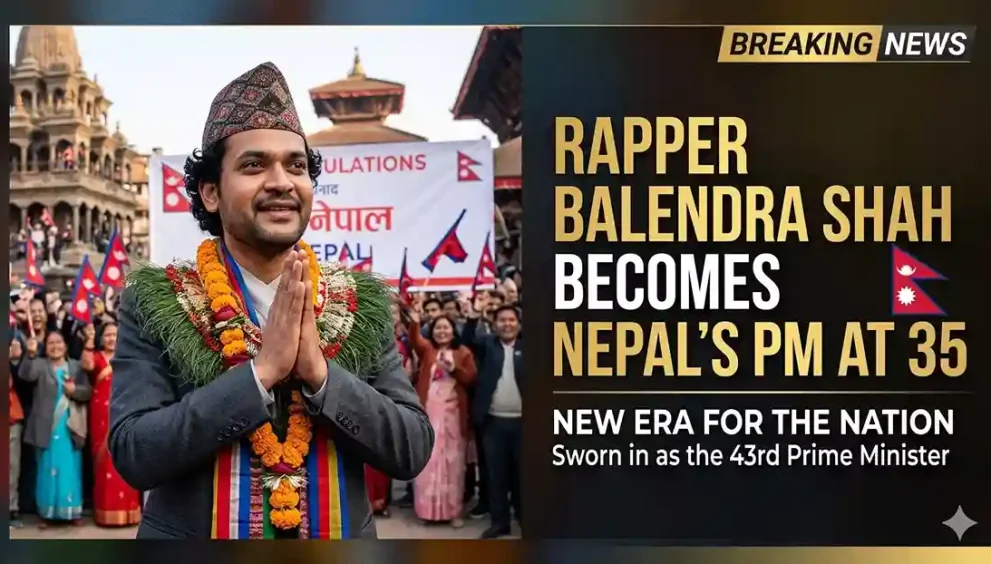
Rapper Balendra Shah Becomes Nepal’s PM at 35
By WorldReport.press Asia Desk March 28, 2026
In a remarkable political transformation that has captured global attention, Nepali rapper, structural engineer, and anti-corruption activist Balendra Shah — popularly known as Balen — was sworn in as Nepal’s 47th Prime Minister on March 27, 2026. At just 35 years old, Shah becomes the youngest prime minister in Nepal’s modern history and the first from the Madhes region to hold the country’s highest executive office.
The swearing-in ceremony took place at the Presidential Palace (Sheetal Niwas) in Kathmandu, administered by President Ram Chandra Paudel. Dressed in black with his signature dark sunglasses, Shah took the oath of office, pledging loyalty to the constitution and committing to serve the nation and its people. Ahead of the event, he shared a powerful rap-style video message to the nation, blending his artistic roots with a call for unity, reform, and accountability.
Shah’s rise to power marks the culmination of a youth-driven political upheaval. His Rastriya Swatantra Party (RSP) secured a landslide victory in Nepal’s recent general elections — the first since deadly anti-corruption protests toppled the previous government last year. The RSP captured approximately two-thirds of the seats in the lower House of Representatives, reflecting widespread frustration with traditional parties and a demand for fresh leadership.
A Unique Journey: Engineer, Rapper, Mayor, Now Prime Minister
Balendra Shah first gained prominence as a rapper under the stage name Balen, using music to highlight social issues, urban problems, and government failures. His lyrics often tackled corruption, inequality, and the struggles of everyday Nepalis. He later transitioned into public service, winning the mayoral election in Kathmandu in 2022 as an independent candidate. As mayor, he focused on infrastructure development, waste management, heritage preservation, and cracking down on illegal construction — earning both praise and criticism for his direct, sometimes confrontational style.
Shah holds a degree in structural engineering, which he applied to practical governance challenges in the capital. His engineering background and artistic expression created a unique public persona: a no-nonsense leader who communicates directly with citizens through social media and creative formats.
The path to premiership accelerated after massive Gen-Z protests against corruption and political instability forced early elections. Shah’s party capitalized on this momentum, positioning itself as a clean, youth-centric alternative to entrenched political dynasties. Analysts describe the victory as a “peaceful revolution” — a rare example in South Asia of a generational shift achieved through the ballot box rather than violence.
During the swearing-in, outgoing interim officials and senior political figures attended, underscoring a smooth transition. Shah’s appointment ends a period of political limbo and signals potential stability, though challenges ahead are formidable.
Key Challenges Facing the New Prime Minister
Nepal faces a complex array of domestic and economic issues that will test Shah’s leadership:
- Economic Recovery and Unemployment: High youth unemployment, inflation, and slow post-pandemic recovery remain pressing concerns. Remittances from Nepali workers abroad form a lifeline for the economy, but global disruptions — including energy crises linked to the ongoing Middle East conflict — could affect these flows.
- Infrastructure and Urban Development: As former Kathmandu mayor, Shah prioritized roads, public spaces, and disaster resilience (Nepal is highly earthquake-prone). Scaling these efforts nationally will require significant investment and coordination with federal and local bodies.
- Anti-Corruption and Governance Reform: Shah’s campaign centered on transparency and accountability. Delivering on promises to root out graft while navigating coalition politics (if needed) will be critical to maintaining public trust.
- Federalism and Regional Balance: As the first Madhesi prime minister, Shah brings representation from the southern Terai region, which has historically felt marginalized. Balancing demands from hills, mountains, and plains will be essential for national unity.
- Foreign Policy and Geopolitics: Nepal maintains delicate relations with neighbors India and China. Shah will need to navigate trade, border issues, and development partnerships carefully. The global energy volatility from the US-Israel-Iran conflict and disruptions in the Strait of Hormuz could indirectly impact Nepal through higher fuel and fertilizer costs.
Additionally, environmental challenges — including climate change impacts on Himalayan glaciers, flooding, and biodiversity — demand urgent attention.
Reactions and Global Interest
The swearing-in has drawn widespread international coverage, with media outlets highlighting the “rapper to prime minister” narrative. Supporters, particularly young Nepalis, celebrated on social media with hashtags like #BalenPM and shared clips of his rap message. Critics from traditional parties have expressed skepticism, questioning whether his outsider approach can deliver results in Nepal’s complex parliamentary system.
Regional observers note the significance of a peaceful power transition in a country with a history of political turbulence, including multiple constitution changes and government collapses since the end of the monarchy.
India and China have extended formal congratulations, with analysts watching for any shifts in Nepal’s foreign policy stance. Western media has framed the event as an inspiring story of youth empowerment in democracy.
Broader Context: Youth Revolutions and Global Trends
Shah’s ascent reflects a growing global trend of younger, non-traditional leaders emerging amid public disillusionment with established politics. Similar dynamics have appeared in various countries, driven by social media, economic pressures, and demands for authenticity.
In Nepal’s case, the Gen-Z protests that preceded the elections were fueled by issues like corruption scandals, youth migration, and governance failures. Shah’s party positioned itself as pragmatic rather than ideological, focusing on results over rhetoric.
His background as a structural engineer also brings a technical mindset to governance — potentially useful for addressing Nepal’s infrastructure deficits and disaster preparedness.
Outlook: Hope, Skepticism, and High Expectations
As Balendra Shah assumes office, expectations are sky-high among his supporters. He has signaled intentions to prioritize good governance, economic reforms, and citizen-centric policies. However, forming a stable government, managing parliamentary alliances, and delivering tangible improvements in daily life will require skillful navigation.
Early signals suggest Shah plans to maintain an active public presence, possibly continuing creative communication styles to engage citizens directly.
The coming months will reveal whether this youthful leadership can translate electoral success into sustainable progress. Nepal’s history shows that bold mandates can quickly face tests from economic realities, coalition dynamics, and external shocks.
WorldReport.press will continue monitoring developments in Kathmandu, including policy announcements, economic indicators, and reactions from key stakeholders. Balendra Shah’s premiership represents not just a personal milestone but a potential turning point for Nepal’s democracy and its younger generation.
In a world facing multiple crises — from the escalating conflict in the Middle East to energy market volatility and ongoing wars elsewhere — Nepal’s story offers a rare note of democratic renewal and generational change.