
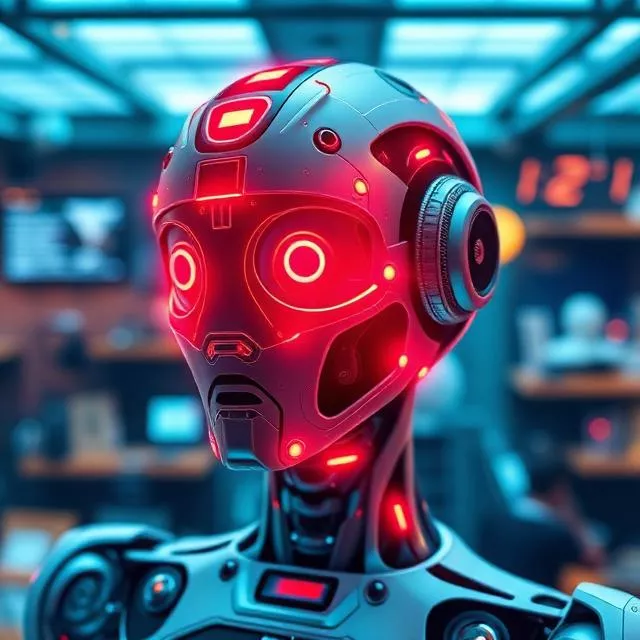


Hollywood’s Most Advanced Quantum Computing Movies That Explained the Future Before It Arrived


Hollywood’s Most Advanced Quantum Computing Movies That Explained the Future Before It Arrived
Published on www.worldreport.press | Technology & Science
Quantum computing was once confined to elite research labs and complex physics journals. Long before it entered mainstream tech discussions, Hollywood quietly introduced quantum concepts to global audiences through thrilling narratives, intelligent scripts, and visionary storytelling.
Some films didn’t just mention quantum computing — they explained it, dramatized it, and predicted its real-world implications with surprising accuracy.
Let’s explore the most advanced Hollywood movies that explained quantum computing, how scientifically close they came, and why these films still feel ahead of their time.
Why Hollywood Was Drawn to Quantum Computing
Traditional computers think in bits (0 or 1). Quantum computers think in qubits (0 and 1 simultaneously) — a concept that naturally fits cinema themes like:
- Parallel realities
- Time manipulation
- Superhuman intelligence
- Predictive simulations
- Consciousness beyond logic
Hollywood realized early that quantum theory is storytelling gold.
1. Ant-Man and the Wasp (2018) – The Quantum Realm Explained Visually
Quantum Concepts Used:
- Quantum Realm
- Subatomic dimensions
- Quantum entanglement
- Time dilation
Marvel delivered one of the clearest visual explanations of quantum mechanics ever put on screen.
Why It’s Advanced
The Quantum Realm is portrayed as a place where:
- Time flows differently
- Probability dominates reality
- Observation alters outcomes
These ideas align closely with real quantum theories like wave function collapse and quantum uncertainty.
“You’re not supposed to be here” — a line that subtly reflects how quantum states behave when observed.
Real Science Connection
Modern quantum researchers actually simulate particle behavior inside quantum fields, similar to what the movie imagines as an explorable realm.
2. Tenet (2020) – Quantum Inversion Meets Time Warfare
Quantum Concepts Used:
- Time inversion
- Entropy reversal
- Quantum causality
Christopher Nolan’s Tenet didn’t simplify quantum computing — it respected the intelligence of the audience.
Why It’s Revolutionary
The film is inspired by quantum entropy theory, suggesting:
- Objects can move backward in time
- Cause and effect are reversible
- Future states can influence the past
This mirrors quantum retrocausality, a real scientific debate in quantum physics.
Why Tech Experts Loved It
Unlike typical sci-fi, Tenet avoids magic explanations. Every concept is rooted in real quantum thought experiments, making it one of the most intellectually demanding films ever made.
3. Transcendence (2014) – Quantum Computing Meets Artificial Consciousness
Quantum Concepts Used:
- Quantum neural networks
- AI consciousness
- Superintelligence
- Nanotech powered by quantum logic
Johnny Depp’s character evolves into a quantum-powered intelligence capable of:
- Solving problems beyond classical computation
- Modeling reality in real time
- Predicting human behavior
Why It Was Ahead of Its Time
Today, companies like Google and IBM are exploring quantum machine learning — exactly what this movie imagined over a decade ago.
The film asks a chilling question:
What happens when quantum computers begin to think instead of calculate?
4. The Cloverfield Paradox (2018) – Quantum Experiments Gone Wrong
Quantum Concepts Used:
- Quantum tunneling
- Multiverse theory
- Particle accelerator anomalies
This Netflix sci-fi thriller connects quantum experiments with dimensional collapse.
Why It’s Scientifically Interesting
The movie is inspired by real CERN experiments, where scientists caution that:
- High-energy quantum experiments can cause unpredictable results
- Parallel universes are mathematically plausible
While dramatized, the core fear — unknown quantum consequences — is very real.
5. Source Code (2011) – Quantum Simulation of Consciousness
Quantum Concepts Used:
- Quantum memory reconstruction
- Parallel timelines
- Observer effect
Rather than time travel, Source Code uses quantum state reconstruction, where consciousness enters a simulated past.
Why It’s Underrated
The film subtly explains:
- How quantum data could recreate entire realities
- Why observation changes outcomes
- How probabilities collapse into decisions
It’s one of the best explanations of quantum simulation for general audiences.
6. Avengers: Endgame (2019) – Quantum Computing at Cosmic Scale
Quantum Concepts Used:
- Quantum time navigation
- Entanglement across timelines
- Multiversal branching
While often simplified, the movie’s explanation of quantum time travel is surprisingly accurate.
The Famous Line
“Time doesn’t work that way”
This directly references quantum theory — where time is not linear, but probabilistic.
Why These Movies Matter Today
Quantum computing is no longer science fiction:
- Google achieved quantum supremacy
- IBM released cloud-based quantum processors
- Governments are investing billions into quantum research
Hollywood didn’t just entertain — it prepared society for the next computing revolution.
Final Thoughts: Hollywood Predicted the Quantum Age
Hollywood didn’t wait for quantum computing to become mainstream. It imagined the consequences first, explored the ethics early, and showed us both the promise and the danger.
As quantum computers move closer to reshaping cybersecurity, medicine, AI, and global power, these movies feel less like fiction — and more like early warnings from the future.
 SEO Keywords
Quantum computing movies, Hollywood quantum films, quantum computing explained, sci-fi quantum theory, quantum mechanics in movies, future computing films, Google Discover tech stories