


Russia Offers Cheap LNG Amid Iran War Energy Crisis

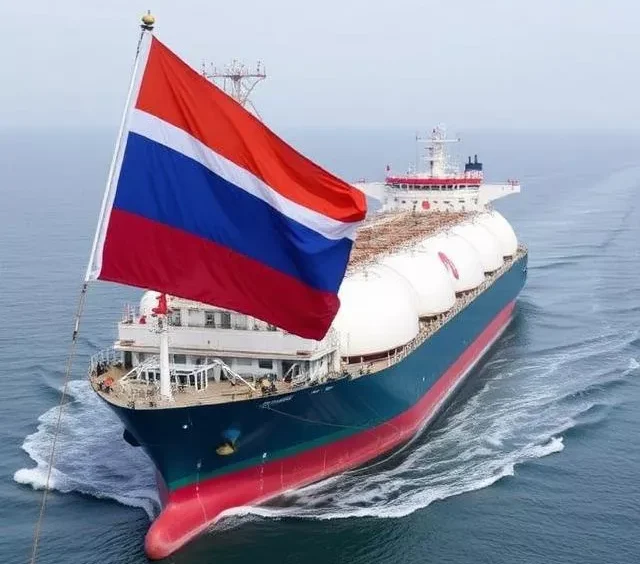
Global Energy Markets in Turmoil – April , 2026 – Russia is actively marketing sanctioned liquefied natural gas (LNG) from its flagship Arctic LNG 2 project and other restricted facilities to energy-hungry nations in South Asia at discounts of up to 40% below current spot prices.
Shipments are reportedly routed through lesser-known Chinese and Russian intermediary companies, often accompanied by rebranded or alternative origin paperwork suggesting origins from neutral countries such as Oman or Nigeria. This move comes as the ongoing conflict in Iran has severely disrupted global LNG supplies, effectively closing the Strait of Hormuz and forcing major producers like Qatar to idle significant production capacity.
Global LNG Supply Shock: Impact of the Iran Conflict
The Strait of Hormuz — a critical chokepoint carrying roughly one-fifth of the world’s oil and LNG flows — has seen shipping traffic drop dramatically due to heightened tensions and attacks. Iranian strikes have damaged key infrastructure at Qatar’s Ras Laffan complex, the world’s largest LNG export facility, knocking out approximately 17% of Qatar’s LNG export capacity (around 12.8 million tons per year) for an estimated 3 to 5 years. Qatar has declared force majeure on several contracts, leaving dozens of empty Qatari LNG tankers idling across Asian waters.
This disruption has removed a substantial portion of reliable LNG supply from the market, causing spot prices to surge and forcing price-sensitive buyers in South Asia to scramble for alternatives.
Russia’s Strategy: Discounted Sanctioned LNG Finds New Markets
Russia’s Novatek-led Arctic LNG 2 project, which has been under heavy U.S., UK, and EU sanctions, has struggled to find buyers since 2023. However, Moscow is now offering steep discounts — reportedly 30-40% below Asian benchmark prices — to move volumes through alternative channels.
These discounted cargoes are primarily being tested in Asia, with China already receiving multiple shipments via routes including the Suez Canal. South Asian countries facing acute shortages are now being approached with similar attractive pricing, though direct purchases remain complicated due to sanctions risks and payment hurdles.
Analysts note emerging back-channel mechanisms, including possible gold or non-Western payment settlements, that could help bypass traditional financial restrictions imposed by Western nations.
Severe Impact on South Asian Nations
Bangladesh has been among the hardest hit. The country previously relied on Qatar for nearly 60% of its LNG imports. With Qatari supplies disrupted and spot market prices nearly doubling, Bangladesh is facing power shortages, factory slowdowns, increased coal usage, and pressure on foreign exchange reserves. Universities have been closed and fuel sales restricted in some areas to conserve energy.
Other South Asian economies are also feeling the pinch as summer electricity demand rises and alternative supplies remain expensive or limited.
India’s Position: Energy Security vs Sanctions Compliance
India, one of the world’s largest and fastest-growing LNG importers, has so far maintained a cautious approach toward sanctioned Russian LNG, particularly from the Arctic LNG 2 project. Indian officials have publicly stated they will not purchase broadly sanctioned commodities.
However, New Delhi continues to prioritize energy security and has significantly increased imports of discounted Russian crude oil in recent years. As shortages intensify, analysts suggest India may explore indirect or carefully structured options while balancing relations with Western partners and its growing energy needs.
Russia views South Asia as a strategic market to offset lost European volumes and generate revenue for its energy sector.
What This Means for Global Energy Markets
- Steep Discounts vs Sanctions Risk: South Asian buyers must weigh the significant cost savings against potential secondary sanctions, shipping insurance issues, and reputational concerns.
- Payment Innovations: Alternative settlement methods (including gold) are reportedly being discussed to facilitate trade outside Western banking systems.
- Long-term Shift: The crisis is accelerating diversification efforts, with countries ramping up coal usage in the short term and exploring new long-term LNG contracts.
The situation remains fluid as geopolitical tensions in the Middle East continue and global LNG demand grows.
Key Takeaways
- Russia is offering sanctioned LNG (including from Arctic LNG 2) at up to 40% discounts via intermediaries.
- The Iran war has disrupted the Strait of Hormuz and damaged Qatar’s LNG infrastructure, cutting global supply significantly.
- Bangladesh faces acute shortages after relying heavily on Qatari LNG.
- India remains cautious on direct purchases of sanctioned Russian LNG but continues diversifying energy sources.
- South Asia is balancing affordability against compliance and risk as energy prices soar.
As the global energy crunch deepens, nations in the region face difficult choices that could reshape trade flows, payment systems, and energy strategies for years to come.
What are your thoughts? Should South Asian countries accept heavily discounted Russian LNG despite sanctions risks, or prioritize non-sanctioned sources even at higher costs? Share your views in the comments.