



Middle East War Threatens 90 Lakh Indian Workers

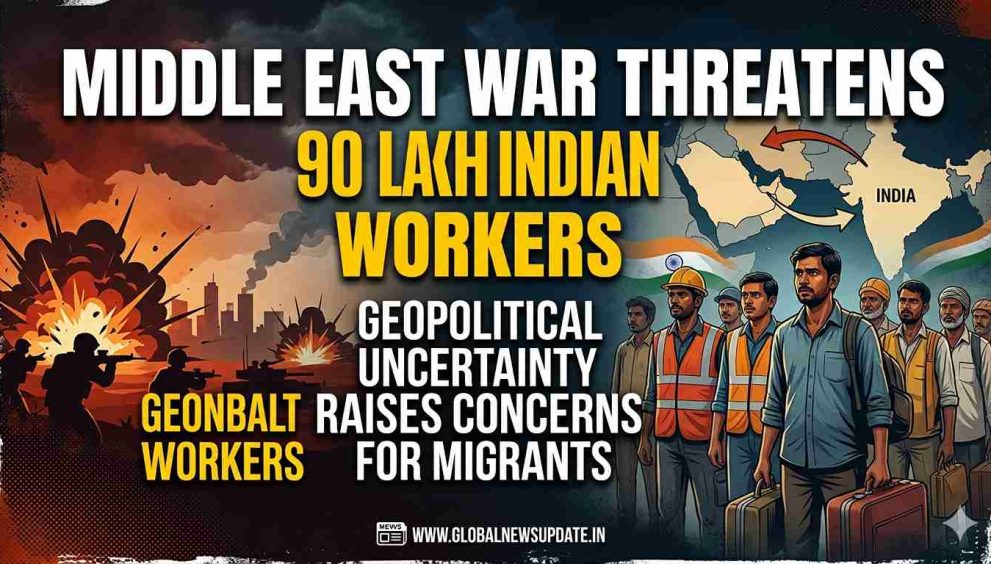
Nearly 9 Million Indian Expatriates Face Safety Threats, Potential Job Losses, and Remittance Disruptions as War Intensifies in the Middle East
As the US-Israel-Iran conflict enters a critical phase in April 2026, nearly 90 lakh (9 million) Indian workers across the Gulf Cooperation Council (GCC) countries find themselves in a precarious situation. According to multiple reports and government estimates, around 8.9 to 9.5 million Indians live and work in the UAE, Saudi Arabia, Qatar, Kuwait, Oman, and Bahrain — making them the largest expatriate community in the region.
The ongoing military escalations, including missile strikes, drone attacks, airspace closures, and disruptions to key trade routes, have raised serious concerns over the safety and livelihoods of these migrant workers, who form the backbone of many Gulf economies.
Scale of Indian Presence in the Gulf
- UAE: Approximately 3.5 million Indians (largest host nation).
- Saudi Arabia: Around 2.5–2.7 million Indians.
- Significant populations also exist in Qatar, Kuwait, Oman, and Bahrain.
A majority (around 65–70%) of these workers are blue-collar and low-to-mid skilled, employed in construction, oil & gas, hospitality, logistics, domestic services, and healthcare. Many hail from Indian states like Kerala, Telangana, Andhra Pradesh, Tamil Nadu, Uttar Pradesh, and Bihar.
These workers send home substantial remittances — estimated at over $50 billion annually from the Gulf region alone — supporting millions of families and contributing significantly to India’s current account balance.
Major Risks Facing Indian Workers
- Physical Safety Concerns Migrant workers often live in crowded labour camps or near industrial and logistics zones that could become collateral targets. Reports indicate migrants have already been among the casualties in the broader conflict, with limited access to safe shelters or timely evacuation due to restrictive sponsorship systems.
- Job Losses and Economic Uncertainty Over 300,000 Indian jobs are estimated to be at immediate risk if the conflict drags on. Sectors such as construction, tourism, hospitality, aviation, and logistics have already slowed down. New recruitment has been paused in several cases, affecting thousands with approved job offers who are now stranded.
- Remittance and Family Impact Prolonged instability could reduce or delay remittances, hitting household incomes hard in migrant-dependent regions of India. Oil price volatility and supply chain disruptions further threaten project continuity and employer stability.
Despite the dangers, a large majority of Indian workers are choosing to stay put. For many low-income families, returning home without a job means immediate financial hardship. The dilemma is often described as “jobs versus safety,” with workers prioritizing continued employment to support dependents back in India.
India’s Response and Challenges
The Indian government has been closely monitoring the situation through the Ministry of External Affairs (MEA) and has held high-level cabinet-level discussions focusing on the safety of its citizens. Measures taken include:
- Issuing safety advisories and coordinating with GCC governments.
- Organizing special flights for stranded or willing-to-return Indians.
- Engaging embassies to ensure worker welfare.
However, large-scale evacuation of nearly 9 million people remains highly challenging. India must also balance its strategic interests, including energy security, as the Gulf remains a vital source of crude oil imports.
Human rights groups have highlighted long-standing vulnerabilities faced by migrant workers under the kafala sponsorship system — issues such as wage theft, poor living conditions, and limited legal recourse — which the current crisis has further exposed.
Broader Economic Implications for India
A sustained conflict could lead to:
- Reduced remittance inflows.
- Higher energy costs and inflation pressures.
- Increased domestic job market strain if large numbers of workers return unemployed.
- Impact on bilateral trade and investment ties with GCC nations.
States with high out-migration rates are particularly vulnerable to the ripple effects on local economies.
WorldReport.press will continue to track developments in the region. Indian nationals in the Gulf are strongly advised to stay in regular contact with Indian embassies and consulates, follow official MEA advisories, and prioritize personal safety while assessing their options.
If you or your family members are working in the Gulf, what challenges are you facing amid the current situation? Share your views or experiences in the comments section below.