


India Gets Iran Oil After 7 Years Under US Waiver

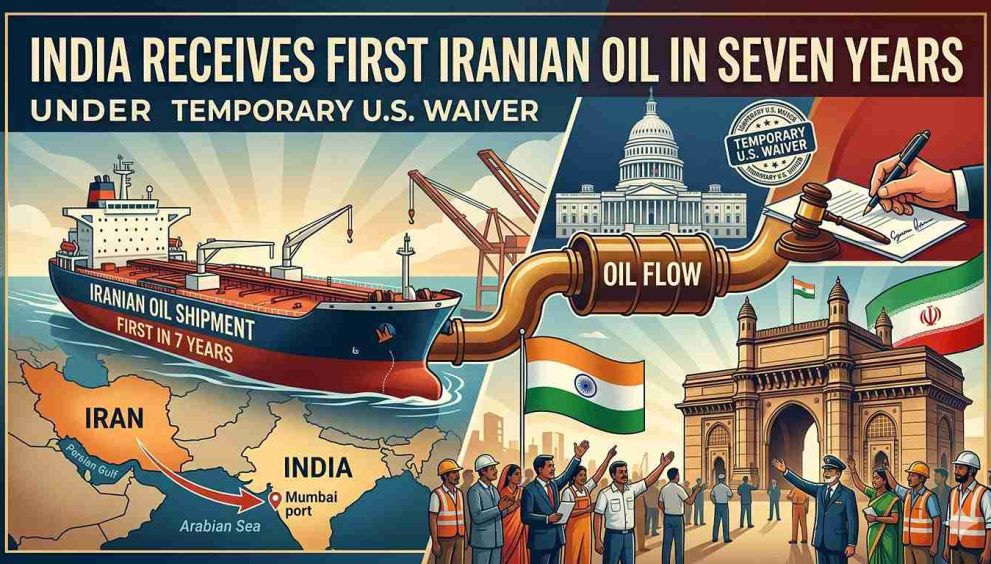
New Delhi — India has resumed imports of Iranian crude oil after a seven-year gap, receiving approximately two million barrels in a shipment enabled by a temporary U.S. sanctions waiver.
The cargo marks the first arrival of Iranian oil in India since May 2019. It was delivered under a 30-day waiver issued by the U.S. Treasury Department’s Office of Foreign Assets Control (OFAC) on March 20, 2026, allowing the discharge of Iranian crude loaded on or before that date until April 19, 2026.
Ship-tracking data from TankerTrackers and other sources confirmed the delivery of the two-million-barrel cargo, which is expected to help ease supply pressures on Indian refiners amid ongoing tensions in the Middle East and partial disruptions in the Strait of Hormuz.
Timely Relief for India’s Energy Security
As the world’s third-largest oil importer and consumer, India depends on imports for over 85% of its crude requirements. The Iranian shipment will provide immediate support to major refiners, including state-owned Indian Oil Corporation (IOC) and private players such as Reliance Industries.
India’s Ministry of Petroleum and Natural Gas stated that refiners have secured crude supplies from more than 40 countries, including Iran, and confirmed there are “no payment hurdles” for the Iranian imports under the current waiver.
The move comes at a time when global oil markets remain tight. The oil arrived at a notable premium amid elevated benchmark prices and supply concerns triggered by the U.S.-Iran conflict and related disruptions in key shipping routes.
Geopolitical and Market Context
The temporary U.S. waiver aims to bring additional barrels into the market and help stabilize global energy prices during a period of heightened volatility. Before 2019, Iran was among India’s important oil suppliers, but imports stopped following the end of earlier sanctions relief.
Analysts note that this single shipment is unlikely to provoke immediate backlash from Washington, given its limited scope and the waiver’s focus on already-loaded cargoes. However, any future imports beyond April 19 will depend on whether the waiver is extended or if new diplomatic and trade arrangements emerge.
India has also been exploring alternative mechanisms, including potential barter arrangements, to sustain energy ties with Iran while navigating international sanctions.
Broader Implications
This development underscores India’s pragmatic approach to energy diplomacy — balancing relations with major global powers while prioritizing domestic energy security and affordable fuel supplies for its 1.4 billion population.
For the global economy, even modest additions of Iranian barrels can help moderate price volatility, especially as the Strait of Hormuz remains a critical chokepoint for nearly 20% of the world’s oil trade.
World Report will continue monitoring the situation as the April 19 waiver deadline approaches, along with any potential extensions and their impact on global oil markets and India-Iran relations.