


Iran War 2026: Impact on AI, Tech & Global Jobs


Iran War 2026: Impact on AI, Tech & Global Jobs
While the world watches dramatic images of conflict in the Middle East, rising oil prices crossing $110 per barrel, and mounting recession warnings, a quieter but equally significant transformation is unfolding in the technology sector. The Iran War 2026, which began with U.S.-Israeli strikes on Iranian targets on February 28, is not only an energy and geopolitical crisis — it is rapidly becoming a defining moment for the future of AI, cloud computing, and global digital infrastructure.
At World Report Press, we go beyond surface-level war coverage to deliver clear, fact-based analysis on how major global events affect economies, industries, and daily lives. In this comprehensive report, we explore the often-overlooked tech dimensions of the Iran conflict within the broader economic context.
The Energy Shock Driving Economic Uncertainty
The conflict has severely disrupted energy flows from the Persian Gulf. Attacks on oil and gas infrastructure, combined with threats to shipping through the Strait of Hormuz, have pushed Brent crude prices sharply higher — from around $70–75 before the escalation to over $100–$110 per barrel, with some analysts warning of $120–150 in a prolonged scenario.
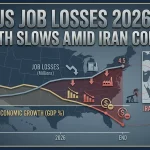
This energy surge is feeding global inflation pressures. Higher fuel, transport, and manufacturing costs are squeezing margins across industries. Economists have raised recession probabilities significantly, with Goldman Sachs lifting the U.S. downturn risk to around 30%. Business surveys show softening activity in major economies, while central banks face the difficult choice between fighting inflation and supporting growth.
For the technology sector — which has powered much of the post-pandemic economic recovery through AI-driven productivity gains — these macroeconomic headwinds arrive at a delicate time.
Direct and Indirect Impact on AI and Data Centers
Modern AI development depends heavily on massive, power-intensive data centers. Training and running today’s large language models and generative AI systems consume electricity equivalent to that of small countries. The Iran War is creating multiple layers of pressure on this infrastructure:
- Skyrocketing Energy Costs: Data center operators (Amazon Web Services, Microsoft Azure, Google Cloud, and others) are facing sharply higher electricity and cooling expenses. Natural gas disruptions in the Gulf region have ripple effects on global energy markets, making new AI projects more expensive to build and operate.
- Physical and Cyber Vulnerabilities: Iranian drone and missile strikes have already caused damage to data center facilities in the UAE and Bahrain, leading to temporary service disruptions. This has forced hyperscalers to activate contingency plans and reconsider aggressive expansion in the Middle East, a region previously attractive for its strategic location and renewable energy potential.
- Supply Chain Disruptions: Higher shipping insurance premiums, rerouted maritime routes, and tightness in critical materials (such as helium used in semiconductor manufacturing) are slowing hardware deliveries for new data centers and chip production.
Analysts warn that sustained high energy prices could delay or cancel portions of the multi-billion-dollar AI infrastructure buildout announced in recent years. Private investment in tech infrastructure is also showing signs of caution amid broader economic uncertainty.
Tech Job Market: Slowdowns, Shifts, and New Priorities
The technology industry, long seen as relatively recession-resistant, is beginning to show signs of adjustment:
- Hiring Caution and Freezes: Many companies are tightening budgets and prioritizing essential projects. Non-critical software development, consumer app initiatives, and some mid-level engineering roles face slower hiring or temporary pauses. Indian IT services companies, which serve a large portion of global clients, are already signaling more measured growth expectations for the coming fiscal year.
- Rising Demand in Specific Areas: Conversely, demand is increasing for specialists in cybersecurity, critical infrastructure protection, energy-efficient AI algorithms, geopolitical risk modeling, and resilient cloud architectures. Companies are investing more in securing their digital assets against state-sponsored threats.
- Regional Effects: The Gulf region, an important hub for Indian tech talent and global capability centers, is experiencing project delays. At the same time, diversification trends could benefit locations like India, Eastern Europe, and parts of the United States as firms seek more stable environments for sensitive workloads.
Broader labor market data suggests that if the conflict drags on and triggers a wider slowdown, enterprise IT spending growth could moderate, particularly in discretionary areas such as new digital transformation programs.
Broader Economic Context and Long-Term Implications
The Iran War underscores how deeply interconnected energy security, geopolitics, and technological progress have become. For years, the AI boom benefited from relatively stable and affordable energy. That assumption is now being tested.
Key Long-Term Shifts Likely to Accelerate:
- Energy-Independent AI Infrastructure: Greater investment in nuclear micro-reactors, advanced renewables, and on-site power generation for data centers.
- Geographic Diversification: Reduced concentration of critical digital infrastructure in geopolitically sensitive regions.
- Efficiency-Focused Innovation: Faster development of low-power AI chips, edge computing solutions, and optimized algorithms that deliver performance with less energy.
- Cyber Resilience as Standard: Every major tech project will now incorporate stronger defenses against hybrid warfare threats.
For emerging economies and talent powerhouses like India, this period could present strategic opportunities. As Western companies reassess risk exposure, India’s combination of skilled workforce, improving digital infrastructure, and relative political stability may attract more nearshoring and friendshoring of tech operations.
What This Means for Professionals and Businesses Worldwide
For technology professionals:
- Short-term uncertainty may lead to more selective hiring.
- Medium-to-long-term opportunities will favor those who build expertise in sustainable computing, cybersecurity, and resilient systems.
- Continuous upskilling remains essential in a rapidly evolving landscape.
For businesses:
- Review supply chain and infrastructure dependencies.
- Factor geopolitical risk into technology investment decisions.
- Explore partnerships in more stable regions.
Final Thoughts: A Crisis That Could Reshape the Digital Future
The Iran War 2026 will be remembered not only for its immediate humanitarian and energy consequences but also for exposing and accelerating vulnerabilities in the global technology ecosystem. While oil prices and battlefield developments dominate daily headlines, the subtler restructuring of AI infrastructure, data center strategies, and tech employment patterns may have more lasting effects on the world economy.
At World Report Press, we remain committed to providing balanced, in-depth coverage that helps readers understand both the visible and hidden forces shaping our times. The coming months will test the resilience of the digital economy, but they may also spark the innovations needed to build a more secure and sustainable technological future.
What impact has the Iran conflict had on your industry or career? Share your perspective in the comments section below.
This analysis draws from reports by Reuters, Bloomberg, IDC, OECD, Goldman Sachs, and industry sources as of March 27, 2026. Markets and situations evolve quickly — readers are advised to consult latest updates and professional advice for investment or career decisions.