



Iran War Global Impact: Country-Wise Breakdown

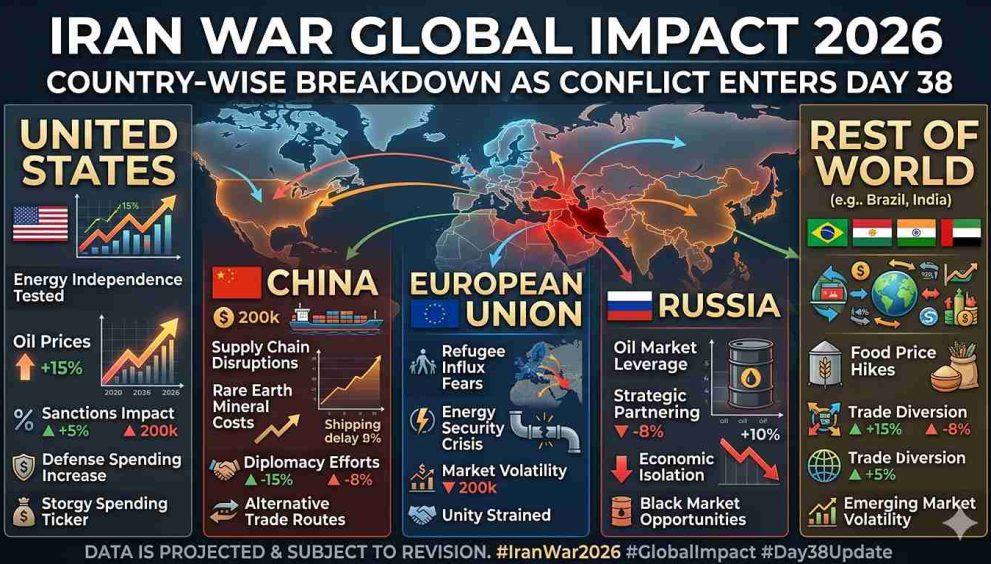
The Iran war, now in its sixth week following US and Israeli strikes that began on February 28, 2026, continues to reshape the global economy. With President Donald Trump issuing a fresh deadline (8:00 PM ET on April 7) for Iran to reopen the Strait of Hormuz — threatening strikes on power plants and bridges otherwise — the disruption of roughly 20% of global oil and LNG shipments has triggered one of the largest energy supply shocks in history.
Oil prices have surged significantly (Brent crude hovering above $110–120 per barrel in recent trading), driving inflation fears, supply chain strains, and growth downgrades worldwide. Here is a clear country-wise and region-wise impact analysis.
United States
The US remains relatively insulated thanks to its status as a major oil and gas producer via shale. However, gasoline prices have climbed past $4 per gallon in many areas, with diesel and jet fuel seeing sharper rises. Higher energy costs are feeding into broader inflation, though domestic production cushions the blow. The successful rescue of the downed F-15E crew members has boosted morale, but prolonged conflict risks market volatility and higher consumer prices. Trump’s aggressive posture prioritizes strategic goals over short-term economic pain.
India
India, which imports nearly 90% of its crude oil with a large share routed through the Strait of Hormuz, faces severe pressure. Rising oil and LPG prices have led to factory shutdowns, rationing of cooking gas, and higher transportation/food costs. The rupee has weakened, inflating import bills and straining household budgets. Remittances from Gulf-based NRIs could slow if regional economies falter. Economists have trimmed India’s growth forecasts, with risks of higher inflation and potential energy shortages persisting.
China
As the world’s largest oil importer and a major buyer of discounted Iranian crude, China has built strategic reserves and diversified sources. It appears more insulated than many Asian peers but still contends with higher energy costs and supply chain disruptions affecting manufacturing. Beijing has criticized the conflict while quietly benefiting from alternative Russian and Iranian supplies at discounted rates. Long-term, prolonged disruption could slow export-driven growth.
Europe (UK, Germany, France, Italy)
Europe is among the hardest hit, evoking painful memories of the 2022 Russia-Ukraine energy crisis. Natural gas prices have risen sharply, with LNG supplies from Qatar disrupted. Energy-intensive industries (chemicals, steel, fertilizers) face surging costs, potential plant closures, and deindustrialization risks. The European Central Bank has delayed rate cuts, with inflation forecasts revised upward and GDP growth downgraded. Countries like Germany and the UK are particularly vulnerable; stagflation risks loom if the Hormuz crisis drags on.
Russia
Russia emerges as one of the clearest winners. Higher global oil prices and relaxed Western rules on certain energy flows have boosted revenues. Sales to India and other markets have increased, potentially adding billions to Moscow’s energy income. This windfall strengthens Russia’s economy and geopolitical position amid the conflict.
Gulf Countries (Saudi Arabia, UAE, Qatar, Kuwait)
Gulf economies, heavily reliant on energy exports, face mixed effects. While higher prices benefit revenues in theory, disrupted shipping through the Strait of Hormuz has reduced export volumes and project delays. Construction, hospitality, and oil sectors employing millions (including many Indian workers) risk slowdowns. Some nations report short-term GDP contraction risks of up to 2%. Safety concerns and possible repatriation add social pressures.
Other Key Regions
- Asia (Japan, South Korea, Southeast Asia): Heavy dependence on Hormuz-routed oil has led to fuel rationing, school closures in some countries (e.g., Pakistan), and inflation spikes. Manufacturing and trade hubs face higher costs for energy and fertilizers, threatening food security.
- Global South & Emerging Markets: Many nations with thin energy buffers (under 30–60 days of reserves) are rationing fuel and bracing for higher living costs. Food price rises from expensive fertilizers compound the pain.
- Winners Overall: Energy exporters like Russia, Canada, and Norway gain from elevated prices. Discounted oil buyers (China, India to some extent) mitigate部分 impacts.
Broader Global Economic Risks
Analysts warn that sustained high oil prices ($100–130+ per barrel) could shave 0.2–0.5 percentage points off global GDP growth while adding 0.7+ points to inflation. A prolonged Hormuz closure risks recessionary pressures, supply chain breakdowns (beyond energy, affecting semiconductors and food), and stagflation. Central banks face tough choices between fighting inflation and supporting growth.
Iran itself suffers massive damage to infrastructure, military capabilities, and economy, with civilian impacts mounting (e.g., recent airstrikes reported near Tehran).
Latest Developments (April 6, 2026)
- Trump extended the Hormuz reopening deadline amid indirect talks (Pakistan mediation ongoing).
- US completed rescue of both F-15E crew members; Iran claims partial successes in retaliation.
- Iran demands compensation for any reopening; missile exchanges continue with Israel.
The situation remains highly fluid. A quick resolution could ease pressures, but escalation around the April 7 deadline could intensify the global energy shock.
Stay tuned to WorldReport.press for continuing coverage of the Iran war’s geopolitical and economic fallout, including daily updates on oil markets, country-specific effects, and international diplomacy.
Last updated: April 6, 2026. Analysis draws from reports by major global outlets, economic think tanks, and official statements.
Which country’s economy do you think will be most affected in the long run by the Iran war? Share your views in the comments. Subscribe to our newsletter for weekly global impact reports and breaking international news alerts.