



Germany Economic Crisis 2026: Jobs, Growth, Reforms

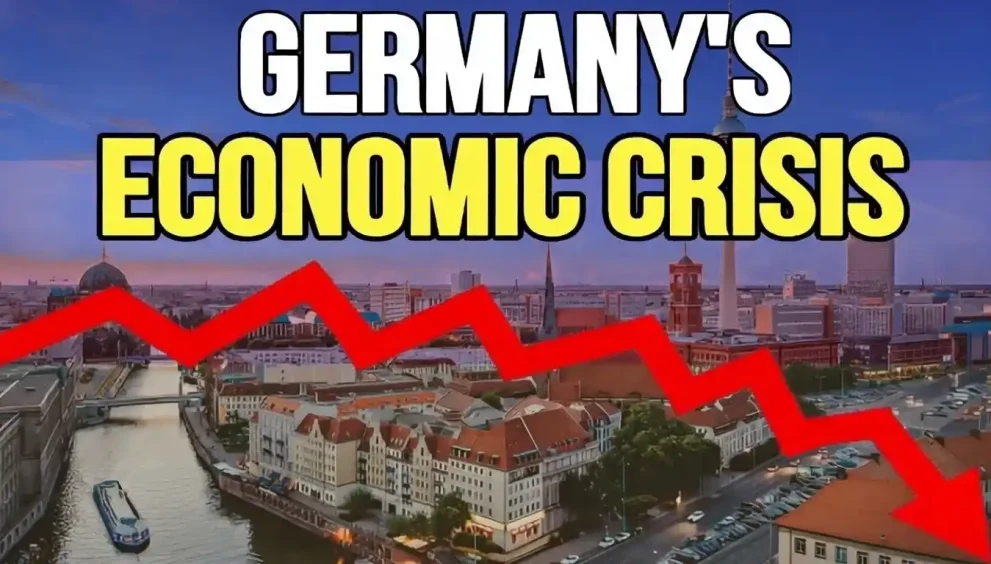
Germany Economic Crisis 2026: Jobs, Growth, Reforms
Germany economic crisis 2026 and related searches such as “Arbeitslosigkeit Deutschland 2026,” “Merz Wirtschaftsreformen,” and “Deutschland BIP Prognose 2026” have surged on Google Trends in the first weeks of February. Following the release of January unemployment figures and the government’s downward revision of growth forecasts, interest in Germany’s economic health has spiked significantly across the country. This reflects widespread concern among businesses, workers, and investors as Europe’s largest economy struggles to emerge from years of near-stagnation.
As of February 10, 2026, Germany confronts a domestic economic crisis characterised by record post-pandemic unemployment and subdued growth projections. Under Chancellor Friedrich Merz’s CDU-SPD coalition government (in office since mid-2025), Berlin is prioritising aggressive reforms aimed at restoring competitiveness. These efforts carry major implications for the broader European Union, where Germany is pushing for faster decision-making and a “two-speed” approach to revitalise the bloc amid global trade tensions and geopolitical uncertainty.
The Hard Numbers: Unemployment Hits 12-Year High
Official data released at the end of January painted a sobering picture. The number of unemployed in Germany rose by 177,000 in January 2026 to 3.08 million—the highest level in 12 years. The unadjusted unemployment rate climbed 0.4 percentage points to 6.6%, while the seasonally adjusted rate held at 6.3%, according to the Federal Employment Agency (Bundesagentur für Arbeit) and Destatis.
This marks a reversal from the tight labour markets of the early 2020s. Year-on-year, unemployment is up by 92,000. Economists point to lagging effects from the 2023–2025 period of recession and minimal growth, compounded by structural issues.
On the growth front, the government on January 28 revised its 2026 GDP forecast downward to 1.0% from the previous 1.3% estimate. The 2027 projection was trimmed to 1.3% from 1.4%. Economy Minister Katherina Reiche (CDU) attributed the caution to slower-than-expected rollout of fiscal measures and heightened global trade uncertainty.
Fourth-quarter 2025 GDP showed a modest 0.3% quarter-on-quarter expansion (better than the 0.2% consensus), offering a glimmer of hope, but annual growth for 2025 remained anaemic at around 0.2–0.3%.
Key Economic Indicators (as of early 2026):
- Unemployment: 3.08 million (6.6% unadjusted)
- 2026 GDP growth forecast: 1.0% (official)
- Industrial orders: Strong December 2025 rise of 7.8% month-on-month, led by large orders in metalwork (+30%), machinery, and defence
- Public debt trajectory: Expected to rise toward 65–67% of GDP by 2027 amid stimulus
Root Causes: A Perfect Storm of Structural and External Pressures
Germany’s economic model—built on export strength, manufacturing excellence (especially automobiles, machinery, and chemicals), and the Mittelstand of small-to-medium enterprises—has faced multiple headwinds since the energy shock following Russia’s 2022 invasion of Ukraine.
High energy prices, though eased, continue to burden energy-intensive industries. The Energiewende (energy transition) has delivered renewable capacity gains but also imposed costs and grid challenges. Deindustrialisation fears persist, with some companies relocating production to lower-cost or more stable energy locations.
Global factors exacerbate the situation: China’s rise as a competitor in traditional German strongholds (autos, machinery), slowing world trade, and potential new US tariffs under the current Trump administration threaten the export engine. Domestic issues include bureaucratic red tape, skills shortages amid demographic ageing, and slow digitalisation in parts of the economy.
Chancellor Merz has described the outlook as “very critical,” warning that without bold reforms, Germany risks prolonged weakness. In speeches, including at the World Economic Forum in Davos, he emphasised the need to reduce dependencies, cut costs (especially energy and taxes), and accelerate innovation.
Merz Government’s Reform Agenda: Fiscal Stimulus and Structural Overhaul
The new coalition has made economic revival its central mission. Key measures include:
- Infrastructure and defence spending boost: A special fund for infrastructure and exemption of defence spending from the debt brake. Plans to raise defence outlays significantly (with some reports citing ambitions toward 5% of GDP in the longer term, though 2%+ NATO commitments are the baseline).
- Tax and regulatory relief: Corporate tax incentives, reduced energy prices for industry, and deregulation to cut bureaucracy.
- Labour market and welfare reforms: Discussions on adjusting Bürgergeld (citizens’ income), part-time work entitlements, and skilling initiatives to address labour shortages.
- Industrial strategy: Focus on strategic sectors—defence, AI, semiconductors, renewables, and critical minerals—to rebuild competitiveness.
Positive signals include rising industrial orders in late 2025, particularly in defence-related areas, and major foreign investments such as Google’s expanded data centre and renewable energy commitments in Germany.
Merz has framed 2026 as a potential “year of new beginnings,” stressing that fiscal stimulus is now flowing and should support consumption and investment.
EU Context: Germany’s Push for a “Two-Speed” Europe and Competitiveness
Germany’s domestic challenges directly influence its EU role. With France heading into elections and other members facing varied pressures, Berlin is advocating for a more pragmatic, efficient Union. Proposals for a “two-speed” or “E6” format (involving leading economies) aim to break decision-making gridlock and accelerate competitiveness measures.
This includes industrial policy, single-market deepening, reduced regulatory burdens, and collective responses to external threats (trade, security, technology). The upcoming Munich Security Conference (February 13–15, 2026) will spotlight these themes, with the Munich Security Report 2026 warning of an era of “wrecking-ball politics” and institutional strain, particularly in transatlantic relations.
Germany’s ability to strengthen its own economy is seen as prerequisite for credible EU leadership on defence, green transition, and economic security.
Expert Insights and Stakeholder Reactions
Analysts offer a nuanced assessment. Goldman Sachs projects 1.1% growth for 2026, citing fiscal expansion and stabilising manufacturing. The European Commission anticipates around 1.2% in its latest forecasts, driven by consumption and public investment, though offset by trade risks.
Critics from opposition parties and some economists argue reforms are not bold enough or risk social cohesion. Business associations (e.g., BDI) welcome deregulation but call for faster implementation. Trade unions express concerns over welfare changes and job security.
Coverage in DW and Spiegel highlights the tension between necessary structural shifts and political realities in a grand coalition. International observers note that Germany’s recovery is crucial for Eurozone stability.
Future Outlook: Cautious Optimism Amid Risks
Short-term (2026): Growth around 1–1.2% is plausible if stimulus takes hold and external shocks are contained. Unemployment may stabilise or decline modestly with improved orders. Key watchpoints: Q1 2026 data, implementation speed of reforms, and outcomes from the Munich Security Conference.
Medium-term risks:
- Escalating US-EU trade tensions (especially autos and steel)
- Energy price volatility
- Slower China demand
- Domestic political friction within the coalition
Opportunities:
- Defence industry expansion creating jobs
- AI and digital transformation
- Renewables leadership (e.g., offshore wind deals like Google-EnBW)
- Repatriation or “friendshoring” of supply chains
For businesses: Sectors tied to defence, infrastructure, green tech, and high-tech manufacturing stand to gain. Exporters must navigate tariff risks through diversification.
For workers and households: Modest wage growth amid inflation control, but potential labour market tightening could improve bargaining power in skilled areas. Expats and immigrants face evolving welfare and integration rules.
For Europe: A stronger Germany bolsters the EU’s geopolitical weight; prolonged weakness could hinder collective ambitions on autonomy and competitiveness.
What This Means for Germany and Beyond
Germany’s 2026 economic story is one of transition: from post-energy-crisis fragility toward renewed strength through pragmatic reforms and higher strategic investment. While the current data signals ongoing pain—particularly in the labour market—the policy response under Chancellor Merz reflects a determination to adapt the German model to 21st-century realities.
Success is far from guaranteed and will depend on execution, coalition unity, and the global environment. As the Munich Security Conference convenes this week, the world will watch whether Europe’s economic anchor can regain its footing and help steer the continent through turbulent times.
The coming months will reveal if 2026 marks the beginning of a credible recovery or an extended period of underperformance. For now, the German government’s message is one of determined action: reforms are underway, and the economy must become the top priority.
For continuing coverage of Germany economic crisis 2026 developments, EU policy shifts, and related global impacts, bookmark World Report Press. Related reading: Our analyses on European defence spending trends and transatlantic relations in 2026.
This report draws on official data from Destatis, Bundesagentur für Arbeit, German government statements, Reuters, DW, AP, and the Munich Security Conference. All forecasts are subject to revision; consult professional sources for financial or policy decisions.
Follow us for more
- Latest tech news
https://worldreport.press/category/tech-news/ - Latest Grok Imagine 2026 update xAI rolls out 10-second videos
https://worldreport.press/tech-news/latest-grok-imagine-2026-update-xai-rolls-out-10-second-videos/ - How AI is reshaping banking in 2026 fewer branches smarter operations
https://worldreport.press/tech-news/how-ai-is-reshaping-banking-in-2026-fewer-branches-smarter-operations/ - Major worldwide news stories recap last week
https://worldreport.press/tech-news/major-worldwide-news-stories-recap-last-week/ - Breaking ChatGPT linked to 9 reported deaths including 5 alleged suicides
https://worldreport.press/tech-news/breaking-chatgpt-linked-to-9-reported-deaths-including-5-alleged-suicides-openai-under-fire-amid-lawsuits-and-musk-altman-clash/