



Hungary Election 2026: Orbán Defeated After 16 Years

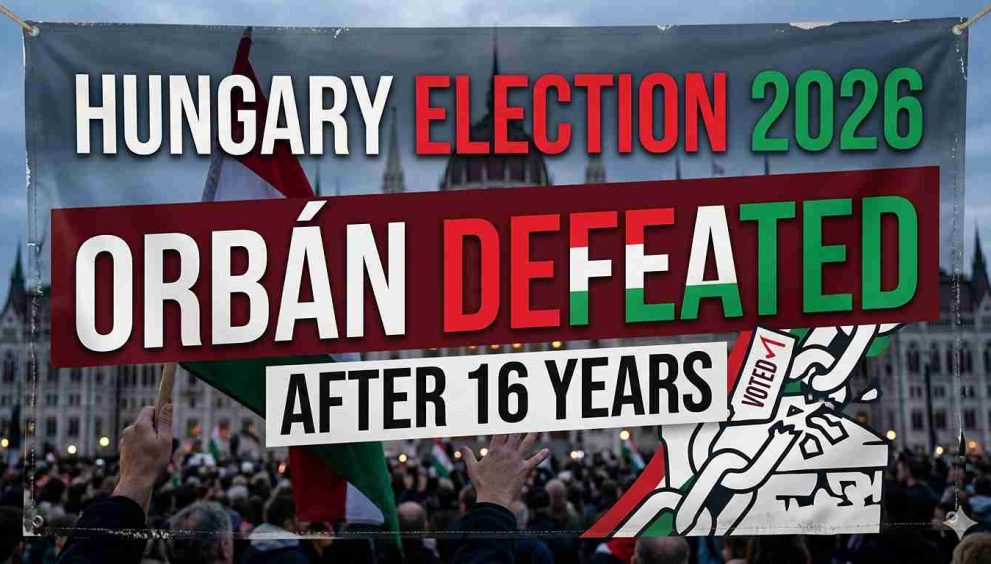
In a historic political shift, Hungary’s long-serving Prime Minister Viktor Orbán conceded defeat on April 12, 2026, after 16 years in power. Opposition leader Péter Magyar and his centre-right Tisza party secured a decisive victory in the parliamentary elections, with projections showing Tisza winning around 138 seats in the 199-seat parliament — enough for a comfortable majority and potentially a two-thirds supermajority needed for constitutional changes.
Record voter turnout of approximately 77.8–79% underscored the high stakes of this election, which many analysts described as a pivotal moment for Hungarian democracy and Europe’s political landscape.
Background: From Orbán’s Dominance to a Dramatic Challenge
Viktor Orbán, often called Europe’s longest-serving current leader before this vote, had won four consecutive elections since 2010. His Fidesz party built a strong nationalist platform emphasizing sovereignty, resistance to EU migration policies, and a cautious stance on the war in Ukraine.
Péter Magyar, a 45-year-old former insider who once worked within Orbán’s orbit, broke away to form the Tisza party (Respect and Freedom). Campaigning on anti-corruption, judicial reforms, better public services, and improved EU relations, Magyar positioned himself as a fresh, centre-right alternative. His rapid rise from relative unknown to frontrunner surprised many observers.
Pre-election polls consistently showed Tisza leading Fidesz by 7–15 percentage points. High turnout ultimately favoured the opposition.
Election Results and Immediate Reactions
With nearly all ballots counted:
- Tisza Party (Péter Magyar): Projected ~53–55% of the vote, winning ~138 seats.
- Fidesz (Viktor Orbán): ~37–38%, projected ~49–55 seats.
- Smaller parties, including the far-right Our Homeland (Mi Hazánk), secured a handful of seats.
Orbán addressed supporters in Budapest, describing the result as “painful but unambiguous.” He congratulated Magyar and stated that Fidesz would now serve the nation from the opposition benches.
Magyar declared victory, telling crowds that “Hungary has chosen Europe” and promising a “change of regime” focused on transparency, rule of law, and unlocking frozen EU funds.
European Commission President Ursula von der Leyen welcomed the outcome, saying “Hungary has chosen Europe. Europe has always chosen Hungary.”
What This Means for Europe
The defeat of Viktor Orbán — a vocal critic of EU centralization and a frequent blocker of unified EU positions — carries significant implications:
- EU Unity and Decision-Making: Hungary under Orbán repeatedly used its veto power to delay or block EU initiatives, particularly on sanctions against Russia and financial support for Ukraine. A Tisza-led government is expected to adopt a more constructive approach, potentially allowing faster EU decision-making on foreign policy and releasing billions in withheld EU recovery funds for Hungary.
- Support for Ukraine: Orbán’s government maintained relatively warm ties with Moscow and resisted stronger EU backing for Kyiv. Magyar’s victory could strengthen Europe’s unified stance on the Russia-Ukraine war and open the door for previously blocked aid packages worth around €90 billion.
- Rule of Law and Democratic Standards: Critics of Orbán accused his administration of eroding judicial independence and media pluralism. Magyar has pledged reforms to reverse what the European Parliament once called a “hybrid regime of electoral autocracy.” A supermajority would allow constitutional changes to strengthen checks and balances.
- Transatlantic and Global Ripple Effects: Orbán was a close ally of U.S. President Donald Trump and received public support from Vice President JD Vance during the campaign. His loss represents a setback for the populist right in Europe. It may also weaken Russia’s influence within the EU, where Hungary served as one of Moscow’s few reliable partners.
- Broader Political Trends: The result signals that even entrenched incumbents can be ousted when voters prioritize domestic issues like corruption, healthcare, and economic governance over nationalist rhetoric. It could inspire opposition movements in other European countries facing populist governments.
Challenges Ahead for Péter Magyar
Despite the strong mandate, governing will not be easy. Magyar must deliver on promises of reform while managing a polarized society. Economic challenges, including inflation and EU fund negotiations, will test the new administration. Fidesz remains a formidable opposition with deep roots in Hungarian institutions.
Analysts note that a smooth transition of power will be crucial for maintaining stability in Central Europe.
World Report Press will continue to monitor post-election developments in Hungary, including government formation, EU relations, and the broader impact on European politics and security.