



Tesla Cybercab Robotaxi Production Begins April 2026

Tesla Cybercab Robotaxi Production Begins April 2026
Ten years ago, Elon Musk stood before an audience and predicted that cars would one day operate without steering wheels. The room burst into laughter.
Today, that prediction is no longer a punchline. Elon Musk posted directly on X: “Cybercab, which has no pedals or steering wheel, starts production in April.”
This marks the third time in recent months Musk has pinned the exact month—April 2026—for the start of production of Tesla’s groundbreaking Cybercab robotaxi. What began as skepticism a decade ago is now hurtling toward factory floors at Gigafactory Texas.
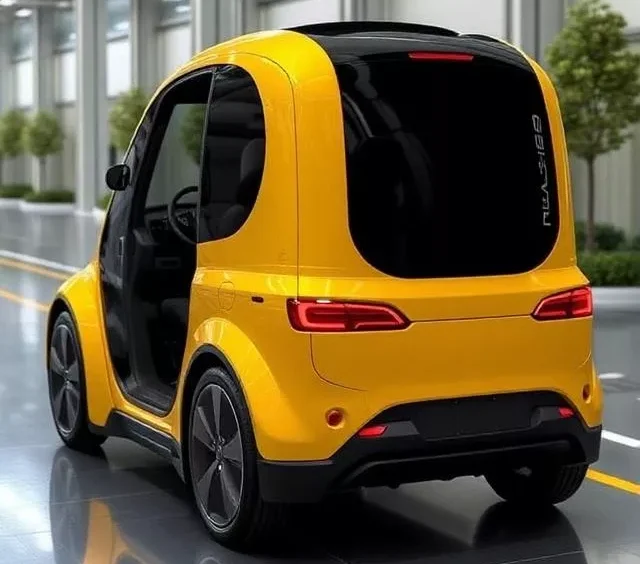
The Tesla Cybercab is purpose-built for full autonomy from the ground up: a compact, two-seat pod with zero manual controls. No steering wheel. No pedals. No human override. It depends entirely on Tesla’s advanced Full Self-Driving AI, refined through billions of real-world miles and the latest hardware suite.
Its sleek, aerodynamic pod-like form optimizes efficiency and creates a surprisingly roomy cabin for two passengers. The iconic upward-swinging butterfly doors open with minimal side space required—making it practical for crowded streets in megacities from Tokyo to São Paulo, London to Dubai, Shanghai to Mexico City. Inside, the experience is minimalist and intuitive: comfortable seats, a large central touchscreen for setting destinations, adjusting climate, or enjoying entertainment—leaving riders free to relax, work, or simply enjoy the ride.
Why this matters to people worldwide:
- Dramatically lower mobility costs — Targeted ownership price under $30,000, with projected operating costs around $0.20 per mile (energy, maintenance, insurance, depreciation included). In many urban areas globally, this could make premium, on-demand autonomous rides cheaper than car ownership, fuel, parking, or traditional ride-hailing services.
- Passive income opportunity — Owners anywhere can add their Cybercab to Tesla’s robotaxi network, allowing the vehicle to generate revenue autonomously—whether the owner is in Berlin, Sydney, Cape Town, or Seoul. This transforms a traditional depreciating asset into a potential income stream in the sharing economy.
- Wireless inductive charging — No cables or plugs needed. Simply park over a charging pad for automatic top-ups—ideal for 24/7 fleet operations in dense cities across continents.
- High efficiency, compact battery — Approximately 35 kWh pack delivering roughly 200 miles of range with top-tier energy efficiency, keeping per-mile costs low even in high-traffic environments.
- Safety ambition on a global scale — Tesla aims for 10–20 times fewer incidents per mile than human drivers once the system matures, addressing road safety concerns in regions with varying traffic conditions and regulations.
Production launches in April 2026 at Giga Texas. Musk has been transparent: because the Cybercab is an entirely new vehicle with a radical redesign of manufacturing processes, the early ramp will be “agonizingly slow.” The goal, however, is transformative—targeting roughly 5x higher production rates long-term, potentially reaching one vehicle every 10 seconds at peak across multiple factories worldwide.
Regulatory approval for Level 5 autonomy (no manual controls) remains a key challenge in markets everywhere, from the US and Europe to Asia and beyond. Yet Tesla’s winter testing, design iterations, and new permits in Austin demonstrate relentless forward momentum.
From bustling Asian metropolises to sprawling European capitals, congested Latin American cities to emerging African hubs, the Cybercab promises to reshape urban mobility: point-to-point premium rides summoned instantly, delivered quietly and efficiently, at costs that could democratize access to personal transportation like never before.
What laughed-off vision from a decade ago is now poised to become a global reality?
The steering wheel may soon join the horse and carriage as a symbol of a bygone era.
Follow the latest on Tesla, autonomous vehicles, electric mobility, and worldwide innovation at www.worldreport.press — delivering global news that shapes tomorrow, today.
Follow us for more
- Latest tech news
https://worldreport.press/category/tech-news/ - Latest Grok Imagine 2026 update xAI rolls out 10-second videos
https://worldreport.press/tech-news/latest-grok-imagine-2026-update-xai-rolls-out-10-second-videos/ - How AI is reshaping banking in 2026 fewer branches smarter operations
https://worldreport.press/tech-news/how-ai-is-reshaping-banking-in-2026-fewer-branches-smarter-operations/ - Major worldwide news stories recap last week
https://worldreport.press/tech-news/major-worldwide-news-stories-recap-last-week/ - Breaking ChatGPT linked to 9 reported deaths including 5 alleged suicides
https://worldreport.press/tech-news/breaking-chatgpt-linked-to-9-reported-deaths-including-5-alleged-suicides-openai-under-fire-amid-lawsuits-and-musk-altman-clash/

