


India 2026: Economic Boom Amid Political Tensions

India 2026: Economic Boom Amid Political Tensions
As February 2026 unfolds, India stands at the forefront of global economic narratives—projected as the fastest-growing major economy amid a fractious world order. With the Union Budget 2026 freshly presented and the India AI Impact Summit drawing international leaders to New Delhi, the nation is aggressively positioning itself in semiconductors, AI, defense, and critical minerals. Yet, this momentum collides with persistent geopolitical risks: US trade uncertainties under President Trump (mitigated by a recent interim deal), lingering China border frictions along the Line of Actual Control (LAC), and broader multipolar strains from Ukraine, Iran, and supply chain realignments.
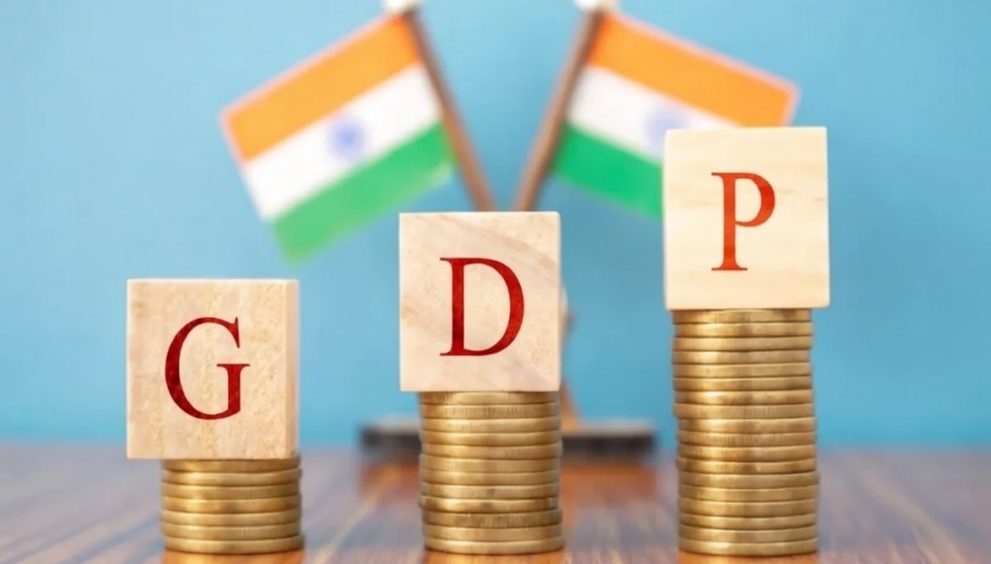
India’s Economic Survey and government forecasts paint an optimistic picture: GDP growth for FY2026-27 (April 2026-March 2027) at 6.8-7.2%, building on an estimated 7.4% for the current fiscal year. The IMF upgraded its FY2025-26 forecast to 7.3% (from 6.6%), citing strong momentum, though it predicts moderation to 6.4% in subsequent years as cyclical factors fade. The World Bank aligns closely at around 6.5-7.2% for near-term projections. Domestic consumption, infrastructure spending, and services (including IT exports) drive this resilience, even as global volatility—Trump-era tariffs, energy shocks, and weak exports—looms.
Economic Strengths: Domestic Demand and Strategic Push
India’s growth is increasingly structural, not transitory. Key drivers include:
- Robust Internal Engine: Strong private consumption, rural income gains from tax cuts/higher MSPs, and government capex (infrastructure, defense) sustain momentum. Manufacturing’s GDP share, though low at ~13-14%, shows recovery signs via targeted incentives.
- Budget 2026 Priorities: Finance Minister Nirmala Sitharaman emphasized self-reliance amid global disruptions—Rs 40,000 crore for Semiconductor Mission 2.0, rare earth corridors in four states, nuclear energy reforms, maritime logistics, and defense modernization (Rs 7.8 lakh crore allocation). These counter supply chain fractures and position India in strategic sectors.
- Tech & AI Leadership: Hosting the AI Impact Summit (February 16-20, 2026) at Bharat Mandapam—inaugurated by PM Modi—signals ambition. Minister Ashwini Vaishnaw highlighted $200 billion in expected AI investments over two years, with themes of applied AI, social equity, and global governance. Over 250,000 attendees, 20 national leaders, and 45 ministerial delegations underscore India’s convening power in the Global South.
- Trade Diplomacy Wins: Recent deals (EU FTA January 2026, UK earlier, interim US framework February 2026) cover markets worth trillions. The US deal slashes tariffs from 50% to 18% (removing punitive duties tied to Russian oil imports), with India committing to $500 billion in US goods purchases over five years (energy, tech, aviation). This eases export pain but draws domestic criticism over farmer impacts and sovereignty.
India’s nominal GDP projection for 2026 nears $4.51 trillion (IMF), ranking it fourth globally—behind US, China, Germany—bolstering its G20/BRICS influence.
Geopolitical Challenges: Borders, Trade, and Multipolarity
Despite economic gains, external pressures test resilience:
- China Border Dynamics: The LAC in Ladakh remains tense despite the October 2024 patrolling agreement easing Depsang/Demchok frictions. Both sides accelerate infrastructure—India’s Daulat Beg Oldi road upgrades vs. China’s heavy troop presence and builds. CDS General Anil Chauhan recently traced disputes to 1954 Panchsheel (Tibet recognition), underscoring unresolved claims. While no major clashes since 2020 Galwan, buffer zones limit patrols asymmetrically, per critics.
- US Relations Under Trump: The interim trade framework (February 2026) marks a pragmatic reset after tariff threats (linked to Russia-Ukraine stance). Yet, analysts note caution—deportations, military-plane removals, and strained warmth signal limits. Broader ties strengthen via Quad, defense, but multipolar realignments (India-Middle East-Europe Corridor) reflect diversification.
- Global Risks: Economic Survey outlines three 2026 scenarios—managed disorder, multipolar tension, systemic shocks—India better equipped via buffers. Weak global value chain integration and export vulnerability persist; IMF flags tariff headwinds.
Human rights/press freedom concerns (e.g., journalist safety, online curbs) draw scrutiny amid growth narrative.
Global Implications and Outlook
India’s rise reshapes multipolarity: middle-power leverage in trade blocs, supply chain shifts (China+1), AI governance. Success in semiconductors/AI could boost manufacturing to 25% GDP target; failures risk inequality widening.
Experts like Chatham House’s Chietigj Bajpaee note cautious US engagement; ORF analysts see opportunity in FTAs. India must sprint (reforms) and marathon (resilience) simultaneously.
As PM Modi stated on Budget 2026: It reflects “yearning to become a developed nation.” With AI summits, trade pivots, and border vigilance, 2026 tests whether India can convert boom into enduring power.
Sreekanth
World Report Contributor
Follow us for more
- Latest tech news
https://worldreport.press/category/tech-news/ - Latest Grok Imagine 2026 update xAI rolls out 10-second videos
https://worldreport.press/tech-news/latest-grok-imagine-2026-update-xai-rolls-out-10-second-videos/ - How AI is reshaping banking in 2026 fewer branches smarter operations
https://worldreport.press/tech-news/how-ai-is-reshaping-banking-in-2026-fewer-branches-smarter-operations/ - Major worldwide news stories recap last week
https://worldreport.press/tech-news/major-worldwide-news-stories-recap-last-week/ - Breaking ChatGPT linked to 9 reported deaths including 5 alleged suicides
https://worldreport.press/tech-news/breaking-chatgpt-linked-to-9-reported-deaths-including-5-alleged-suicides-openai-under-fire-amid-lawsuits-and-musk-altman-clash/