


India Navigates Global Storm: April 2026 – Hormuz Crisis Tests Energy Security as Historic Census Begins

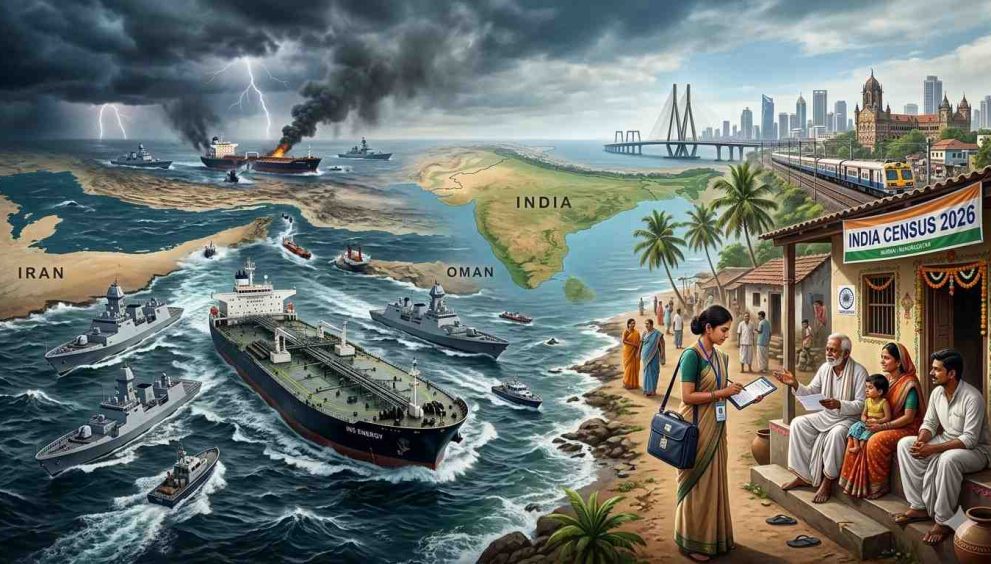
As April 2026 dawned across the Indian subcontinent, India found itself walking a delicate diplomatic and economic tightrope amid the escalating US-Iran war. The conflict’s ripple effects through the Strait of Hormuz have disrupted critical energy imports, pushed oil prices higher, and forced New Delhi to balance strategic autonomy with urgent economic safeguards. At the same time, the world’s largest democracy quietly launched one of its most ambitious administrative exercises in decades, while Prime Minister Narendra Modi reiterated a reform-driven vision for long-term growth.
This week underscored India’s dual reality: a rising global power vulnerable to distant conflicts yet determined to protect its energy lifeline and developmental momentum.
The Strait of Hormuz Crisis: Iran Reassures “Indian Friends” Amid Disruptions
The ongoing military campaign in Iran has severely restricted traffic through the Strait of Hormuz, the narrow chokepoint carrying roughly one-fifth of global oil and LNG supplies. For India — which imports nearly 85% of its crude oil, with a significant portion routed through this waterway — the blockade has raised alarms over supply security, freight costs, and inflation.
Iran moved quickly to reassure New Delhi. On April 2-3, the Iranian Embassy in India posted messages on X stating that “our Indian friends are in safe hands, no worries” and emphasizing that only Iran and Oman would decide the strait’s future. Several Indian-flagged vessels have reportedly transited safely, with Iran granting limited exemptions to “friendly nations” including India.
India has taken a measured yet firm stance. Foreign Secretary Vikram Misri participated in UK-led virtual talks involving over 60 countries to explore ways of restoring unimpeded navigation. New Delhi has publicly criticized Iranian attacks on commercial shipping as “unacceptable” while stressing the importance of freedom of navigation in international waterways. Defence Minister Rajnath Singh assured that the Indian Navy stands ready to escort Indian vessels if needed.
Despite these assurances, disruptions have been felt. India is among the few nations to have lost mariners in attacks on merchant vessels in the Gulf during the current conflict. The government has cut central excise duties on petrol and diesel by ₹10 per litre to cushion domestic consumers, while jet fuel (ATF) prices in Delhi more than doubled to record highs around ₹2.07 lakh per kilolitre. Commercial LPG cylinder prices also rose sharply. Economists warn of potential slower GDP growth and wider fiscal deficits if oil prices remain elevated, with some estimates projecting a fiscal hit of up to ₹2 lakh crore.
Prime Minister Modi has maintained direct communication channels with Iranian leadership, prioritizing the safety of Indian nationals and unhindered energy transit. Opposition voices, including Rahul Gandhi, have questioned the government’s energy policy and alleged over-reliance on US approvals for oil purchases, keeping the issue politically charged.
Historic Digital Census 2026: Counting 1.4 Billion Citizens Begins
In a landmark development, India commenced its first fully digital population census on April 1, 2026 — the first comprehensive headcount in over 15 years. The exercise, spanning two phases until September 2026, will capture detailed demographic, socio-economic, and housing data for an estimated population exceeding 1.4 billion.
Conducted digitally for the first time, the census aims for greater accuracy and efficiency through mobile apps and biometric integration. Officials have described it as the world’s largest administrative operation, with potential implications for resource allocation, electoral delimitation, and policy planning. Some critics have raised concerns about data privacy and possible political misuse in sensitive regions such as Assam.
The launch coincided with Good Friday observances on April 3, adding a reflective tone to the start of the exercise.
Domestic Politics and Economic Reforms: Modi Outlines Growth Roadmap
Prime Minister Narendra Modi used interviews and public addresses this week to project confidence in India’s trajectory. He described the nation as “riding the Reform Express,” highlighting record capital expenditure of ₹12.2 lakh crore in the Union Budget 2026-27 focused on infrastructure, manufacturing, railways, highways, and ports.
Modi emphasized women-led development, defence modernisation, and deeper global trade integration as pillars for achieving developed-nation status by 2047. The government continues to project GDP growth in the 6.8–7.2% range for the coming year, though external shocks from the Middle East have introduced downside risks.
In security developments, 44 Maoists surrendered in Chhattisgarh’s Bastar region on March 31, with the state government declaring the area Maoist-free — a significant milestone in India’s long-running counter-insurgency efforts.
Defence ties with the United States also advanced, with the 18th Defence Policy Group meeting in New Delhi discussing expanded cooperation, including potential additional P-8I anti-submarine aircraft.
Broader Impacts and Outlook
The Iran conflict has compounded global headwinds for India, including higher shipping insurance premiums, supply-chain strains, and pressure on the rupee. Yet New Delhi has demonstrated pragmatic diplomacy — engaging both Iran for safe passage and Western partners for collective solutions — while shielding consumers through targeted fiscal measures.
As the US signals the Iran campaign could conclude in the coming weeks, India’s focus remains on diversifying energy sources, accelerating domestic LNG and renewable capacity, and safeguarding economic stability. The ongoing census will provide fresh data to recalibrate welfare and development schemes in this challenging environment.
For the international community, India’s experience highlights the far-reaching consequences of Middle East instability on major Asian economies and the delicate balancing act required to protect strategic interests without being drawn into distant conflicts.