



The Greenland Deal Trump 2026: Framework Reached at Davos Amid Tariff Retreat

The Greenland Deal Trump 2026: Framework Reached at Davos Amid Tariff Retreat
Introduction
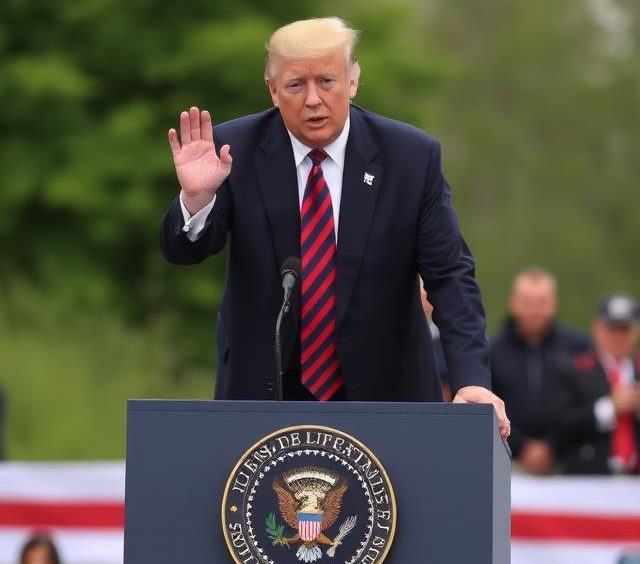
In a dramatic turn at the World Economic Forum in Davos, Switzerland, on January 21, 2026, U.S. President Donald Trump announced a breakthrough in long-standing tensions over Greenland. Hours after delivering a special address where he ruled out military force to acquire the vast Arctic island, Trump posted on Truth Social that following a “very productive meeting” with NATO Secretary General Mark Rutte, the two had “formed the framework of a future deal with respect to Greenland and, in fact, the entire Arctic Region.”
The announcement came as Trump walked back earlier threats to impose tariffs on several European NATO allies starting February 1, citing opposition to U.S. ambitions for greater control over Greenland. “Based upon this understanding, I will not be imposing the Tariffs that were scheduled to go into effect on February 1st,” Trump wrote, framing the development as a win for American national security without coercion.
This shift marks a significant de-escalation in what had threatened to become one of the most severe strains on transatlantic relations in recent memory. Trump’s renewed interest in Greenland—first prominently raised during his previous term—stems from its strategic location, vast mineral resources, and role in countering Russian and Chinese influence in the Arctic. The framework, while light on specifics, appears to build on existing U.S.-Danish defense agreements, potentially expanding military access, restricting adversarial mining, and enhancing NATO’s Arctic posture.
As an international journalist with over 15 years covering global security and Arctic affairs for outlets including major wires and think tank publications, this development echoes past sovereignty disputes in the region, where strategic imperatives often clash with territorial integrity. The deal, if finalized, could reinforce NATO unity in the High North while addressing U.S. concerns over great-power competition—yet it risks highlighting divisions within the alliance over burden-sharing and sovereignty.
Background on Trump’s Longstanding Interest in Greenland
Trump’s fascination with Greenland dates back to 2019, when he publicly floated purchasing the island from Denmark, citing national security and economic benefits. Though dismissed at the time by Danish leaders as absurd, the idea resurfaced in his second term amid melting ice exposing rare earth minerals critical for technology and defense.
Greenland, an autonomous territory within the Kingdom of Denmark, holds immense geopolitical value: It hosts the U.S. Pituffik Space Base (formerly Thule Air Base) under a 1951 defense agreement, providing early warning and surveillance in the Arctic. With climate change accelerating access to resources and shipping routes, the island has drawn attention from China and Russia, prompting U.S. officials to prioritize preventing adversarial footholds.
Key Recent Events Leading to the Davos Framework
The latest chapter unfolded rapidly in January 2026. Trump escalated pressure by threatening tariffs on European exports if allies resisted U.S. demands for expanded influence over Greenland. He also referenced historical U.S. protection during World War II, inaccurately suggesting the territory had been “given back” to Denmark.
In his Davos speech, Trump doubled down on the need for U.S. involvement but explicitly stated he would not use force: “I won’t use force for Greenland.” He called for immediate negotiations, emphasizing only the U.S. could safeguard the island against external threats.
Later that day, after meeting Rutte on the sidelines, Trump declared the framework agreement. Details remain sparse, but reports indicate discussions involve updating the 1951 pact for broader U.S. military access—potentially including sovereign pockets for bases—and joint restrictions on non-NATO mining of rare earths.
Danish Prime Minister Mette Frederiksen welcomed constructive dialogue on Arctic security, including Trump’s “Golden Dome” missile defense concept, while stressing sovereignty as non-negotiable.
Expert Analysis and Perspectives from Credible Sources
Analysts view the framework as a pragmatic compromise. According to the Council on Foreign Relations (CFR), the deal represents a “de-escalation without details,” potentially involving enhanced NATO Arctic missions and updated basing rights.
The New York Times reported proposals for U.S. sovereignty over select areas for bases, while blocking Russia and China from mineral access.
Reuters cited Trump claiming “total and permanent” U.S. access, with Rutte urging allies to bolster Arctic commitments.
Al Jazeera highlighted Greenland’s insistence on sovereignty as a “red line”.
The BBC noted limited public details, with options like expanded U.S. basing under Danish sovereignty.
Geopolitical and Security Impacts
The framework could strengthen NATO’s deterrence in the Arctic, where Russia maintains a strong military presence and China seeks mineral investments. It addresses U.S. concerns over supply chains for critical minerals while avoiding outright acquisition that could fracture the alliance.
However, it may strain relations if perceived as U.S. overreach. European allies worry about tariff coercion setting precedents.
Differing Perspectives
From the U.S. view, the deal secures strategic advantages without force, benefiting alliance security.
Denmark and Greenland emphasize sovereignty remains intact; Prime Minister Frederiksen and Greenland’s leaders reject any compromise on territorial integrity.
European concerns focus on alliance cohesion, with some seeing relief in the tariff withdrawal but caution over future pressures.
Key Takeaways
- Trump announced a Greenland framework with NATO at Davos 2026, dropping tariff threats and force options.
- The deal likely updates 1951 U.S.-Denmark basing rights, expands Arctic security, and restricts adversarial mineral access.
- Sovereignty remains a red line for Denmark and Greenland.
- It de-escalates transatlantic tensions but leaves details for further talks.
- Implications include stronger NATO High North posture amid Russia-China competition.
FAQ
What is the Greenland framework deal announced in 2026? President Trump and NATO’s Mark Rutte agreed on a framework for future cooperation on Greenland and the Arctic, focusing on security, military access, and minerals without full U.S. ownership.
Why did Trump drop tariff threats on Europe? The tariffs, set for February 1 against resistant allies, were canceled after the framework was reached, as Trump cited progress on U.S. security goals.
Does the deal involve U.S. sovereignty over Greenland? No full sovereignty transfer; proposals suggest expanded basing rights or limited sovereign areas for U.S. forces, while Denmark retains overall control.
How do Denmark and Greenland respond? Both insist sovereignty is non-negotiable, welcoming dialogue on Arctic security but rejecting territorial concessions.
What role does NATO play? The alliance facilitates talks to enhance collective defense in the Arctic, potentially involving broader High North commitments.
Could this affect U.S.-China-Russia dynamics in the Arctic? Yes, by restricting non-NATO access to minerals and boosting defenses, it aims to counter potential footholds by adversaries.
Conclusion
The Greenland framework announced at Davos 2026 represents a negotiated path forward from confrontation to cooperation on Arctic security. While details await finalization through U.S., Danish, Greenlandic, and NATO channels, the de-escalation preserves alliance unity at a time of heightened geopolitical competition. Ongoing talks will determine whether this becomes a durable enhancement to transatlantic defense in the High North or requires further adjustments to balance interests.
Follow us for more
- Latest tech news
https://worldreport.press/category/tech-news/ - Latest Grok Imagine 2026 update xAI rolls out 10-second videos
https://worldreport.press/tech-news/latest-grok-imagine-2026-update-xai-rolls-out-10-second-videos/ - How AI is reshaping banking in 2026 fewer branches smarter operations
https://worldreport.press/tech-news/how-ai-is-reshaping-banking-in-2026-fewer-branches-smarter-operations/ - Major worldwide news stories recap last week
https://worldreport.press/tech-news/major-worldwide-news-stories-recap-last-week/ - Breaking ChatGPT linked to 9 reported deaths including 5 alleged suicides
https://worldreport.press/tech-news/breaking-chatgpt-linked-to-9-reported-deaths-including-5-alleged-suicides-openai-under-fire-amid-lawsuits-and-musk-altman-clash/