


Trump’s “Global Healer” Claim Sparks Reactions

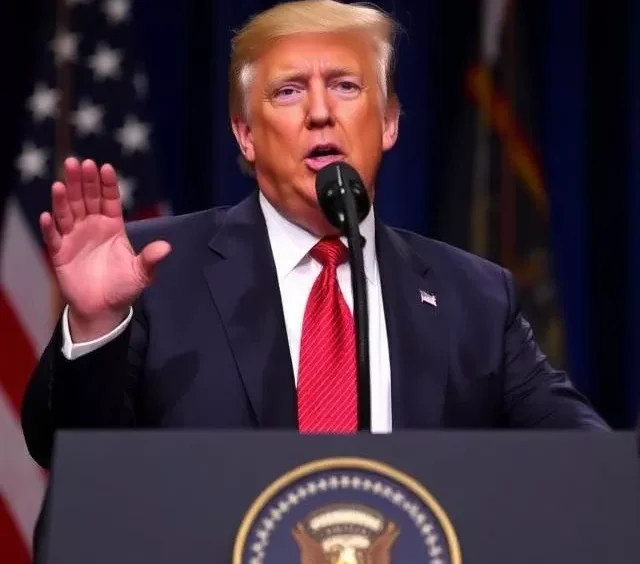
Late Sunday night, April 12, 2026, President Trump posted a lengthy Truth Social message sharply criticising Pope Leo XIV over the pontiff’s criticism of U.S. military actions in the Middle East. Hours later, he shared an AI-generated image showing Trump in flowing white-and-red biblical robes, laying hands on a sick man in a hospital bed with glowing light emanating from his fingers — a clear visual echo of Jesus performing miracles. Onlookers in the image included a soldier, a nurse, a praying woman, and a bearded man in a baseball cap.
The post exploded across global platforms within minutes. It was translated into Spanish, Arabic, Hindi, Mandarin, and French within hours. By Monday morning, Trump had deleted the image. Asked about it by reporters, he replied: “I thought it was me as a doctor… I do make people better.” He stood by his criticism of the Pope and offered no apology.
Vice President JD Vance defended the President on U.S. television, telling the Pope to “stay out of American affairs.”
The image — and the deletion — became instant global meme fodder, with newspapers from The Guardian (UK) to El País (Spain) and Al Jazeera running front-page coverage.
Pope Leo XIV’s “Hands Full of Blood” Rebuke: A Message Heard Around the World
Pope Leo XIV (born Robert Francis Prevost in Chicago) has positioned himself as a global voice for peace since his election. In late March 2026, during Palm Sunday Mass, he quoted Isaiah 1:15: “Even though you make many prayers, I will not listen: your hands are full of blood.” He declared that God does not hear the prayers of warmakers and rejected violence as a solution to international disputes.
Though not naming any leader directly, the remarks were widely understood as criticism of the Trump administration’s “maximum pressure” policy toward Iran, including the naval blockade that began on April 13. Pope Leo has repeatedly called for dialogue, an end to “absurd and inhuman violence,” and a return to negotiations.
On April 14, speaking aboard a flight to Algiers for a 10-day pastoral visit to Africa, Pope Leo responded indirectly but firmly: “I have no fear” of the Trump administration and vowed to continue speaking out for peace “based on the Gospel, not politics.”
The timing — just days after Easter — gave the exchange powerful symbolic weight across Christian-majority nations and beyond.
Worldwide Reactions: Continent-by-Continent Breakdown
Europe: Catholic-heavy countries like Italy, Spain, Poland, and Ireland have seen the strongest backlash. The Italian newspaper Corriere della Sera called Trump’s post “unprecedented disrespect toward the Holy See.” French President Emmanuel Macron’s office expressed “deep concern” over the mixing of religion and state power. In Germany and the UK, Protestant leaders have been more divided, with some evangelical groups quietly supporting Trump’s strong stance on Iran.
Latin America: Home to the world’s largest Catholic population, the region is watching closely. Brazil’s President and Mexico’s bishops issued statements urging “mutual respect between world leaders and the Church.” Street protests in Bogotá and Lima have included banners reading “Hands Full of Blood — No More Wars.” Many Latin American Catholics feel a personal connection because Pope Leo’s American identity makes the clash feel closer to home.
Asia: In the Philippines (the world’s third-largest Catholic nation), parishes held special prayer vigils. Indian Christian communities in Kerala and Goa have been divided, with some supporting the Pope’s peace message while others worry it could strain India-U.S. ties. In China and Vietnam, state media used the story to highlight “Western religious-political conflicts,” while Catholic underground churches circulated Pope Leo’s words quietly.
Middle East & Muslim World: Leaders in Saudi Arabia, the UAE, and Jordan have welcomed any pressure on Iran but expressed unease at the religious tone of the feud. Al Jazeera and Arab News ran in-depth analyses noting how the clash could complicate U.S. diplomacy in the Gulf. Iranian state television amplified the story, framing Pope Leo as a “voice of reason” against American aggression.
Africa: As Pope Leo begins his Africa trip, local bishops in Nigeria, Kenya, and the Democratic Republic of Congo have praised his courage. Many African Catholics see parallels between Middle East conflicts and local struggles for peace.
Oceania & Beyond: Australian and New Zealand media have covered the story as a sign of deepening global polarisation, while Pacific Island nations — many with strong Catholic communities — have used it in sermons about climate justice and peace.
Global Evangelical & Non-Christian Views: Evangelical communities in the U.S., Brazil, South Korea, and parts of sub-Saharan Africa have largely rallied behind Trump, viewing his Iran policy as protective of Christian interests and energy security. Hindu, Buddhist, and Jewish organisations worldwide have called for calm, warning that religion-fuelled political attacks risk inflaming interfaith tensions.
Why This Feud Is Igniting a Truly Global Culture War
- First American Pope vs. American President: The unique dynamic of two prominent Americans on opposite sides of a global stage has made the story intensely personal for Catholics everywhere.
- Iran Blockade as the Real Flashpoint: Pope Leo’s peace advocacy directly challenges U.S. strategy in the Strait of Hormuz — a chokepoint for 20% of global oil. Higher energy prices are already being felt from Europe to Asia, linking the religious feud to everyday economic pain.
- Social Media & AI Amplification: The AI image’s virality crossed every border instantly, turning a U.S. domestic post into a planetary debate.
- 2026 Geopolitical Ripple Effects: With midterm elections looming in the U.S. and fragile alliances in the Middle East, the clash could influence everything from NATO unity to India-China-Russia positioning on energy security.
- Faith vs. Nationalism: The story has become a proxy battle for larger questions: Should religious leaders speak on war and peace? Where does national loyalty end and universal moral authority begin?
Vatican experts describe this as the most significant White House-Holy See tension since the 1980s, but with far greater global reach because of digital media and Pope Leo’s American roots.
Full Timeline of the Trump-Pope Leo XIV Feud (April 2026)
- Late March: Pope Leo delivers “hands full of blood” homily amid rising Iran tensions — reported widely in global media.
- April 12: Trump posts strong Truth Social criticism of Pope Leo.
- April 12–13 (late night): AI “Jesus” healing image shared — goes viral worldwide.
- April 13 morning: Image deleted; Trump explains it as “me as a doctor.”
- April 14: Pope Leo responds from Africa-bound flight: “I have no fear.”
- April 14–15: JD Vance defends Trump; Catholic bishops on five continents issue statements; international media coverage intensifies.
What This Global Feud Means for You — Wherever You Are
- For People of Faith: Dinner tables, mosques, temples, and churches from Lagos to Lima are discussing the moral responsibility of leaders in wartime.
- For Oil-Importing Nations: Higher energy prices linked to the Iran blockade could raise living costs in Europe, Asia, and Africa.
- For Diplomats & Governments: The feud complicates U.S. alliances and gives rival powers (China, Russia) new talking points about American “religious politics.”
- For Everyday Global Citizens: It highlights how quickly domestic U.S. drama can affect international stability, energy markets, and interfaith relations.
At worldreport we continue to track every development from the Vatican, White House, and capitals around the world. New statements could emerge at any moment.
What is your view from your part of the world? Is Pope Leo right to speak out for peace, or should religious leaders stay out of geopolitics? Share your perspective in the comments — we feature global reader voices in follow-up coverage.
Share this article with friends across continents. For more worldwide coverage:
- Live Iran Blockade & Global Oil Impact Tracker
- Vatican Diplomacy 2026: Full Updates
- International Reactions to U.S. Politics
Thank you for reading WorldReport.Press — unbiased, borderless news for a connected world.