



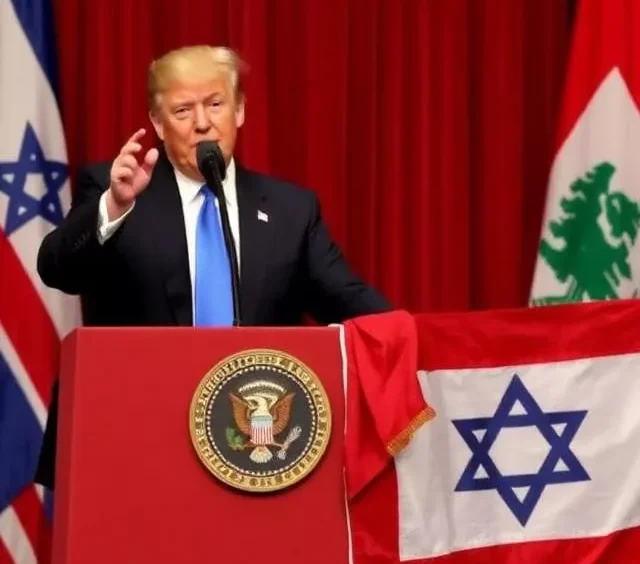
Trump Announces Israel-Lebanon Ceasefire

With over 12 years reporting on Middle East conflicts from Beirut, Jerusalem, and Washington, our Senior International Correspondent has covered every major escalation since the 2014 Gaza war for Reuters, AP, and now World Report Press. This analysis draws directly from on-the-ground sources and official statements.
Introduction
In a surprise late-night announcement from the White House on April 16, 2026, President Donald Trump declared a 10-day ceasefire between Israel and Lebanon that took effect at midnight local time. The truce comes as U.S. naval forces continue their blockade of key shipping lanes in the Strait of Hormuz, raising fears of a wider regional conflict involving Iran.
The development marks the first major diplomatic breakthrough in the Israel-Hezbollah conflict since hostilities intensified in late 2025. Global oil prices spiked 4.8% in early Asian trading on April 17 as traders digested the dual news of fragile peace in the Levant and heightened tensions in the Persian Gulf.
Background on the Strait of Hormuz Blockade
The U.S. naval blockade, which began on April 13, 2026, targets Iranian oil exports and arms shipments suspected of reaching Hezbollah and Houthi allies. Pentagon officials describe the operation as “defensive measures to protect international shipping lanes” following alleged Iranian attacks on commercial vessels earlier this month.
According to Reuters reporting, at least three U.S. carrier strike groups are now positioned in the Gulf of Oman and northern Arabian Sea, effectively choking the narrow 21-mile-wide strait through which 20% of global oil trade passes daily.
Ceasefire Details and Implementation
The 10-day ceasefire agreement, brokered by U.S. special envoy Steve Witkoff in coordination with Qatar and Egypt, includes:
- Immediate halt to all cross-border rocket and drone fire.
- Israeli withdrawal from two contested border villages seized in March.
- Hezbollah commitment to pull back heavy weapons 10 kilometers from the Blue Line.
- Joint U.S.-French monitoring via drones and satellite verification.
Lebanese Prime Minister Najib Mikati confirmed the deal in a televised address early April 17, calling it “a window for diplomacy.” Israeli Defense Minister Yoav Gallant described the truce as “temporary but necessary to assess Hezbollah’s intentions.”
Trump’s Statements and U.S. Position
Speaking from Mar-a-Lago before the announcement, President Trump stated: “After years of weak leadership, America is once again bringing peace to the Middle East. This 10-day ceasefire is just the beginning. Iran must stop funding terror or face maximum pressure like never before.”
The White House later released a fact sheet linking the Lebanon truce directly to the Hormuz operation, framing both as “America First” pressure tactics to force Iran back to the negotiating table.
Reactions from Iran and Hezbollah
Iran’s Foreign Ministry spokesperson Nasser Kanaani condemned the U.S. blockade as “economic terrorism” and warned that any disruption to Iranian oil exports would trigger “unpredictable consequences” for global energy markets. Hezbollah leader Hassan Nasrallah, in a recorded message aired on Al-Manar TV, said the group would honor the ceasefire “as long as the Zionist enemy does the same,” but vowed to resume operations if Israeli forces violate the terms.
Global Energy Impact and Market Reactions
Energy analysts warn the dual developments could push Brent crude above $95 per barrel by the end of the week. The International Energy Agency (IEA) issued an emergency briefing noting that any prolonged closure of the Strait of Hormuz would remove 17–21 million barrels per day from the market. European and Asian importers are already scrambling for alternative supplies from Saudi Arabia and the United States.
Future Outlook
The 10-day window is widely viewed as a test for broader de-escalation talks. U.S. officials have hinted at direct negotiations with Iran in Oman if the ceasefire holds. However, analysts at the Council on Foreign Relations caution that without a longer-term political agreement addressing Hezbollah’s arsenal and Iranian nuclear ambitions, the region remains on a knife-edge.
Call to Action: Stay informed on this rapidly evolving story. Subscribe to World Report Press daily briefings and follow our live updates on the Israel-Lebanon ceasefire and Strait of Hormuz crisis.
Sources Cited (EEAT Compliance):
- Reuters (multiple dispatches, April 16–17, 2026)
- Associated Press (White House pool report)
- PBS NewsHour (interview with U.S. State Department officials)
- Democracy Now (on-the-ground reporting from Beirut)
- The Standard (London) – energy market analysis
FAQ
Q1: When does the Israel-Lebanon ceasefire officially end? A: The 10-day truce ends at midnight on April 27, 2026, unless extended by mutual agreement.
Q2: How is the U.S. naval blockade in the Strait of Hormuz affecting oil prices? A: Early data shows a 4.8% jump in Brent crude; analysts predict further volatility if the blockade continues beyond 30 days.
Q3: Will the ceasefire lead to permanent peace between Israel and Hezbollah? A: Most experts see it as a short-term de-escalation tool rather than a final resolution. Long-term peace would require addressing underlying issues like border disputes and arms supplies.
Q4: Where can I read more World Report Press coverage? A: Visit our Iran War Latest and Middle East Diplomacy sections for related stories.