



Christmas Bombs Over Nigeria: When Trump Turned the Holiday

Christmas Bombs Over Nigeria: When Trump Turned the Holiday
On Christmas Day 2025, while families in America unwrapped presents and carved ham, something darker unfolded half a world away.
President Donald Trump, lounging at Mar-a-Lago, hit “post” on Truth Social. His words were pure fire: a “powerful and deadly strike” against “ISIS Terrorist Scum” in northwest Nigeria. The militants, he claimed, had been “targeting and viciously killing, primarily, innocent Christians” at levels unseen “for many years, and even Centuries!”
He ended with a chilling holiday greeting: “Merry Christmas to all, including the dead Terrorists, of which there will be many more if their slaughter of Christians continues.”
The timing? Deliberate. The drama? Unmistakable.
This wasn’t just another drone strike. It was a statement. A flex. A message wrapped in red-and-green wrapping paper that read: Under my watch, no one touches Christians on Christmas.
Imagine the scene in Sokoto State, northwest Nigeria. Night falls heavy over dusty villages. A Navy ship somewhere in the Gulf of Guinea launches Tomahawk missiles — over a dozen, sources say — streaking through the dark toward ISIS camps. Explosions light up the horizon. Multiple terrorists dead, according to U.S. Africa Command. No word yet on civilian casualties. The Pentagon video? Grainy footage of a missile igniting, launched into the void. It’s the kind of clip that goes viral for all the wrong reasons.
Trump had been building to this for months. Back in October, he started sounding the alarm: Christianity facing an “existential threat” in Nigeria. He designated the country a “Country of Particular Concern” for religious freedom violations. He ordered the Pentagon to prep for action. “Guns-a-blazing,” he warned, if the killing didn’t stop.
And on December 25? It stopped — at least for a moment. Or so the narrative goes.
But here’s where the story gets messy. Really messy.
Nigeria’s government quickly confirmed: Yes, this was a joint op. Intelligence shared. Coordination tight. “Structured security cooperation,” the Foreign Ministry called it. They thanked the U.S. for helping hit “terrorist targets.”
Yet Nigerian officials were careful. Foreign Minister Yusuf Maitama Tuggar told reporters the strikes targeted “foreign ISIS-linked elements” — not some massive Christian genocide campaign. Attacks hit Muslims and Christians alike. The violence? Often about land, resources, bandits, not just faith.
Experts have been screaming this for years. Boko Haram and its ISIS-aligned splinter, ISWAP, have killed tens of thousands since 2009. Most victims? Muslims in the northeast. The northwest, where these strikes landed? More about kidnapping rings and local gangs than holy war.
So why frame it as a Christmas crusade?
Because it lands. Hard.
Trump’s base — especially evangelical Christians — eats this up. For years, they’ve heard stories of churches burned, pastors murdered, villages emptied in Nigeria’s Middle Belt. Groups like International Christian Concern report thousands killed in 2025 alone. Missionaries warn of “genocide.” Fear spikes around holidays; jihadists love symbolic dates.
One Nigerian pastor in Taraba State told reporters earlier this month: “Sleepless nights as Christmas approaches.” Families huddle, praying the attacks skip their village this year.
Then comes Trump’s strike. A missile on Christmas. Symbolic payback.
Defense Secretary Pete Hegseth couldn’t resist: “The @DeptofWar is always ready, so ISIS found out tonight — on Christmas. More to come…”
More to come.
That’s the line that hangs in the air.
This is Trump’s second term in microcosm. He ran as the “peacemaker,” vowing to end endless wars. Yet 2025 has been nonstop kinetic: strikes in Syria (avenging dead U.S. soldiers), Yemen, Iran, now Nigeria. A “massive military buildup” around Venezuela. The “Department of War” (yes, that’s the rebrand) flexing muscle everywhere.
Is this protection? Or performance?
The human cost is real. In Nigeria, over 230 million people navigate a fractured country: roughly half Christian, half Muslim. Violence displaces millions. Airstrikes — even precise ones — have a terrible track record. Nigerian forces have accidentally bombed markets, weddings, IDP camps. Hundreds dead from “friendly” fire. Now add U.S. missiles. Who verifies the targets? Who counts the bodies after?
No one, yet.
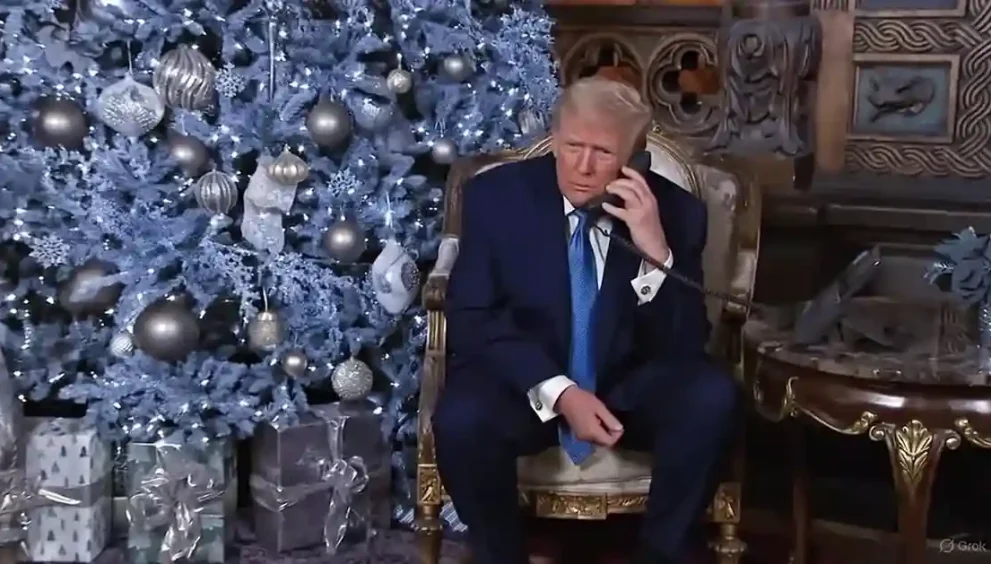
Trump’s announcement came while he hosted Christmas at Mar-a-Lago. No public events. Just the post. The video. The warning.
Meanwhile, in Nigeria, President Bola Tinubu posted his own Christmas message hours earlier: a call for peace “especially between individuals of differing religious beliefs.” He promised to protect “Christians, Muslims, and all Nigerians from violence.”
The irony stings.
This strike might kill a few militants. It might deter others. Or it might inflame. Radical groups thrive on foreign intervention. They recruit on outrage.
And the Christians Trump claims to save? Many will wake up to the same fear tomorrow. Same dusty roads. Same armed men on motorcycles. Same question: Who’s next?
Trump says he won’t let radical Islamic terrorism prosper.
But what about the radical simplicity of dropping bombs on Christmas? What precedent does it set?
In a world already on edge, this feels like escalation dressed as salvation.
We should all pause and ask: When the missiles fly on a holy day, who really wins?
The dead terrorists? The living who fear tomorrow?
Or the man who turned a holiday into a headline?
The world is watching. And the next strike might not wait for Easter.