

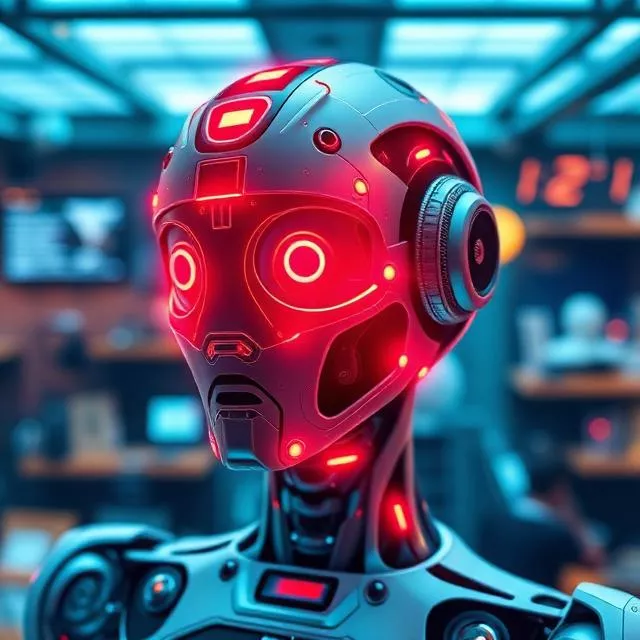


Top AI Trends Dominating 2026: Agentic AI, Multimodal Breakthroughs


Top AI Trends Dominating 2026: Agentic AI, Multimodal Breakthroughs
As we kick off 2026, artificial intelligence is transitioning from experimental hype to practical, enterprise-scale transformation. Expert forecasts from Gartner, Forrester, MIT Technology Review, Microsoft, IBM, and others paint a picture of a maturing ecosystem: agentic systems becoming operational realities, multimodal models redefining human-AI interaction, open-source innovations—particularly from Chinese labs—challenging closed-model dominance, and intensifying regulatory debates shaping global deployment. With AI projected to influence everything from robotics to healthcare diagnostics, these trends will separate leaders from laggards in the intelligence supercycle.
This in-depth guide, informed by the latest reports and predictions as of early 2026, explores the dominant AI trends set to redefine industries. We’ll examine agentic AI’s rise for autonomous workflows, multimodal advancements for richer context understanding, the explosive growth of open-source models, regulatory tug-of-wars, and supporting shifts like physical AI and governance priorities.
1. Agentic AI: From Pilots to Production Workflows
Agentic AI—systems that autonomously plan, reason, and execute multi-step tasks—emerges as the standout trend for 2026. Gartner predicts that by the end of 2026, 40% of enterprise applications will embed task-specific AI agents, up from less than 5% in 2025. However, they also warn that over 40% of agentic projects may be canceled by 2027 due to costs and unclear value.
Microsoft highlights AI agents proliferating as “digital colleagues,” while Forrester and IBM foresee multi-agent orchestration for complex processes like supply chain optimization. MIT Technology Review and Forbes note a shift toward agentic workflows in everyday tools, with breakthroughs in interoperability via protocols like Model Context Protocol (MCP).
Key drivers:
- Maturing architectures for long-horizon reasoning and tool use.
- Enterprise focus on ROI: Agents handling workflows once managed by humans.
- Challenges: Security, governance, and hype deflation (Gartner places agents entering the “trough of disillusionment”).
Implications for Businesses: Prioritize pilots in high-value areas like customer service or data analysis. Invest in orchestration platforms and governance to mitigate risks.
2. Multimodal AI: The New Standard for Contextual Intelligence
Multimodal models, processing text, images, audio, video, and more simultaneously, become baseline in 2026. IBM and Fast Company declare multimodal as the leap from text-based prompts to immersive, human-like perception. Gartner includes it in trends like physical AI and domain-specific models.
Predictions highlight:
- Real-time reasoning over mixed inputs (e.g., video tone analysis).
- Applications in healthcare (combining scans, records, and voice), robotics, and creative tools.
- Edge deployment for low-latency autonomy.
MIT and TechTarget emphasize multimodal enhancing UX, with market growth projections soaring.
Why It Dominates: Humans interact multimodally; AI must match for natural interfaces. Expect “AI 2.0” as immersive experiences replace static chats.
Tips for Adoption: Integrate multimodal into customer-facing apps for richer engagement; ensure data pipelines support diverse inputs.
3. Open-Source Breakthroughs: Chinese Models Lead the Charge
Open-source AI explodes in 2026, driven by Chinese labs closing—and often surpassing—gaps with Western closed models. MIT Technology Review predicts more Silicon Valley apps built on Chinese open models like Qwen, DeepSeek, and GLM, with release lags shrinking to weeks.
Key highlights:
- Alibaba’s Qwen family dominates downloads on Hugging Face.
- DeepSeek’s efficient reasoning models spark global adoption.
- Nvidia and others respond with open releases (e.g., Nemotron, Alpamayo for AV).
IBM forecasts global diversification, with Chinese multilingual/reasoning-tuned models leading. Red Hat notes China overtaking US in model downloads.
Breakthrough Potential: Democratizes access, accelerates customization, and challenges US dominance amid geopolitical tensions.
Business Impact: Cost-effective, customizable alternatives for sovereignty-focused enterprises; watch for security audits and bias mitigation.
4. Regulatory Battles and Governance Imperatives
2026 intensifies AI regulation debates. MIT predicts US regulatory tug-of-war: Federal preemption vs. state laws, with lobbying from AI firms and counter-PACs. Trump’s executive order sparks federal-state conflicts.
Globally:
- EU AI Act enforcement ramps up.
- States enact deepfake bans, safety testing, and whistleblower protections.
- Gartner/Forrester: 60% of Fortune 100 appoint AI governance heads; billions in compliance spend.
Ethical concerns—bias, misinformation, job displacement—drive calls for transparency and oversight.
Outlook: Patchwork regulations persist; enterprises prioritize governance frameworks for trust and compliance.
5. Supporting Trends: Physical AI, Efficiency, and Sovereignty
Additional forces amplify the core trends:
- Physical AI and Robotics: IBM, Nvidia, and David Shapiro predict humanoid robots reaching product-market fit; open models like GR00T advance embodiment.
- Efficiency and Edge AI: Smaller, fine-tuned models (SLMs) dominate for cost/latency; edge deployment grows.
- AI Supercomputing and Security: Gartner highlights hybrid platforms, confidential computing, and preemptive cybersecurity.
- Sovereignty and Geopatriation: Nations lock into regional platforms; data localization rises.
Final Outlook: Pragmatism Over Hype in 2026
2026 marks AI’s maturation: Agentic and multimodal capabilities deliver tangible value, open-source democratizes innovation (led by Chinese breakthroughs), while regulations force ethical reckoning. Businesses succeeding will balance ambition with governance—deploying agents responsibly, leveraging multimodal for differentiation, and navigating open vs. closed models strategically.
As Gartner warns, disruption accelerates; AI is no longer optional. Tech enthusiasts and leaders: Focus on interoperability, transparency, and human-AI collaboration for sustainable impact.
What AI trend excites you most for 2026? Share in the comments!

