


Jensen Huang: English Could Be Programming’s Future

Jensen Huang: English Could Be Programming’s Future
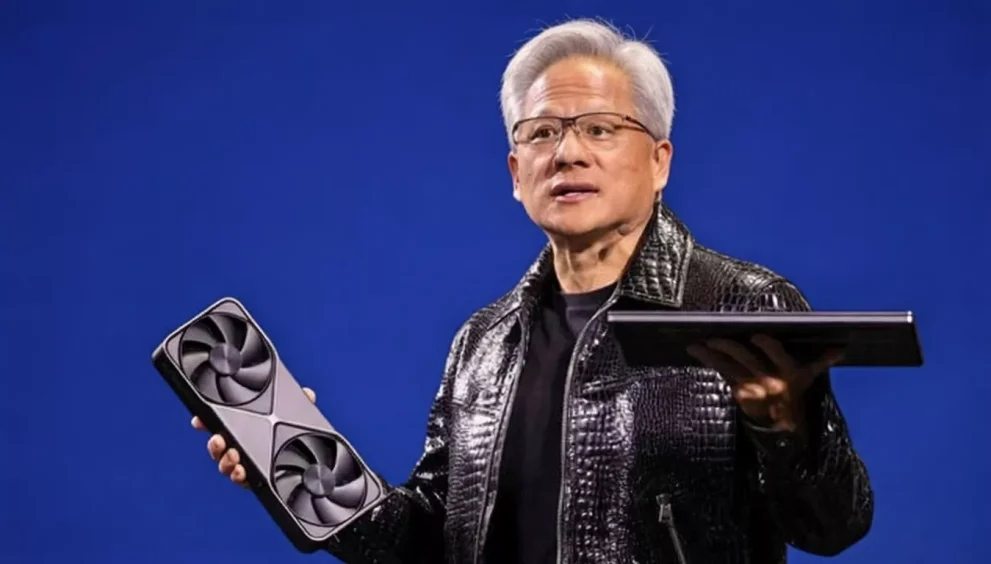
Recent coverage (prominently resurfacing in mid-February 2026, with key articles dated around February 12–15, 2026) highlights Huang’s view that generative AI is revolutionizing software creation. Users no longer need to master syntax-heavy coding; they can simply describe their intentions in everyday language, and AI—accelerated by NVIDIA’s GPUs—generates, debugs, and deploys the necessary code or applications.
Core Elements of Huang’s Statement
Huang emphasizes a fundamental shift:
- From Syntax to Intent: The bottleneck in programming is moving away from memorizing rules in languages like Python or C++ toward clearly articulating goals, requirements, constraints, and edge cases in plain English (or any natural language).
- Prompt Engineering as the New Skill: Effective “programming” now involves precise prompting—describing problems naturally, iterating on AI outputs, and refining results conversationally.
- Democratization Through AI: This empowers non-coders—business leaders, scientists, creators, and everyday users—to build apps, automate workflows, or solve complex problems without traditional development expertise.
- NVIDIA’s Enabling Role: Huang positions his company’s AI hardware as the foundation making this possible, turning “human” into the ultimate interface for computing.
He has described this evolution as a “miracle of AI” that bridges the technology divide, allowing anyone to become a technologist. In various interviews and keynotes (including echoes from events like the World Government Summit and recent discussions), he notes: “It is our job to create computing technology such that nobody has to program and that the programming language is human.”
Worldwide Reception and Coverage
The statement has gone viral across platforms:
- Tech media outlets like Moneycontrol, Analytics India Magazine, and Slashdot have run headlines framing it as “English emerging as the hottest new programming language” or “the most powerful one isn’t C++ or Python—it’s English.”
- Social media buzz on Instagram, Facebook, LinkedIn, Reddit (e.g., r/developersIndia), and X includes reels, posts, and debates questioning “Why only English?” or defending core coding logic.
- Opinion pieces (e.g., on Medium and Shelly Palmer’s blog) project timelines like “in 36 months, code could be essentially free” via natural language interfaces.
- Balanced takes acknowledge excitement while noting AI-generated code can still introduce vulnerabilities, inefficiencies, or require oversight for mission-critical systems.
Globally, the narrative aligns with similar views from leaders like Microsoft’s Satya Nadella (on tools like GitHub Copilot) and earlier predictions from Andrej Karpathy.
Country-Wide Perspectives (Notable Examples)
- India: Heavy traction in outlets like Moneycontrol and Analytics India Magazine, plus Reddit communities (developersIndia) discussing implications for the massive IT workforce. Some express concern over job shifts, while others see it as an opportunity for broader innovation in a country with huge non-technical talent pools.
- United States: Widespread in tech blogs, YouTube shorts, and forums like Slashdot, often tied to NVIDIA’s dominance and AI investment hype. Discussions focus on productivity gains and the “end of coding as we know it.”
- Other Regions: Viral reels on Instagram and Facebook in multilingual contexts raise points like language bias (e.g., “Why only English?”), with growing calls for multilingual AI models. In Europe and Asia, coverage links it to broader AI policy and education reforms.
Counterpoints and Realistic Outlook
Critics argue traditional languages remain vital for:
- Low-level systems, performance-critical software, security hardening, and understanding AI internals.
- Debugging complex AI hallucinations or ensuring reliability in regulated industries.
- The art of prompt engineering itself demands logical thinking akin to programming.
Huang’s vision doesn’t declare coding “dead”—it reframes it. Core infrastructure (AI models, OS kernels, hardware drivers) will still rely on languages like Python, C++, Rust, etc. But for application-layer creation and everyday automation, natural language interfaces are accelerating rapidly.
As of February 2026, this idea continues fueling discussions on education, workforce reskilling, and the future of innovation. Whether English (or natural language broadly) fully becomes the “ultimate” programming language depends on AI’s ongoing progress—but the trend toward intent-based, human-centric computing is undeniably here.a
Follow us for more
- Latest tech news
https://worldreport.press/category/tech-news/ - Latest Grok Imagine 2026 update xAI rolls out 10-second videos
https://worldreport.press/tech-news/latest-grok-imagine-2026-update-xai-rolls-out-10-second-videos/ - How AI is reshaping banking in 2026 fewer branches smarter operations
https://worldreport.press/tech-news/how-ai-is-reshaping-banking-in-2026-fewer-branches-smarter-operations/ - Major worldwide news stories recap last week
https://worldreport.press/tech-news/major-worldwide-news-stories-recap-last-week/ - Breaking ChatGPT linked to 9 reported deaths including 5 alleged suicides
https://worldreport.press/tech-news/breaking-chatgpt-linked-to-9-reported-deaths-including-5-alleged-suicides-openai-under-fire-amid-lawsuits-and-musk-altman-clash/