

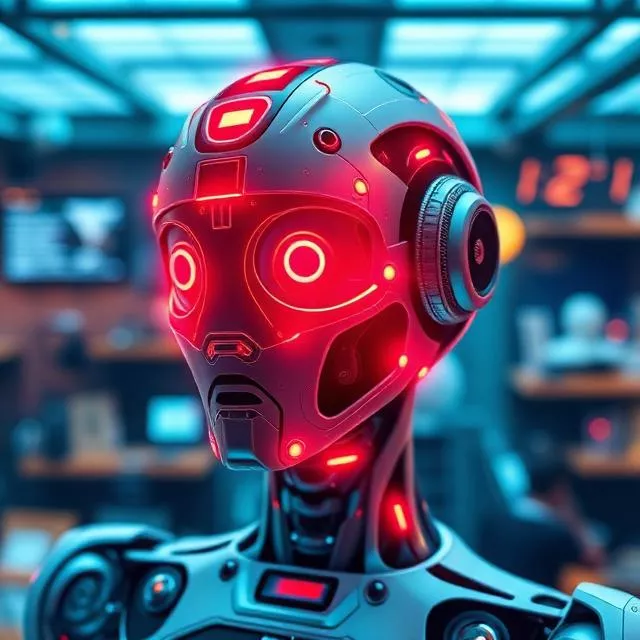


Elon Musk Calls Tesla Optimus an Infinite Money Glitch


Elon Musk Calls Tesla Optimus an Infinite Money Glitch
December 22, 2025 – In a wide-ranging discussion on the future of artificial intelligence and robotics, Tesla CEO Elon Musk described the company’s humanoid robot Optimus as “kind of like an infinite money glitch.” He went further, suggesting that advanced robotics and AI could eventually eliminate the need for money altogether, with economic value potentially measured instead in wattage—the amount of electrical power available to drive productive systems.
The remarks, made during Tesla’s recent shareholder updates and echoed in public statements throughout late 2025, reflect Musk’s long-standing vision of a post-scarcity world enabled by exponential technological progress.
“Things do get kind of wild from an economic standpoint,” Musk explained. “Because at a certain point, with AI and robotics, you can actually increase the global economy by a factor of 10 or maybe 100. There’s not, like, an obvious limit. So, Optimus is kind of like an infinite money glitch. Maybe there won’t even be money in the future, but might be measured in terms of wattage, like, how much power can you bring from an electrical standpoint?”
Tesla Optimus: The Humanoid Robot at the Center of the Vision
Optimus, Tesla’s general-purpose humanoid robot, has advanced significantly in 2025. Recent demonstrations of the third-generation design showcase improved mobility, finer motor skills, and the ability to perform a wide range of tasks—from factory assembly to everyday household activities.
Musk has outlined ambitious goals:
- Deploy thousands of units in Tesla factories by the end of 2025.
- Achieve mass production capable of millions of units per year by the early 2030s.
- Target pricing of $20,000 to $30,000 per robot at scale, making it affordable for businesses and, eventually, individual consumers.
The robot’s potential productivity—operating continuously without rest, fatigue, or salary—could multiply human output dramatically. Musk has claimed Optimus may eventually perform tasks with five times the efficiency of a human worker while consuming only modest electricity.
From Money to Energy: Redefining Economic Value
Musk’s reference to an “infinite money glitch” stems from the idea that humanoid robots could generate near-unlimited value through tireless labor. In a world with billions or tens of billions of such robots, traditional economic constraints like labor shortages would vanish.
However, the ultimate limiting factor shifts to energy. As vast fleets of robots and AI systems require constant power, access to abundant, reliable electricity becomes the critical resource.
This perspective aligns with broader global challenges: The rapid growth of AI data centers and industrial automation is already driving unprecedented electricity demand. Control over efficient, scalable energy sources—solar, nuclear, geothermal, or fusion—could determine economic dominance in such a future.
Musk’s suggestion that “wattage” might replace money as a measure of wealth highlights a potential paradigm shift: In an era of robotic abundance, the ability to generate and distribute power efficiently could become the primary metric of prosperity.
Societal Implications: Abundance, Work, and Equity
The implications of Musk’s vision extend far beyond technology:
- Post-scarcity economy: Essential goods and services could become so inexpensive that basic needs are met universally, potentially eroding the necessity of traditional employment.
- Universal high income: Rather than universal basic income, society might evolve toward a system where robotic productivity funds widespread prosperity.
- Redefinition of human purpose: With mundane and dangerous work handled by machines, individuals could focus on creativity, exploration, science, and personal fulfillment.
While optimistic, the scenario also raises concerns about transition periods: Job displacement on a massive scale, concentration of power among those controlling robotics and energy infrastructure, and the need for new governance models.
Realism and Timeline
Skeptics note that Optimus remains in early development, with current capabilities limited compared to human versatility. Challenges in battery life, safety, real-world adaptability, and ethical deployment persist.
Yet Musk’s history—from reusable rockets at SpaceX to mass-market electric vehicles at Tesla—demonstrates a pattern of turning ambitious timelines into reality, often ahead of consensus expectations.
Recent technical advances, including Tesla’s AI5 inference hardware optimized for low-power robotic operation (around 250 watts per unit), lend credibility to the energy-focused economic model.
A Glimpse of Tomorrow’s World
Whether viewed as visionary foresight or speculative futurism, Musk’s comments on Optimus challenge conventional thinking about economics, labor, and human progress.
As humanoid robotics moves from prototype to production, the conversation shifts from “if” to “when” and “how”—prompting societies worldwide to prepare for profound change.
World Report will continue monitoring developments in AI, robotics, energy systems, and their global socioeconomic impacts.
For comprehensive coverage of technology, innovation, economy, and international affairs, visit www.worldreport.press.

