



True Hindu Love Traditions Better Than Valentine’s Day

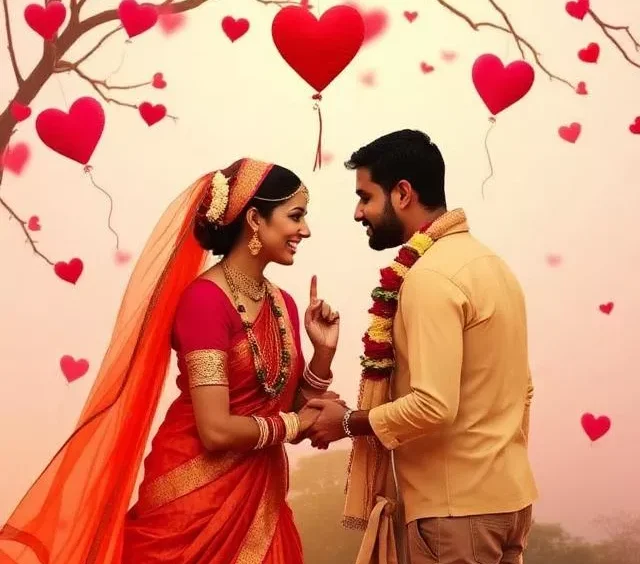
True Hindu Love Traditions Better Than Valentine’s Day
In today’s world, love is often reduced to a single day—Valentine’s Day—marked by roses, chocolates, and fleeting emotions. While such expressions may feel romantic on the surface, Hindu civilization has always viewed love as something far deeper, sacred, and lifelong. True Hindu love is not limited to attraction or celebration; it is a spiritual journey rooted in dharma, bhakti, duty, sacrifice, and inner growth.
Ancient Indian love traditions offer a profound alternative—one that is timeless, soul-centric, and truly better than Valentine’s Day. Let us explore how Indic wisdom defines love in a way that nurtures families, society, and the soul itself.
What Is True Hindu Love?
True Hindu love is not driven by instant gratification. It is a conscious commitment that balances emotion with responsibility. In Hindu philosophy, love (prema) evolves through understanding, service, and spiritual alignment.
Key pillars of true Hindu love include:
- Dharma (Righteous Duty): Love aligned with moral responsibility
- Bhakti (Devotion): Selfless, unconditional affection
- Seva (Service): Expressing love through action, not just words
- Samskara (Sacred Bond): Love sanctified through rituals and values
Unlike modern romantic narratives, Hindu love matures with time, deepens through challenges, and aims for moksha (spiritual liberation).
Bhakti: The Highest Form of Love in Hinduism
One of the most powerful ancient Indian love traditions is Bhakti, the path of pure devotion. Bhakti teaches us how love should be—selfless, surrendering, and unwavering.
Examples of Bhakti love:
- Radha–Krishna: Love beyond possession, rooted in divine union
- Meera’s devotion to Krishna: Love without expectation or reward
- Hanuman’s devotion to Rama: Loyalty and service as supreme love
Bhakti love is not transactional. There is no demand, no pressure, no performance—only surrender. Compared to this, Valentine’s Day appears temporary and externally driven.
Grihastha Dharma: Love as a Sacred Responsibility
In Hinduism, marriage is not merely a romantic arrangement—it is a samskara (sacrament). The Grihastha Ashrama (householder stage) teaches couples to grow together spiritually, emotionally, and socially.
How Grihastha Dharma Defines Love
- Mutual respect over fleeting passion
- Shared responsibilities over personal desires
- Emotional stability over impulsive attraction
- Long-term companionship over short-term excitement
Ancient Hindu couples vowed to support each other through:
- Dharma (duty)
- Artha (prosperity)
- Kama (desire, within limits)
- Moksha (liberation)
This holistic vision of love is far better than Valentine’s Day Hindu perspective, where love is celebrated daily through commitment, not annually through gifts.
Karva Chauth: Love Rooted in Prayer and Sacrifice
Karva Chauth is often misunderstood as mere fasting. In truth, it represents a deep emotional and spiritual bond between husband and wife.
The Spiritual Meaning of Karva Chauth
- Fasting as a form of self-discipline
- Prayers for longevity and well-being
- Emotional bonding through shared rituals
- Gratitude and mutual respect
This ancient Indian love tradition emphasizes tyaga (sacrifice) and shraddha (faith). Love here is not about public display but private sincerity.
Teej Festival: Celebrating Marital Devotion and Feminine Strength
Teej is a powerful example of how Hindu culture honors love blended with devotion. Observed by women across India, Teej commemorates Goddess Parvati’s unwavering love and penance for Lord Shiva.
Lessons from Teej
- Love requires patience and perseverance
- Emotional strength is sacred
- Devotion brings harmony in relationships
Rather than fleeting romance, Teej celebrates love that withstands time, hardship, and separation—an idea deeply rooted in ancient Indian love traditions.
Love as Samskara, Not Sensation
In Hindu culture, love is cultivated through samskaras—rituals that purify intention and strengthen bonds. From marriage rituals to daily prayers, love is continuously nurtured.
Contrast this with Valentine’s Day:
| Valentine’s Day | Hindu Love Traditions |
|---|---|
| One-day celebration | Lifelong commitment |
| Material gifts | Spiritual values |
| External validation | Inner bonding |
| Instant emotions | Gradual deepening |
This comparison clearly shows why Hindu love is deeper and more meaningful.
Family-Centric Love vs Individual-Centric Romance
Ancient Indian love traditions view love as a force that strengthens families and society. Love is not isolated between two individuals; it radiates outward.
Hindu love emphasizes:
- Respect for elders
- Shared family responsibilities
- Emotional security for children
- Harmony between generations
Such love builds stable households, unlike modern romantic models that often prioritize personal satisfaction over collective well-being.
Why Hindu Love Is Better Than Valentine’s Day
From a civilizational perspective, Hinduism offers a complete ecosystem of love—spiritual, emotional, social, and cosmic.
True Hindu love:
- Transcends physical attraction
- Evolves with age and wisdom
- Strengthens character
- Leads toward spiritual growth
Valentine’s Day may celebrate romance, but Hindu traditions celebrate relationship consciousness.
Reviving Ancient Indian Love Traditions Today
In modern times, especially among youth and NRIs, there is a growing need to reconnect with authentic cultural values.
Ways to practice true Hindu love today:
- Observe traditional vratas with understanding
- Celebrate festivals with awareness, not formality
- Treat marriage as a sacred journey
- Practice devotion and gratitude daily
When love is lived as dharma, it becomes fulfilling and eternal.
Conclusion: Love That Liberates the Soul
Valentine’s Day may offer excitement, but it fades quickly. Ancient Indian love traditions, rooted in Hindu philosophy, offer something far greater—love that heals, sustains, and liberates.
True Hindu love is not loud, commercial, or temporary. It is silent strength, spiritual depth, and lifelong companionship. In every sense—emotional, cultural, and spiritual—it is truly better than Valentine’s Day.
May we rediscover this sacred understanding of love and pass it on to future generations.
Sanatana Dharma teaches us that love is not something we fall into—it is something we grow into.
Follow us for more
- Latest tech news
https://worldreport.press/category/tech-news/ - Latest Grok Imagine 2026 update xAI rolls out 10-second videos
https://worldreport.press/tech-news/latest-grok-imagine-2026-update-xai-rolls-out-10-second-videos/ - How AI is reshaping banking in 2026 fewer branches smarter operations
https://worldreport.press/tech-news/how-ai-is-reshaping-banking-in-2026-fewer-branches-smarter-operations/ - Major worldwide news stories recap last week
https://worldreport.press/tech-news/major-worldwide-news-stories-recap-last-week/ - Breaking ChatGPT linked to 9 reported deaths including 5 alleged suicides
https://worldreport.press/tech-news/breaking-chatgpt-linked-to-9-reported-deaths-including-5-alleged-suicides-openai-under-fire-amid-lawsuits-and-musk-altman-clash/