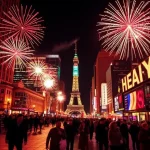



When the World Celebrates New Year: Time Zones, Traditions


When the World Celebrates New Year: Time Zones, Traditions
As the clock ticks toward midnight on December 31, 2025, the arrival of 2026 won’t happen all at once. Thanks to Earth’s rotation and the division of the planet into time zones, New Year’s celebrations unfold over nearly 26 hours — creating a rolling wave of fireworks, countdowns, and cheers that sweeps across the globe.
From tiny Pacific islands welcoming the first sunrise of the new year to remote territories ringing it in last, this global phenomenon highlights humanity’s shared joy and diverse ways of marking renewal. In this article, we explore how time zones dictate the order of celebrations, spotlight iconic traditions from around the world, and uncover cultural beliefs and superstitions that promise luck, prosperity, and fresh beginnings in 2026.
The Journey of Midnight: First to Last in 2026
The International Date Line in the Pacific Ocean plays a starring role. Countries east of the line enter the new day earlier, while those west lag behind. Here’s how January 1, 2026, arrives:
- First to Celebrate: The remote island of Kiritimati (Christmas Island) in Kiribati (UTC+14) is the very first inhabited place on Earth to welcome 2026. Just minutes later, the Chatham Islands (New Zealand), parts of eastern Russia, and major cities like Auckland follow with spectacular fireworks.
- Iconic Early Celebrations: Sydney, Australia, hosts one of the world’s most famous displays over the Harbour Bridge and Opera House — often among the first major events broadcast globally.
- Global Wave: The new year then moves westward through Asia (Japan, South Korea, China, India), Europe (London, Paris, Berlin), Africa, and finally the Americas (New York City’s Times Square ball drop being a highlight).
- Last to Celebrate: American Samoa (UTC-11) and Niue are among the final inhabited places, with uninhabited U.S. territories like Baker and Howland Islands bringing up the rear — sometimes nearly a full day after Kiribati’s first cheers.
This staggered timeline turns New Year’s Eve into a continuous, worldwide party.
Spectacular Traditions Around the World
Beyond the countdown, cultures infuse January 1 (or alternative dates) with unique rituals symbolizing hope, prosperity, and renewal:
- Spain & Latin America: Eat 12 grapes at midnight — one for each chime of the clock — to ensure good luck for every month of the year.
- Southern United States: Enjoy Hoppin’ John (black-eyed peas, rice, and pork) with collard greens (symbolizing money) for prosperity.
- Japan: Savor toshi-koshi soba (long buckwheat noodles) to represent longevity, while watching the first sunrise (hatsuhinode).
- Brazil: Dress in white, head to the beach, and jump over seven waves at midnight — each jump accompanied by a wish.
- Denmark: Smash plates against friends’ doors (the more shards, the more luck) and leap off furniture at midnight for a “jump into the new year.”
- Italy & Latin Countries: Wear red underwear on New Year’s Eve to attract love and passion in the coming year.
- Philippines: Surround yourself with round fruits (for abundance) and jump up and down at midnight — hoping to grow taller!
- Greece: Smash a pomegranate on the doorstep for good fortune — the more seeds scatter, the better the year.
These customs blend ancient symbolism with modern festivity, often focusing on food, noise (to scare away evil spirits), and cleansing rituals.
Cultural Beliefs & Superstitions for a Lucky 2026
Many traditions carry deeper superstitions aimed at inviting positive energy:
- Avoid washing clothes or cleaning on January 1 in some Asian cultures — it could “wash away” good fortune or loved ones.
- Open all doors and windows at midnight in Ireland to let the old year out and the new in.
- In parts of Latin America, carry an empty suitcase around the block to encourage travel in the new year.
- Loud noises — fireworks, bells, drums — worldwide ward off evil spirits and welcome positive vibes.
- In Germany and Austria, Bleigießen (pouring molten lead into water) forms shapes that predict the year’s fortunes.
These beliefs remind us that New Year is more than a date — it’s a moment of intention, reflection, and hope.
Beyond January 1: Other New Year Celebrations
While the Gregorian calendar dominates globally, many cultures follow their own:
- Chinese/Lunar New Year (late January/February) — with dragon dances and red envelopes.
- Nowruz (Persian/Iranian, around March 20) — spring cleaning and family feasts.
- Hindu regional New Years — like Ugadi/Gudi Padwa in spring.
- Rosh Hashanah (Jewish, September/October) — reflection and sweet foods.
Conclusion: A World United in Renewal
Whether you’re in Kiribati’s early dawn, Sydney’s dazzling lights, or American Samoa’s final hours, the transition to 2026 unites billions in wishing for health, love, prosperity, and peace. Time zones may separate us by hours, but shared traditions and beliefs connect us across cultures.
As midnight sweeps the globe, raise a glass — or 12 grapes — and step boldly into the new year. Happy New Year 2026!