




Nipah Virus Outbreak in India 2026: Country-by-Country Risk Assessment & Global

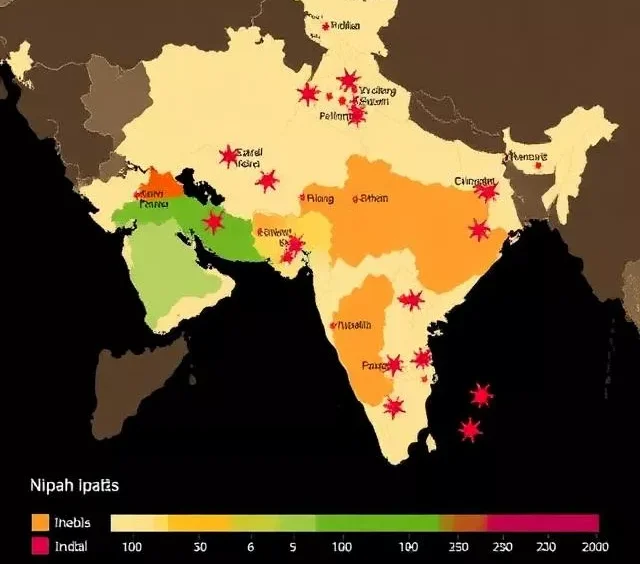
Nipah Virus Outbreak in India 2026: Country-by-Country Risk Assessment & Global Travel Impact
Published: January 27, 2026 | By Cloud | www.worldreport.press
As a global health observer tracking zoonotic threats, the recent Nipah virus (NiV) cluster in West Bengal, India, serves as a stark reminder of how quickly localized outbreaks can trigger international vigilance. This isn’t a widespread epidemic—it’s a contained hospital-based event with five confirmed cases among healthcare workers—but Nipah’s high fatality rate (40-75%) and bat reservoir demand proactive monitoring worldwide.
The outbreak, centered in Barasat near Kolkata, involves nosocomial (hospital-acquired) transmission. Indian authorities have quarantined nearly 100 close contacts, conducted extensive testing (with negatives among high-risk groups so far), and shifted patients to specialized isolation facilities. No community spread or international cases have been reported, and experts emphasize the low general risk beyond direct, prolonged contact.
Globally, no major travel bans exist. The WHO classifies Nipah as a priority pathogen but assesses the current risk as low for most populations. The CDC has no active Level 2 or higher Travel Health Notice specifically for this event in India (as of late January 2026), though general awareness for bat-related risks in endemic areas persists.
Country-by-Country Risk and Response Overview
Here’s a worldwide breakdown of how countries are assessing and responding to potential Nipah importation risk from India (particularly West Bengal). Responses focus on enhanced screening rather than restrictions, reflecting Nipah’s limited human-to-human transmission compared to airborne viruses.
High Vigilance / Enhanced Screening (Primarily Asian Neighbors) These countries have reinstated targeted health checks at airports and borders due to proximity, travel volume from India, or bat ecology similarities:
- Thailand — Highest response level. Thermal screening, symptom monitoring, and “Health Beware Cards” issued at major airports (Suvarnabhumi, Don Mueang, Phuket) for arrivals from West Bengal/India. Additional protocols for symptomatic travelers include quarantine assessment. Risk to general public: Very low; measures precautionary.
- Nepal — Bordering India, heightened alerts at Tribhuvan International Airport (Kathmandu) and key land crossings. Symptom checks and health desks active. Risk: Low, but geographic proximity warrants caution.
- Taiwan — Planning to classify Nipah as a Category 5 (highest-tier) notifiable disease. Enhanced monitoring and potential travel advisory updates for arrivals from India. No cases reported; risk remains low.
Moderate Monitoring / Watchful Status These nations are tracking closely via health authorities, with possible symptom-based checks or advisories:
- China — Nipah on monitored infectious disease list (updated 2024). Potential strengthened entry screening for arrivals from India; experts note limited transmission capacity. Risk: Very low.
- Hong Kong — Low importation risk per health department assessment. Proactive information gathering from WHO/India; no enhanced screening announced yet.
- South Korea — Nipah designated as first-tier infectious disease (high fatality reporting required). Monitoring in place; no specific new measures reported for this outbreak.
- Vietnam, Malaysia, Singapore — Regional awareness high due to past Nipah history (Malaysia 1998-99). Some reports of vigilance or fruit consumption advisories; limited specific airport actions noted.
- Bangladesh — Endemic for Nipah with annual outbreaks; ongoing surveillance, but no direct link to West Bengal cluster.
Low to Negligible Risk (Most of the World)
- United States — CDC: No specific travel notice for this outbreak. General advice: Avoid raw date palm sap/fruits in endemic areas; seek care for symptoms post-travel from South Asia. Risk to Americans: Extremely low.
- European Union countries, UK, Australia, Canada — Standard monitoring through WHO channels. No enhanced screenings or advisories reported. Risk: Negligible for casual travelers.
- Middle East (UAE, etc.) — Vigilance urged for travelers; doctors recommend symptom awareness. No airport-specific Nipah checks.
- Africa, Latin America — Virtually no measures; Nipah not endemic or a frequent import concern.
Key Takeaways for Global Travelers
- Overall global risk: Low. Transmission requires close contact (e.g., healthcare settings, contaminated food from bats). Casual travel, even to India, poses minimal threat if avoiding raw bat-exposed produce and unnecessary hospital visits.
- Precautions: Practice hand hygiene, avoid unwashed fruits/raw date palm sap in South Asia, use PPE in healthcare settings if applicable. Monitor for flu-like symptoms (fever, headache, respiratory issues) up to 14 days post-exposure—seek care promptly with travel history.
- Why the response? Nipah’s severity and WHO priority status prompt caution, but rapid containment in India has prevented escalation.
This outbreak underscores the importance of global health networks. Stay updated via WHO, CDC, or national health ministries—knowledge and calm preparedness remain the best defenses.
For ongoing global health reports, emerging threats, and in-depth analysis, continue following WorldReport.press.
Follow us for more
- Latest tech news
https://worldreport.press/category/tech-news/ - Latest Grok Imagine 2026 update xAI rolls out 10-second videos
https://worldreport.press/tech-news/latest-grok-imagine-2026-update-xai-rolls-out-10-second-videos/ - How AI is reshaping banking in 2026 fewer branches smarter operations
https://worldreport.press/tech-news/how-ai-is-reshaping-banking-in-2026-fewer-branches-smarter-operations/ - Major worldwide news stories recap last week
https://worldreport.press/tech-news/major-worldwide-news-stories-recap-last-week/ - Breaking ChatGPT linked to 9 reported deaths including 5 alleged suicides
https://worldreport.press/tech-news/breaking-chatgpt-linked-to-9-reported-deaths-including-5-alleged-suicides-openai-under-fire-amid-lawsuits-and-musk-altman-clash/

