


NATO Split on Iran War 2026: Support vs Opposition

NATO Split on Iran War 2026: Support vs Opposition
The 2026 Iran War, which began on February 28 with joint US-Israel strikes on Iranian nuclear, missile, and military targets, has tested NATO unity like few crises in recent years. As of late March 2026, NATO as an organization has maintained a clear policy of non-participation in the conflict.
NATO Secretary General Mark Rutte has praised the US and Israeli actions for degrading Iran’s nuclear and ballistic missile capabilities, calling them “very important” for European and Middle Eastern security. However, he has repeatedly stressed that there are “absolutely no plans” for NATO to be dragged into the war. The alliance has limited its role to defensive measures, such as protecting member territory (e.g., intercepting Iranian missiles targeting Türkiye) and enabling logistics support where individual allies choose to assist.
Article 5 (collective defense) has not been invoked, as the conflict is not viewed as a direct armed attack on NATO territory.
Overall NATO Position
- Non-involvement in offensive operations: NATO refuses collective military action against Iran.
- Defensive focus: Strong condemnation of Iranian attacks on regional countries, including missile strikes on Türkiye and attempts to close the Strait of Hormuz.
- Support for freedom of navigation: NATO allies are discussing (but not fully committing to) measures to secure international shipping lanes, though many resist a full US-led naval mission in the Gulf.
- Internal strain: The war has exposed transatlantic rifts, with President Trump publicly criticising allies for refusing to provide more support, especially for reopening the Strait of Hormuz. Several European leaders have responded that “this is not NATO’s war.”
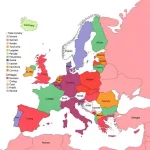
Country-Wise Stances Within NATO
Strong Supporters / Eastern Flank Allies
- Poland, Baltic States (Estonia, Latvia, Lithuania), Czech Republic: Vocal support for the US-Israeli strikes, citing Iran’s role in supplying drones to Russia for the Ukraine war. They view weakening Iran as beneficial for European security.
United States
- Leading the military campaign alongside Israel. President Trump has repeatedly urged NATO allies to contribute more, particularly naval assets to secure the Strait of Hormuz, warning that failure to do so could harm the alliance’s future.
United Kingdom
- Did not participate in initial strikes but has allowed use of UK bases (including Cyprus) for defensive operations and to protect regional airspace. Deployed additional naval assets (e.g., HMS Dragon) to the region. Prime Minister Keir Starmer has emphasised that Britain “will not be drawn into a wider war” and that any Hormuz mission is not a NATO operation. The UK has joined joint statements condemning Iranian attacks and calling for de-escalation.
France
- Strongly opposed to offensive involvement. President Emmanuel Macron stated France was “neither warned nor involved” in the initial strikes and will not participate in operations to reopen the Strait of Hormuz in the current context. France has deployed forces for defensive protection of interests and citizens in the region (e.g., around Cyprus) but stresses the need for a negotiated solution.
Germany
- Clear opposition to military involvement. Chancellor Friedrich Merz and officials have repeatedly stated: “This war has nothing to do with NATO” and “It is not our war.” Germany has not blocked US use of Ramstein Air Base for logistics but refuses broader participation or naval support for Hormuz operations. Public and political sentiment leans heavily against escalation.
Spain
- Most critical among major allies. Refused to allow US forces to use Spanish bases (Rota and Morón) for strikes on Iran. Called the war “illegal” and rejected any involvement.
Türkiye
- Targeted by Iranian missiles; NATO expressed full solidarity and successfully intercepted threats. Türkiye has not joined offensive actions but benefits from alliance defensive support.
Other Notable Positions
- Nordic Countries (including Finland): Emphasise that the Iran war “is not a NATO matter.” Finland’s president stated it is a defensive alliance and this conflict falls outside its mandate.
- Canada: Expressed concerns and showed reluctance for deeper involvement.
- Italy, Netherlands, Greece: Provided defensive support around Cyprus and regional interests but avoided offensive commitments.
- Southern and Eastern Members: Mixed; some offered limited enabling support while prioritising Ukraine aid.
Key Developments Straining NATO
- Trump’s public rebukes of allies for not sending warships to the Strait of Hormuz.
- European rejection of a NATO-led or collective Hormuz mission, with many arguing it falls outside the alliance’s defensive mandate.
- Continued commitment to Ukraine support despite the Middle East crisis, as reaffirmed by Secretary General Rutte.
- Joint statements by the UK, France, and Germany condemning Iranian retaliatory attacks while calling for de-escalation and negotiations.
Outlook
As the conflict enters its second month, NATO remains united on defending member territory and condemning Iranian aggression but deeply divided on offensive or expeditionary involvement. The crisis has highlighted the limits of transatlantic solidarity when the US acts unilaterally without prior consultation.
The alliance’s ability to maintain cohesion while managing the economic fallout from disrupted oil supplies (higher energy prices across Europe) will be a major test in the coming weeks.
This analysis is based on official statements and reports available as of late March 2026. Positions can evolve rapidly with diplomatic and military developments.