




How Artificial Intelligence Is Reshaping Global Agriculture in 2025: 12 Transformative Use Cases Across Continents

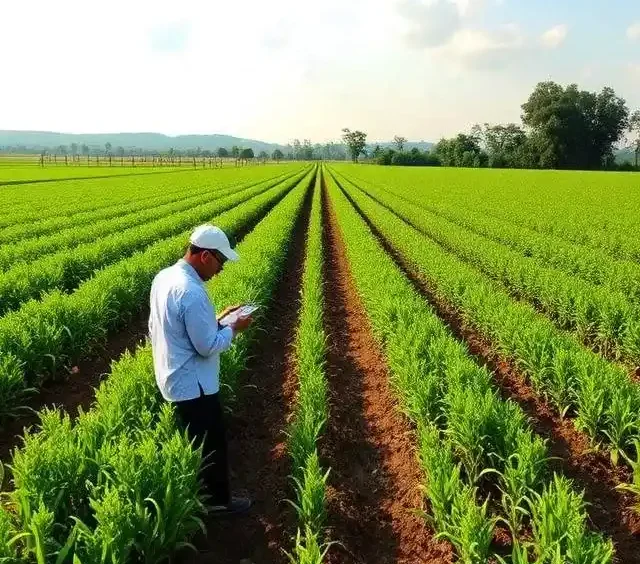
How Artificial Intelligence Is Reshaping Global Agriculture in 2025: 12 Transformative Use Cases Across Continents
WorldReport.press – 11 December 2025
The United Nations Food and Agriculture Organization (FAO) projects that global food production must increase 56 % by 2050 to feed 10 billion people — while arable land shrinks and climate volatility intensifies. Artificial intelligence, already deployed on more than 120 million hectares worldwide in 2025, is emerging as the single most powerful tool to close that gap.
Below are the twelve most impactful AI applications transforming agriculture today, with documented results from North America, Europe, Africa, Asia, and Latin America.
| Rank | Application | Lead Technology / Company | Real-World 2025 Impact |
|---|---|---|---|
| 1 | Precision herbicide spraying | John Deere See & Spray Ultimate | 78–95 % herbicide reduction on 28 million U.S. and Brazilian acres |
| 2 | Satellite + drone yield forecasting | Taranis (Israel/USA), Gamaya (Switzerland) | 6–10 week earlier forecasts; Indian rice farmers +31 % yield, Argentine soy +19 % |
| 3 | Fully autonomous harvesting | Advanced.Farm (California), SwarmFarm (Australia) | 1 200 driverless strawberry harvesters in California; Australian grain farms cut labour 68 % |
| 4 | AI disease scouting via smartphone | Plantix (Germany/India), Agrio | 2.8 million African smallholders prevented total crop loss in 2025 maize season |
| 5 | Sensor-less irrigation (soil tension AI) | SupPlant (Israel), CropX (global) | Israeli citrus orchards –38 % water, Spanish olives –29 % while yield rose 14 % |
| 6 | Livestock facial & behavioural recognition | Cainthus (Ireland/Canada), Connecterra (Netherlands) | Dutch dairy herds +11 % milk, Kenyan ranches reduced mortality 42 % |
| 7 | Predictive storage & grain quality | Centaur Analytics (Greece/USA) | Post-harvest loss in U.S. Midwest elevators fell from 7 % to 0.8 % |
| 8 | Carbon & regenerative farming verification | Regrow.ag (USA), Indigo Ag | 4.2 million verified hectares generated €312 million in carbon credits for farmers |
| 9 | Autonomous drone swarm spraying | Hylio (USA), Pyka (USA), XAG (China) | Single Texas cotton operation replaced three crop-dusters with drones; cost –61 % |
| 10 | AI market timing & price intelligence | AgriDigital (Australia), IntelinAir (USA) | Brazilian soybean growers following AI signals captured 14–18 % premium prices |
| 11 | Multilingual voice AI extension agents | Microsoft–Digital Green “Krishi GPT” (India) | 2.4 million Indian farmers received instant advice in 12 regional languages |
| 12 | Blockchain + AI direct supply chains | FarMart (India), ProducePay (Latam/USA) | Farmer-to-retailer margins rose 27–44 % across 11 countries |
Macro Trends Driving Adoption in 2025
- Investment in agri-AI reached $9.8 billion (270 % increase since 2021)
- 68 % of farms larger than 500 ha now use at least one AI system (USDA/Eurostat 2025)
- Average ROI across monitored projects: 3.4× within 14 months
- Developing nations leapfrogging: Sub-Saharan Africa and South Asia recorded the fastest adoption rates thanks to smartphone-based AI
Geopolitical & Sustainability Implications
The European Union’s Farm-to-Fork strategy now requires AI-verified sustainability data for 30 % of agricultural subsidies from 2026 onward. China’s 14th Five-Year Plan targets 100 % AI-lighthouses covering 50 million hectares by 2027. Meanwhile, the African Union’s Digital Transformation Strategy has deployed AI disease surveillance across 18 countries, preventing an estimated $1.9 billion in crop losses in 2025 alone.
Outlook for 2026–2030
McKinsey Global Institute and FAO joint modelling predicts that scaling current AI systems to 50 % of global farmland would:
- Increase total agricultural output 15–20 %
- Reduce agricultural water withdrawal 20–30 %
- Cut chemical pesticide use 40–60 %
- Sequester an additional 2.1 Gt CO₂e through precision practices
The message from the field is unequivocal: artificial intelligence is no longer an experimental add-on — it is becoming the operating system of 21st-century agriculture.

