



US Crisis Hits Canada: Oil, Protests & Trade Tensions

US Crisis Hits Canada: Oil, Protests & Trade Tensions
By World Report Press Desk | Updated: March 30, 2026
March 2026 was a month of global turbulence, driven largely by U.S. developments under the Trump administration. For Canada, the ripple effects were significant — from surging energy prices and economic opportunities in Alberta to travel disruptions for March break families, domestic protests outside U.S. consulates, and heightened uncertainty ahead of USMCA (CUSMA) review talks.
Here is a detailed look at how the top USA news stories of March 2026 directly impacted Canada, its economy, citizens, and international stance.
1. US-Iran War: Oil Price Surge Brings Mixed Economic Impact for Canada
The escalation of U.S.-Israel military operations against Iran dominated global headlines and had immediate consequences for energy markets. Iran’s retaliatory closure (or severe disruption) of the Strait of Hormuz triggered a sharp rise in global oil prices, with Brent crude climbing above $100–110 per barrel at peaks.
Key Impacts on Canada:
- Boost for Alberta Energy Sector: Higher oil prices provided a short-term lift to Canada’s oil sands and conventional producers. Alberta saw increased drilling activity, capital investment, and job support in Calgary and Edmonton. Canada even announced plans to ramp up crude output by 140,000 barrels per day starting in April as part of international efforts to stabilize supply.
- Inflation and Consumer Pain: Rising gasoline and diesel prices hit Canadian drivers at the pump, with increases of several cents per litre observed nationwide. This added pressure on household budgets, transportation costs, and broader inflation — raising concerns about potential stagflation risks if the conflict prolonged.
- Broader Economic Effects: While energy exports helped widen Canada’s trade surplus, non-energy sectors faced higher input costs. Analysts warned of slower consumer spending and possible Bank of Canada interest rate adjustments later in the year.
Prime Minister Mark Carney’s government expressed support for curbing Iran’s nuclear ambitions “with regret” but repeatedly stated Canada would not participate in offensive military operations and had not been consulted by the U.S. on the strikes. Foreign Minister Anita Anand emphasized Canada’s neutral-to-cautious stance while condemning Iranian attacks on civilian infrastructure.
Public opinion polls (Angus Reid, Leger) showed divided views: roughly half of Canadians opposed the U.S.-Israeli strikes, with a majority preferring strict neutrality.
Related: How the Iran Conflict is Reshaping Global Energy Markets in 2026
2. ‘No Kings’ Protests Spill Over into Canada
The massive “No Kings” protests across the United States on March 28, 2026 — one of the largest single-day demonstrations in U.S. history — found echoes north of the border.
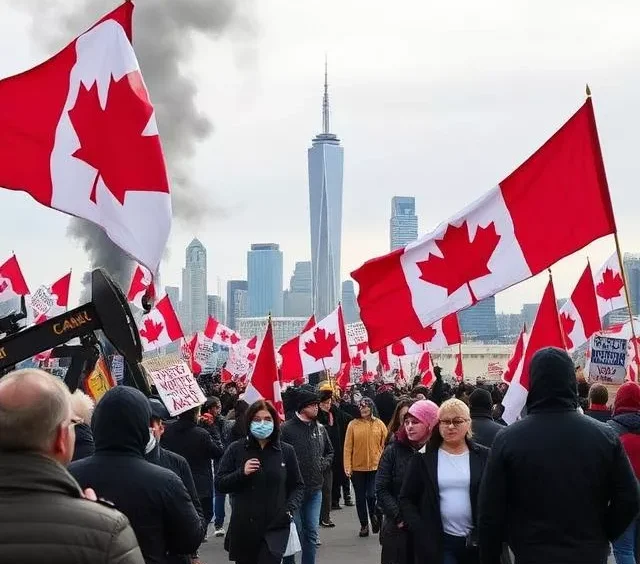
- Hundreds gathered outside the U.S. Consulate in Toronto and the U.S. Embassy in Ottawa, voicing opposition to the Iran war, U.S. immigration policies, and perceived authoritarian trends under President Trump.
- Protesters in Toronto, Ottawa, and other cities carried signs linking U.S. actions to broader concerns about democracy, immigration enforcement, and cross-border impacts.
- Canadian participants included activists concerned about how U.S. policies might affect bilateral relations, travel, and Canadian families with ties south of the border.
While the protests remained peaceful, they highlighted growing public unease in Canada about deepening polarization in the U.S. and its potential spillover effects.
3. Partial U.S. DHS Government Shutdown: Airport Delays Hit Canadian Travelers
A partial shutdown of the U.S. Department of Homeland Security (DHS), centered on funding disputes involving immigration enforcement, severely disrupted TSA operations at American airports during the busy March break travel season.
Direct Effects on Canadians:
- Long security lines (often 2–3+ hours) at major U.S. hubs like New York, Houston, Atlanta, and Florida airports frustrated Canadian snowbirds, families, and business travelers.
- Canadian airlines and travel groups issued warnings; some flights faced delays or cancellations compounded by weather and staffing shortages.
- Many March break travelers heading to Florida, California, or other U.S. destinations reported significant anxiety and adjusted plans by arriving much earlier or choosing alternative routes.
The chaos underscored the deep integration of North American travel and the vulnerability of cross-border movement to U.S. domestic political gridlock.
4. US-Canada Relations: Heightened Tensions Ahead of USMCA Review
March 2026 added layers of complexity to already strained U.S.-Canada ties:
- The Iran war created potential leverage for Canada in upcoming CUSMA (USMCA) renegotiation talks, as the U.S. may need reliable alternative energy suppliers.
- However, ongoing sectoral tariff disputes (steel, aluminum, autos, lumber) and broader Trump administration rhetoric continued to create uncertainty for Canadian exporters and businesses.
- Public and business sentiment in Canada reflected growing wariness, with some surveys showing a significant portion of small businesses viewing the U.S. as a less reliable partner.
Prime Minister Carney walked a careful diplomatic line — supporting certain U.S. goals while firmly rejecting direct military involvement and emphasizing Canadian sovereignty.
5. Other Notable Ripple Effects
- Iranian-Canadian Communities: Divided reactions emerged within Canada’s Iranian diaspora, with some supporting regime change hopes and others concerned about civilian casualties and regional instability.
- Global Supply Chains & Inflation: Higher energy costs risked feeding into grocery prices, shipping, and manufacturing — areas where Canadians were already feeling cost-of-living pressures.
- Stock Markets: Canadian and U.S. markets showed volatility but rallied at points on hopes of de-escalation in the Middle East.
What Lies Ahead for Canada in April 2026 and Beyond?
As March ends, Canada faces a delicate balancing act: capitalizing on energy sector gains while mitigating inflation risks, managing travel and trade disruptions, and navigating complex relations with its largest trading partner amid U.S. political volatility.
Key watchpoints include:
- Diplomatic efforts to de-escalate the Iran conflict
- Resolution (or prolongation) of the U.S. funding standoff
- Progress toward the July 2026 CUSMA review
- Continued monitoring of oil prices and their dual-edged impact on the Canadian economy
For Canadians, March 2026 served as a stark reminder of how interconnected North America remains — and how quickly U.S. events can influence daily life, from gas pumps to airport lines to foreign policy debates.
World Report Press will continue providing in-depth global analysis of these developments. Stay informed on U.S.-Canada relations, energy markets, and international security.