



Mark Carney Launches $2.3B EV Affordability Program

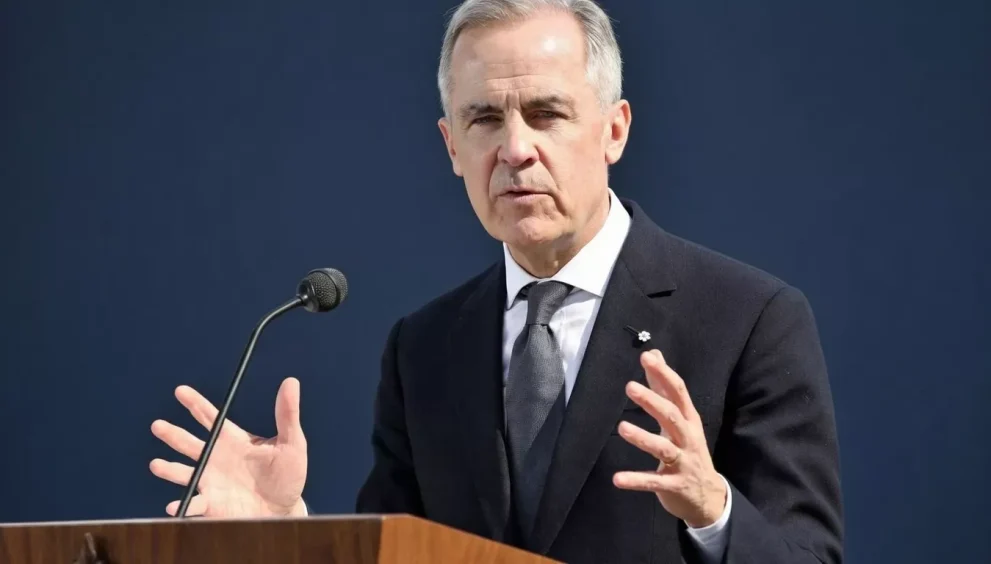
Mark Carney Launches $2.3B EV Affordability Program
By World Report Press Team Published: February 15, 2026 www.worldreport.press
Ottawa — Prime Minister Mark Carney has unveiled a major pivot in Canada’s electric vehicle policy, scrapping the previous EV sales mandate while launching a $2.3 billion five-year Electric Vehicle Affordability Program to make cleaner vehicles more accessible and bolster the domestic auto sector.
Announced on February 5, 2026, the strategy replaces rigid quotas with stronger emissions standards and consumer incentives, aiming to achieve 75% EV sales by 2035 and 90% by 2040 without mandating specific targets. The program offers up to $5,000 for battery electric vehicles (BEVs) and fuel cell EVs, and up to $2,500 for plug-in hybrids (PHEVs) priced up to $50,000 (for models from free trade agreement countries, excluding China). The price cap is waived for Canadian-made EVs and PHEVs, directly benefiting vehicles like the Dodge Charger Daytona EV assembled in Windsor, Ontario.
Breakdown of the $2.3 Billion EV Affordability Program
The Electric Vehicle Affordability Program (EVAP) runs from 2026 to 2030, with incentives tapering annually to sustain funding:
- 2026: $5,000 for BEVs/fuel cell EVs; $2,500 for PHEVs.
- 2027: $4,000 / $2,000.
- 2028–2029: Around $3,000 for BEVs.
- 2030: $2,000 for BEVs.
Officials project the rebates could support over 840,000 new EV purchases or leases, with applications starting February 16, 2026. The initiative revives elements of the former iZEV rebate system, which exhausted funds in 2025.
The broader auto package includes:
- Up to $3 billion from the Strategic Response Fund for industry adaptation.
- $1.5 billion for EV charging and hydrogen infrastructure expansion.
Dodge Charger Daytona EV: Canada’s Main Qualifying Model Gains Edge
The Dodge Charger Daytona EV, produced at Stellantis’ Windsor Assembly Plant, stands out as the primary Canadian-built BEV eligible under the program. For 2026:
- Scat Pack variants start around $62,000–$69,000 CAD (with higher trims exceeding $80,000+ before fees and options).
- The base R/T trim was discontinued due to tariff impacts and market factors.
The no-cap exemption allows full incentives on these higher-priced models, potentially boosting sales of performance-oriented Canadian-made EVs and supporting Ontario manufacturing jobs.
How Is Carney’s Net-Zero Vision Funded?
The $2.3 billion EV Affordability Program draws from federal budgets, reallocated paused-program funds, and general revenues. It fits into a larger multi-billion-dollar auto strategy emphasizing economic resilience, clean tech investment, and reduced reliance on foreign supply chains.
Carney’s net-zero framework relies on:
- Public investments in strategic funds and infrastructure.
- Tax incentives for zero-emission manufacturers.
- Stronger emissions rules to drive industry transitions.
Critics argue the subsidies disproportionately benefit imported vehicles, with limited impact on revitalizing Canadian plants that produce few qualifying models beyond the Charger Daytona and Chrysler Pacifica Hybrid.
“Trudeau EV 2.0”? Praise, Criticism, and Industry Reactions
The policy echoes the Trudeau-era iZEV rebates, prompting some to dub it “Trudeau EV 2.0”. Supporters hail the shift from mandates to incentives as realistic, protecting jobs amid U.S. tariff threats and global trade volatility while advancing emissions goals.
Environmental groups have voiced disappointment, viewing the mandate repeal as a climate setback. Automakers and parts associations have welcomed the balanced approach, noting it avoids undue burdens while fostering domestic demand.
Carney described the plan as forward-looking: positioning Canada as a leader in next-generation vehicle production through innovation and affordability.
What This Means for Canadians Heading into 2026
As EV adoption faces affordability and infrastructure hurdles, the incentives could lower barriers for buyers—particularly for Canadian-assembled options. With trade uncertainties and economic pressures, the program’s effectiveness will depend on uptake and industry response.
World Report Press tracks global policy, energy transitions, and economic developments. This EV strategy signals a pragmatic pivot toward incentives—effective bridge to net-zero or missed opportunity?
Share your take on the rebates, mandate change, and future of Canadian EVs in the comments.
Follow us for more
- Latest tech news
https://worldreport.press/category/tech-news/ - Latest Grok Imagine 2026 update xAI rolls out 10-second videos
https://worldreport.press/tech-news/latest-grok-imagine-2026-update-xai-rolls-out-10-second-videos/ - How AI is reshaping banking in 2026 fewer branches smarter operations
https://worldreport.press/tech-news/how-ai-is-reshaping-banking-in-2026-fewer-branches-smarter-operations/ - Major worldwide news stories recap last week
https://worldreport.press/tech-news/major-worldwide-news-stories-recap-last-week/ - Breaking ChatGPT linked to 9 reported deaths including 5 alleged suicides
https://worldreport.press/tech-news/breaking-chatgpt-linked-to-9-reported-deaths-including-5-alleged-suicides-openai-under-fire-amid-lawsuits-and-musk-altman-clash/