



Philippines Impeachment Crisis: Duterte Under Fire

Philippines Impeachment Crisis: Duterte Under Fire
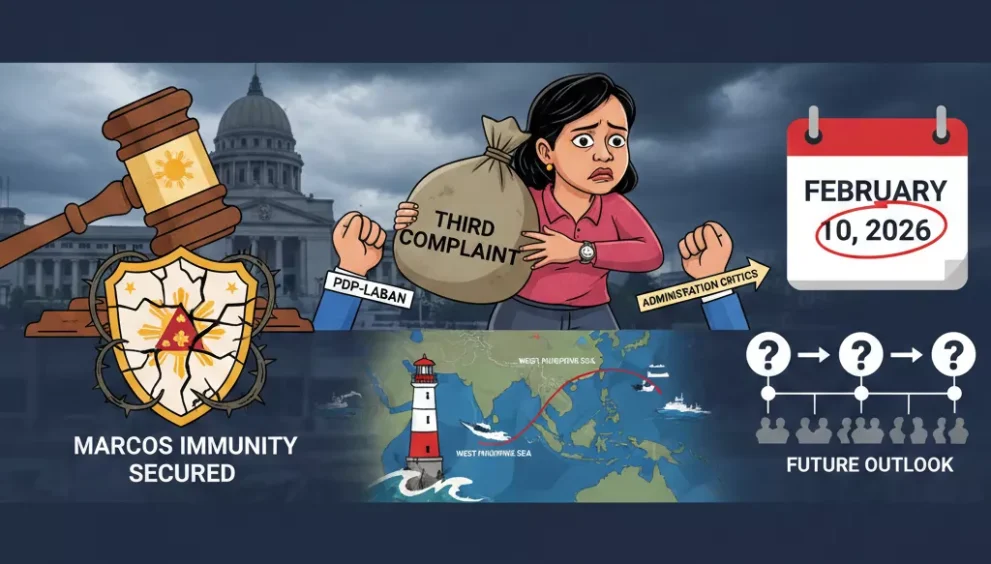
Philippines impeachment 2026 and related searches such as “impeachment Sara Duterte,” “Marcos impeachment junked,” “VP Sara third impeach rap,” and “South China Sea resolution Senate” have surged on Google Trends in the Philippines over the past few days. The filing of a third impeachment complaint against Vice President Sara Duterte on February 9–10, combined with the House justice committee’s decision to junk complaints against President Ferdinand Marcos Jr., has driven massive public interest. Queries for live updates, House proceedings, Senate resolutions on China, and political ratings reflect heightened scrutiny amid ongoing political friction in the Marcos-Duterte tandem.
As of February 10, 2026, the Philippines navigates intense domestic political turbulence. The House of Representatives has effectively granted President Marcos one-year immunity from impeachment after dismissing two major complaints for insufficient substance. Meanwhile, a fresh impeachment filing against Vice President Sara Duterte—led by church groups, lawyers, and civil society—revives allegations of misuse of public funds and betrayal of public trust. These developments coincide with Senate actions on South China Sea disputes and broader governance issues, testing the stability of the current administration ahead of mid-term political maneuvers.
Key Political Developments
- Marcos Immunity Secured: On February 10, the House approved the justice committee report junking two impeachment complaints against President Marcos Jr. The panel deemed them sufficient in form but insufficient in substance, triggering a one-year bar on new filings against him under House rules.
- Third Impeachment vs. VP Sara Duterte: Church-led groups and lawyers filed a new complaint on February 9–10, accusing Duterte of graft, corruption, bribery, and high crimes—largely tied to her time as Education Secretary and alleged threats against Marcos. This follows earlier complaints sidelined by the Supreme Court in 2025.
- Senate Resolution on China: The Senate adopted a resolution condemning aggressive actions by Chinese diplomats in the West Philippine Sea, amid reports of Manila seeing tentative signs of cooperation from Beijing to “isolate” disputes.
- Class Suspensions and Weather Impact: Heavy rainfall from a shear line caused suspensions in MIMAROPA and other areas on February 10, compounding recovery from Tropical Storm Basyang (Penha), which displaced over 182,000 families and damaged 1,300+ houses.
Political Snapshot (February 2026):
- Public trust: Marcos’ ratings dipped in late 2025 surveys, while Duterte’s rose sharply.
- Upcoming: President Marcos’ March 2026 UN visit; OECD Economic Survey launch (February 12); EU-Philippines trade talks (February 16–18).
- Broader issues: Calls to scrap travel tax, pass anti-dynasty bill before June 2026; flood control criticisms linked to political dynasties.
Root Causes: Fractures in the UniTeam Alliance
The Marcos-Duterte alliance—forged for the 2022 elections—shows visible cracks. Impeachment efforts stem from:
- Alleged misuse of confidential/intelligence funds (Education department under Duterte).
- Policy divergences on South China Sea, drug war legacy, and governance.
- Political positioning ahead of 2028 elections, with figures like Sen. Risa Hontiveros open to opposition bids.
South China Sea tensions persist despite diplomatic signals: Manila reiterates sovereignty while noting potential for Beijing to compartmentalize disputes. Broader context includes ASEAN chairmanship preparations (Philippines “ASEAN-ready”) and global engagements.
Government and Stakeholder Reactions
President Marcos urged public input on reforms, emphasizing outdated policies and priorities like internet access (Konektadong Pinoy Act progress). Malacañang framed the impeachment dismissals as procedural wins for stability.
VP Duterte’s camp has not issued detailed responses to the latest filing, but allies highlight her rising ratings. Opposition and civil society groups (e.g., Karapatan) criticize red-tagging and call for abolishing NTF-ELCAC.
Media outlets like Inquirer.net, Philstar.com, Rappler, ABS-CBN, and GMA Network provide balanced coverage, noting risks of polarization. International observers (Human Rights Watch, Reuters) highlight human rights concerns amid political volatility.
Expert Insights
Political analysts view the impeachment cycle as symptomatic of alliance strains but unlikely to succeed soon due to congressional majorities. Economists note stability benefits from resolved complaints, with OECD’s upcoming survey (February 12) expected to praise growth while urging inclusive reforms.
Diplomats see cautious optimism in China relations: Ambassador Romualdez noted signs Beijing may isolate sea disputes from broader ties.
Future Outlook: Stability vs. Escalation Risks
Short-term (February–March 2026): Focus on OECD launch, EU trade delegation (February 16–18), and Marcos’ UN trip. Impeachment efforts may stall in committee; Senate resolutions keep West Philippine Sea in spotlight.
Medium-term:
- Push for anti-dynasty bill, travel tax repeal before mid-2026 deadlines.
- ASEAN Summit preparations test diplomatic bandwidth.
- Potential 2028 positioning intensifies.
Opportunities:
- Strengthened alliances (US, EU) amid Indo-Pacific focus.
- Economic resilience (peso stable at ~₱58.53/USD).
- Tourism/infrastructure gains post-storm recovery.
Risks:
- Escalating political attacks eroding governance focus.
- Weather/flood vulnerabilities amid climate challenges.
- South China Sea incidents reigniting tensions.
For citizens: Monitor official channels for class/weather updates; engage in policy consultations.
For businesses/investors: Political stability supports continuity, but watch fiscal reforms.
For the Philippines: The current cycle underscores democratic checks but highlights alliance fragility.
What This Means for the Philippines and Beyond
February 2026’s political headlines—impeachment filings, junked complaints, and sea dispute resolutions—reveal a nation balancing internal divisions with external assertiveness. While Marcos gains breathing room, persistent efforts against Duterte signal unresolved tensions in the ruling tandem.
As ASEAN chairship and global engagements loom, effective management of these issues will define stability and progress. The coming weeks will test whether procedural wins translate to governance momentum or fuel further polarization.
For continuing coverage of Philippines impeachment 2026 developments, South China Sea updates, and political outlook, bookmark World Report Press. Related reading: Our analyses on ASEAN 2026 preparations and West Philippine Sea diplomacy.
Follow us for more
- Latest tech news
https://worldreport.press/category/tech-news/ - Latest Grok Imagine 2026 update xAI rolls out 10-second videos
https://worldreport.press/tech-news/latest-grok-imagine-2026-update-xai-rolls-out-10-second-videos/ - How AI is reshaping banking in 2026 fewer branches smarter operations
https://worldreport.press/tech-news/how-ai-is-reshaping-banking-in-2026-fewer-branches-smarter-operations/ - Major worldwide news stories recap last week
https://worldreport.press/tech-news/major-worldwide-news-stories-recap-last-week/ - Breaking ChatGPT linked to 9 reported deaths including 5 alleged suicides
https://worldreport.press/tech-news/breaking-chatgpt-linked-to-9-reported-deaths-including-5-alleged-suicides-openai-under-fire-amid-lawsuits-and-musk-altman-clash/