



US Navy Blockade Hits 20% of Global Oil Supply

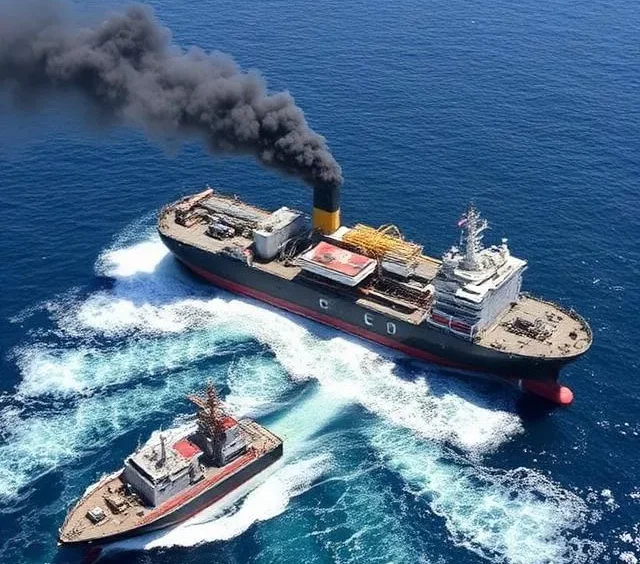
In a significant military escalation amid the ongoing Iran conflict, the United States Navy has begun enforcing a targeted blockade of vessels entering or leaving Iranian ports in the Strait of Hormuz. The operation officially commenced on Monday, April 13, 2026, just hours after high-stakes peace negotiations between US and Iranian officials collapsed in Islamabad, Pakistan.
U.S. Central Command (CENTCOM) confirmed that the blockade focuses on maritime traffic linked to Iranian ports while allowing non-Iranian vessels to continue transit where possible. President Donald Trump described the measure as essential to counter Iran’s previous restrictions on the waterway and warned that any Iranian fast-attack vessels approaching US forces would be “immediately eliminated.”
This development marks a dangerous new phase in the fragile two-week ceasefire that began earlier in April. With the blockade now active, global energy markets are on high alert as the world’s most critical oil chokepoint faces direct disruption.
The Strategic Importance of the Strait of Hormuz
The Strait of Hormuz, a narrow waterway between Iran and Oman connecting the Persian Gulf to the Gulf of Oman, serves as the lifeline for global energy trade. Before the current tensions intensified, approximately 20 million barrels of oil and petroleum products passed through the strait every day — accounting for roughly 20% of global seaborne oil trade and a substantial share of liquefied natural gas (LNG) exports.
This single maritime corridor is the primary export route for crude oil from major producers including Saudi Arabia, the United Arab Emirates, Iraq, Kuwait, and Qatar. In addition, it handles a significant portion of Qatar’s and the UAE’s LNG shipments, which together represent about 19% of global LNG trade. Roughly 80-83% of these energy flows are destined for Asian markets, particularly China, India, Japan, and South Korea.
Disruptions here do not merely affect regional players — they send immediate shockwaves through the entire global economy. Even partial restrictions can lead to higher insurance premiums for tankers, forced rerouting, and rapid drawdowns of commercial inventories.
Immediate Market Reaction and Oil Price Surge
Global oil benchmarks responded sharply to the blockade announcement. Brent crude, the international benchmark, climbed above $100–$103 per barrel, while West Texas Intermediate (WTI) also surged. This represents one of the fastest geopolitical-driven price increases in recent years.
Analysts note that the effective reduction in flows through the strait — already limited due to earlier Iranian actions — has compounded existing supply tightness. The International Energy Agency (IEA) and other observers have described the cumulative disruptions since the conflict began as among the largest supply shocks in modern oil market history.
The price spike is not limited to crude oil. Wholesale gasoline, diesel, heating oil, and jet fuel prices have also risen, with potential knock-on effects for transportation, aviation, and consumer goods worldwide.
Why This Blockade Poses a Severe Global Threat
The threat to 20% of global oil supply is not theoretical. Even short-term disruptions can create significant imbalances because alternative routes are limited. Saudi Arabia has some pipeline capacity to the Red Sea, but it cannot fully compensate for the volume normally shipped through Hormuz. Other bypass options, such as pipelines through Turkey or expanded production elsewhere, require time and substantial investment.
Experts warn that a prolonged blockade could lead to:
- Supply Shortages: Global oil supply could contract by several million barrels per day, depending on the duration and severity of enforcement.
- Inventory Drawdowns: Commercial stockpiles in importing nations are being drawn down faster than anticipated, reducing buffers against further shocks.
- Higher Insurance and Freight Costs: War-risk insurance premiums for vessels operating near the region have skyrocketed, increasing overall shipping expenses.
The timing adds urgency. The Northern Hemisphere summer driving season is approaching in many countries, while developing nations in the Global South are already grappling with elevated food and fuel costs.
Regional and Country-Specific Impacts
Asia — The hardest hit region. China, India, Japan, and South Korea import large volumes of Gulf crude. Higher energy costs could exacerbate inflationary pressures, slow industrial output, and strain current account balances. India, in particular, may face difficult choices between subsidizing fuel or allowing prices to rise for consumers.
Europe — Still recovering from previous energy volatility, European nations could see renewed pressure on natural gas and electricity prices. Diversification efforts toward US LNG and renewables may accelerate, but short-term pain appears inevitable.
Developing Nations — Countries in Africa, Latin America, and parts of South Asia with limited fiscal space face the greatest risk. Higher fuel and fertilizer prices (as the strait also carries significant fertilizer trade) could threaten food security and increase debt burdens.
United States and Western Hemisphere — While the US is less dependent on Gulf oil thanks to domestic production, higher global prices still influence domestic gasoline costs and contribute to broader inflationary trends.
Gulf Cooperation Council (GCC) countries have expressed concern. Saudi Arabia and others have reportedly urged de-escalation to prevent wider retaliation, including potential Iranian actions against the Bab al-Mandeb strait, which would create multiple global chokepoints.
Broader Economic and Geopolitical Consequences
Beyond immediate energy markets, the blockade risks triggering secondary effects across global supply chains. Higher energy costs feed into transportation, manufacturing, and agriculture, potentially pushing consumer prices higher and slowing economic growth.
Financial markets have shown volatility, with equities swinging and safe-haven assets such as gold attracting investor interest. Long-term, sustained high oil prices could delay the global energy transition or accelerate investment in alternatives, depending on policy responses.
Geopolitically, the move tests the limits of the current ceasefire and raises questions about escalation risks. Iran has condemned the blockade as “illegal” and an “act of piracy,” while signaling possible retaliatory measures. Diplomatic channels, including potential new rounds of talks mediated by Pakistan or other parties, remain open but face steep challenges.
The involvement of major powers adds complexity. China and Russia, both with strategic interests in the region, have called for restraint, while European nations monitor the situation closely due to energy security concerns.
What Happens Next?
The coming days and weeks will be critical. The fragile ceasefire is scheduled to last until around April 22, but the active naval presence in the strait increases the chance of miscalculation. Any Iranian retaliation or further US enforcement actions could deepen the disruption.
Market participants are watching several variables:
- Duration of the blockade and effectiveness of enforcement
- Ability of Gulf producers to utilize alternative export routes
- Release of strategic petroleum reserves by consuming nations
- Progress in diplomatic efforts to reopen negotiations
Analysts emphasize that even a relatively short disruption could take weeks or months to fully unwind due to tanker scheduling, insurance adjustments, and supply chain realignments.
WorldReport.press will continue providing balanced, in-depth coverage of the Iran conflict, the Strait of Hormuz situation, oil market developments, and the wider global economic implications. As this fast-moving story evolves, the stakes for energy security and international stability remain exceptionally high.