


Oil Falls Below $100 After US-Iran Ceasefire

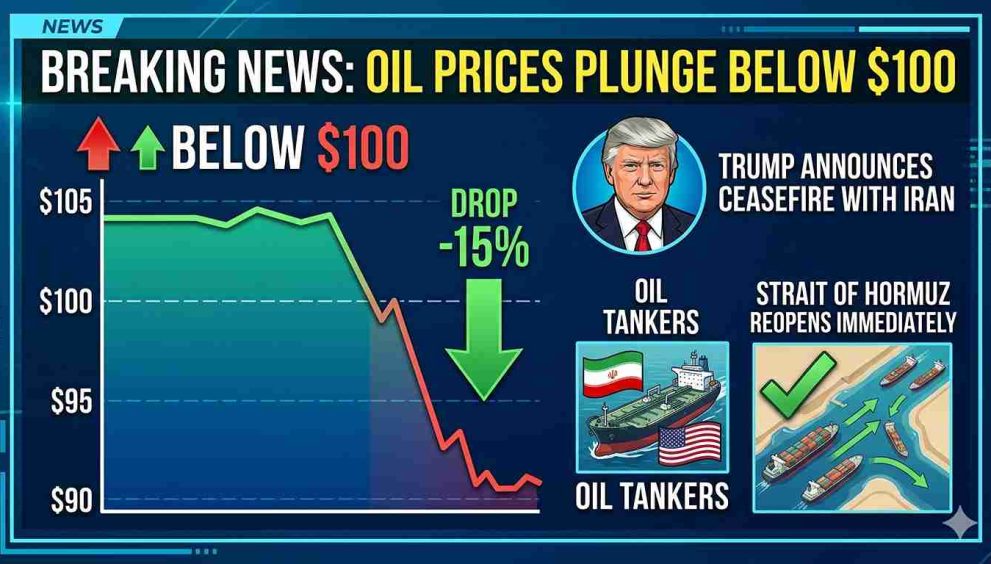
April 8, 2026 – Global oil markets witnessed a dramatic collapse on Wednesday after U.S. President Donald Trump announced a conditional two-week ceasefire with Iran. The agreement, which hinges on the immediate reopening of the strategically critical Strait of Hormuz, triggered one of the sharpest single-day drops in oil prices in nearly six years.
Brent crude futures tumbled more than 13% to trade around $94–$95 per barrel, while West Texas Intermediate (WTI) crude plunged over 14–15% to approximately $94–$96 per barrel in early trading. This sudden relief rally erased much of the war premium that had built up in recent weeks when Iran blocked the strait amid escalating tensions.
Dramatic Market Reaction
The sell-off began late Tuesday evening (U.S. time) following President Trump’s announcement on Truth Social. Oil prices, which had surged past $110–$115 per barrel in the previous sessions due to fears of prolonged disruption, reversed sharply as traders priced in the restoration of vital shipping routes.
- Brent crude: Down as much as 13.6% to around $94.43 per barrel
- WTI crude: Fell over 14.3% to near $94–$96 per barrel
The move marked the steepest one-day percentage decline since major market shocks years ago. Global stock futures, particularly in airlines, transportation, and consumer sectors, surged on expectations of lower energy costs, while energy stocks faced heavy selling pressure.
Background: From Blockade to Breakthrough
The crisis intensified in March 2026 when military conflict led Iran to restrict passage through the Strait of Hormuz — a narrow chokepoint responsible for nearly 20% of global oil and LNG supplies. The near-closure created severe supply bottlenecks, pushing physical crude prices to record highs in some grades and raising gasoline prices across the United States and beyond.
President Trump had issued a firm deadline earlier on Tuesday, warning of severe consequences if safe passage was not restored. Just hours before the deadline, he announced a “double-sided ceasefire,” with Iran agreeing to allow tankers to transit the strait safely for the next two weeks. In exchange, the U.S. and Israel agreed to suspend attacks during this period.
Trump also mentioned that Iran had presented a 10-point peace proposal, which could form the basis for longer-term negotiations. Pakistan reportedly played a key intermediary role in facilitating the deal.
What This Means for the World
The reopening of the Strait of Hormuz is expected to restore millions of barrels per day of oil supply relatively quickly, easing the acute shortage that had gripped energy markets.
For Consumers: American drivers and households worldwide may see gasoline prices ease in the coming days and weeks. U.S. pump prices had climbed significantly in early April due to the supply shock.
For Economies: Lower oil prices should help moderate inflation pressures that had been building from elevated energy costs. Broader markets welcomed the news with relief rallies in equities and bonds.
For Long-Term Outlook: Analysts remain cautious. While today’s plunge removes the immediate war risk premium, the two-week window is temporary. Full stabilization will depend on whether the ceasefire holds and leads to a durable agreement. Some forecasts still point to structural surpluses later in 2026 that could push prices lower in a base-case scenario, though geopolitical uncertainties persist.
Global Implications
This development comes as a major de-escalation in the U.S.-Israel-Iran tensions that had dominated headlines for weeks. Markets had baked in a significant risk premium, and its rapid removal has caused extreme volatility.
Energy experts are now closely monitoring actual tanker movements through the strait and any statements from OPEC+ members or major producers in the region.
WorldReport.press Takeaway: The dramatic collapse in oil prices underscores how quickly geopolitical breakthroughs can reshape global energy markets. From record spikes caused by the Hormuz blockade to today’s sharp reversal on ceasefire hopes, the episode highlights the fragile balance between conflict and commerce in the world’s most vital energy corridor.
For families feeling the pinch at the fuel pump and businesses grappling with higher costs, this news brings much-needed relief — at least in the short term.
Stay tuned to WorldReport.press for continuing coverage on oil markets, the evolving Middle East situation, and its impact on the global economy.
Market data as of early April 8, 2026, compiled from major international wire services and exchanges.