



GCC Crisis April 2026: Hormuz Blockade Shocks Gulf

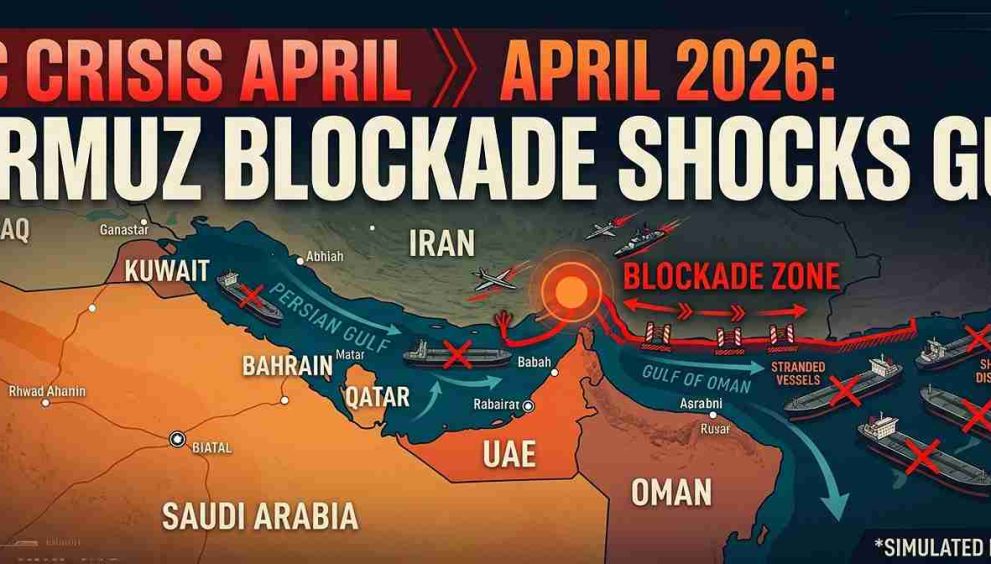
As April 2026 began under the shadow of escalating conflict, the six member states of the Gulf Cooperation Council (GCC) — Saudi Arabia, the United Arab Emirates, Qatar, Kuwait, Bahrain, and Oman — found themselves confronting one of the most severe regional security and economic challenges in recent memory. The ongoing US-Iran war has transformed the Strait of Hormuz into a contested chokepoint, with Iran’s effective closure of the vital waterway triggering retaliatory strikes, soaring global oil prices, and widespread disruption to energy exports, aviation, and daily life across the Gulf.
This week, GCC leaders took their concerns to the world stage, demanding decisive international action while grappling with the immediate fallout of Iranian aggression on their territories and economies.
GCC Turns to the UN Security Council for Protection of the Strait of Hormuz
In a high-profile address at the United Nations Security Council on April 2, GCC Secretary-General Jasem Mohamed Al-Budaiwi delivered a stark warning. He accused Iran of crossing “all red lines” by closing the Strait of Hormuz, preventing commercial vessels and oil tankers from transiting freely, and even imposing conditions or fees on some ships attempting passage.
Al-Budaiwi urged the Council to “take all necessary measures” to protect maritime routes, guarantee uninterrupted international navigation, and halt Iranian attacks on Gulf states. He emphasized that any future negotiations or agreements involving Iran must include the GCC countries as essential stakeholders to ensure lasting regional security.
Bahrain, holding the rotating presidency of the Security Council in April, played a central role by drafting a resolution authorizing member states to use “all necessary means” — including defensive force — to secure shipping through the strait. However, the push faced significant hurdles, with permanent members such as China, Russia, and France expressing opposition to language endorsing military action. A scheduled vote was postponed, and a toned-down presidential statement on UN-GCC cooperation was ultimately adopted instead.
The GCC’s appeal highlighted the broader consequences: the strait, which handles roughly one-fifth of global oil and LNG supplies, has seen shipping traffic drop dramatically, with many vessels loitering or avoiding the area due to safety fears. At least 24 commercial vessels have reportedly been hit since the conflict intensified, exacerbating global energy volatility.
Iranian Retaliatory Strikes Hit Gulf Infrastructure
Iran’s response to US and Israeli operations has included repeated missile and drone attacks targeting civilian and strategic sites across the GCC. Reports this week detailed strikes or interceptions over Saudi Arabia, the UAE, Bahrain, Qatar, and Kuwait. In one incident, fires broke out at fuel tanks near Kuwait’s international airport, though they were quickly contained. Other targets included oil facilities, airports, residential areas, and diplomatic missions.
The GCC condemned these actions as “flagrant violations” of sovereignty, international law, and the UN Charter. UN Secretary-General António Guterres warned of the risk of a “wider war,” while stressing the need for Iran to comply with earlier resolutions demanding an end to attacks on Gulf nations and Jordan.
Gulf states have activated emergency defense protocols, bolstered protection for critical infrastructure (including desalination plants), and coordinated responses through joint ministerial meetings, including with partners like Jordan, Russia, and China.
Economic Shockwaves: Soaring Oil Prices and Supply Disruptions
The closure of the Strait of Hormuz has created a double-edged economic crisis for the GCC. While higher oil prices — with Brent crude pushing toward or exceeding $105–$110 per barrel at times — provide some revenue offset, the sharp drop in export volumes has led to massive losses estimated in the tens of billions of dollars.
Qatar, a global LNG leader, has issued force majeure declarations on some shipments. Aviation has been severely disrupted, with major carriers like Qatar Airways, Emirates, and Etihad facing delays, cancellations, and route adjustments. Tourism, business events, and supply chains for food and essentials have suffered, pushing up grocery prices significantly in several countries.
Analysts warn that prolonged disruption could tip some Gulf economies toward recession, complicating long-term diversification plans such as Saudi Vision 2030. Governments are exploring emergency fiscal measures and alternative shipping routes, though airlifts for critical goods have already become necessary in certain areas.
Divergent yet Unified GCC Positions
While the GCC has maintained a united public front in international forums, subtle differences in tone have emerged. Saudi Arabia and the UAE have appeared more assertive in calling for continued pressure on Iran to degrade its military capabilities. Qatar, Oman, and Kuwait have emphasized the need for swift diplomatic solutions to minimize long-term damage and preserve regional coexistence.
Despite these nuances, all members agree that the current situation is unsustainable and that Gulf voices must be central to any resolution.
Looking Ahead: High Stakes for Regional Stability and Global Energy Security
As US President Donald Trump indicated that the campaign against Iran could wind down in the coming weeks — conditional on the reopening of the Strait of Hormuz — the GCC remains on high alert. The coming days could see further attempts to test maritime passages, renewed diplomatic efforts, or additional UN-level developments.
For the international community, the crisis underscores the interconnected nature of Gulf security and global energy markets. Disruptions here ripple far beyond the region, affecting fuel costs, inflation, and supply chains worldwide.
The GCC’s proactive diplomacy at the UN this week reflects a determination not only to defend its sovereignty and economic interests but also to prevent the conflict from spiraling into a broader regional catastrophe.