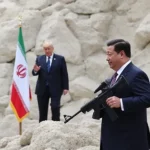



Hormuz Blockade: Country-Wise Oil Impact Explained


By World Report Press Desk | April 13, 2026
Following the collapse of U.S.-Iran peace negotiations in Islamabad and President Donald Trump’s announcement of a U.S. naval blockade, the Strait of Hormuz — a critical chokepoint carrying roughly 20% of global oil and significant LNG volumes — faces severe disruption. The blockade, targeting vessels linked to Iranian ports and beginning on April 13, 2026, threatens to tighten global energy supplies and drive up prices worldwide.
The Strait normally handles about 20–21 million barrels per day of crude oil and petroleum products, with around 80–89% destined for Asia. A prolonged blockade could create shortages, inflate energy costs, and ripple through supply chains, inflation, and economic growth across continents.
Here is a country-wise and regional breakdown of the potential impacts based on current dependency levels and market analyses.
Asia: The Hardest-Hit Region (Receives ~80–89% of Hormuz Flows)
China (37.7% of Hormuz oil flows) As the world’s largest oil importer, China faces significant exposure despite diversified sources like Russia. Analysts estimate potential refined oil output cuts of 50–70% in the worst case. Higher costs for petrochemicals, plastics, and transport could slow industrial activity and fuel inflation. China has built substantial stockpiles (estimated at 900 million–1.3 billion barrels), providing some buffer for 3–4 months, but prolonged disruption may force export curbs and higher domestic fuel prices.
India (14.7% of flows; ~40–50% of its oil imports via Hormuz) India, the third-largest oil consumer, imports around 85% of its crude. Disruptions could push fuel prices higher, affecting inflation, transportation, and agriculture (via fertilizer shortages). The government is exploring alternatives from the U.S., Russia, and others, but Gulf-based NRIs and remittances may feel indirect pressure from regional economic slowdowns. Strategic reserves offer limited cover (around 20–74 days depending on estimates).
Japan (10.9% of flows; 73–90% of its oil imports via Hormuz) Highly dependent with minimal domestic production, Japan holds robust reserves (~254 days). However, any shortfall risks higher energy costs for its export-driven economy, particularly manufacturing and technology sectors. Japan is among the most vulnerable major economies due to its heavy reliance on Gulf supplies.
South Korea (12.0% of flows; 70–80% dependency) South Korea faces risks to its petrochemical and refining industries. Reserves cover roughly 60–208 days, but export restrictions on products like naphtha are already emerging. Higher energy prices could impact shipbuilding, electronics, and autos.
Other Asian Nations (e.g., Taiwan, Thailand, Philippines, Pakistan, Singapore) Many smaller economies with 25–60% dependency are bracing for fuel shortages, power rationing, and higher costs for food and goods. Thailand and Pakistan have reported early signs of conservation measures; the Philippines has faced sharp petrol price spikes.
Europe: Moderate but Rising Pressure
Europe receives only ~3.8% of direct Hormuz flows but remains vulnerable through global price transmission. Countries like Italy (largest EU importer from Gulf states) and the UK face risks to LNG supplies from Qatar. Diesel shortages could emerge in coming weeks, affecting trucking and industry. Germany and France have more diversified sources but will still see higher inflation and energy costs. The EU may coordinate stock releases via the International Energy Agency (IEA).
United States: Limited Direct Impact, Global Ripple Effects
The U.S. receives just 2.5% of Hormuz flows thanks to strong domestic production and diversified imports. However, Americans could face modestly higher gasoline and diesel prices as global benchmarks (Brent crude) surge toward or above $100 per barrel. Broader effects include increased inflation on imported goods and potential strain on allies, prompting U.S. exports to help stabilize markets.
Middle East & Gulf Producers
Gulf exporters (Saudi Arabia, UAE, Kuwait, Qatar, Iraq) are directly affected as the blockade targets Iranian-linked traffic but disrupts overall flows. Bypass pipelines (Saudi East-West and UAE Habshan-Fujairah) offer partial relief (up to ~5–7 million b/d combined), but prolonged issues could reduce revenues and force production adjustments. Iran itself faces self-imposed export challenges.
Other Regions (Africa, Latin America, etc.)
Emerging markets in Africa and parts of Latin America are exposed via higher global energy and fertilizer prices, potentially worsening food insecurity and transport costs. Spare production capacity elsewhere (e.g., U.S., OPEC+ increases) may help offset some losses, but IEA-coordinated stock releases (hundreds of millions of barrels) are already being activated to cushion the shock.
Broader Global Implications
- Oil Prices: Brent and WTI have risen sharply; analysts warn of further spikes and possible shortages in petrochemicals, LNG, and fertilizers.
- Inflation & Growth: Energy shocks could slow global GDP, with uneven effects — Asia facing the sharpest short-term pain.
- Supply Chains: Disruptions extend beyond oil to plastics, textiles, and shipping costs, affecting manufacturers worldwide.
- Mitigation Efforts: IEA members have released emergency stocks; countries are rushing to secure alternative supplies from the U.S., Russia, West Africa, and others.
The current two-week ceasefire (expiring April 22) adds urgency. Any escalation or naval incidents could worsen the situation.
World Report Press will continue monitoring developments, including oil price movements, diplomatic responses, and real-time economic effects across regions.