


Ceasefire Crumbles as Beirut Faces Heavy Strikes

By World Report Press Investigative Desk | April 10, 2026
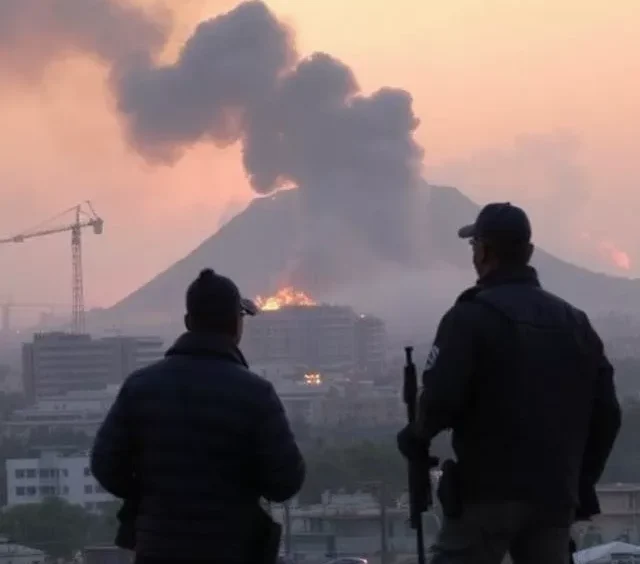
Beirut / Washington D.C. / Geneva – Less than 48 hours after the United States and Iran announced a two-week ceasefire on April 8, 2026, Israeli forces unleashed one of the heaviest airstrike campaigns on Lebanon in recent history. Over 100 strikes in just 10 minutes pounded central Beirut and southern regions, killing at least 182 to 254 people and wounding more than 1,000 others — the deadliest single day since the latest escalation began.
The critical flaw? The fragile U.S.-Iran truce does not cover Lebanon or Hezbollah. Iran immediately labeled the attacks a “blatant violation,” while Israel and the White House insist the deal only halts direct strikes on Iranian soil. This dangerous loophole threatens to unravel the entire agreement, reignite regional chaos, and send shockwaves across the global economy.
World Report Press investigation shows how continued fighting in Lebanon could collapse the ceasefire, choke global energy supplies once more, and push the world toward higher inflation, disrupted trade, and renewed uncertainty in 2026.
The Ceasefire That Left Lebanon Exposed
The April 8 deal, brokered with Pakistani involvement, includes two main public commitments:
- The U.S. and Israel pause direct attacks on Iran for two weeks.
- Iran allows the “complete, immediate and safe opening” of the Strait of Hormuz.
Nowhere does it address Israeli operations against Hezbollah in Lebanon. Israeli Prime Minister Benjamin Netanyahu stated clearly: the ceasefire does not apply there. Iran and mediators argue the spirit of the truce demands a broader regional pause.
On April 8-9, Israel conducted massive strikes across Beirut’s southern suburbs, central districts, Tyre, Nabatieh, Sidon, and the Bekaa Valley — hitting residential and commercial areas without prior warning in some cases. Lebanese officials described it as “barbaric,” with hospitals overwhelmed.
Iran has responded by slowing Hormuz reopenings and warning that time is running out. Shipping data as of April 9-10 confirms traffic remains at a virtual standstill: only a handful of vessels (often 3-11 per day) have transited, compared to the pre-war average of over 100-140 ships daily. Insurance costs stay high, and many operators remain cautious.
Global Ripple Effects: Energy, Economy, and Stability at Risk
This Lebanon flashpoint matters far beyond the Middle East. Here’s how it could impact the world:
- Oil and Energy Markets: The Strait of Hormuz carries roughly 20-25% of global oil and significant LNG. Even with the ceasefire announcement, full restoration of tanker traffic is weeks away at best. Fresh escalation in Lebanon could prompt Iran to tighten control further, driving oil prices higher again. Brent crude already spiked dramatically during the conflict (peaking near or above $100-120 in earlier phases) before easing somewhat. Renewed disruptions would reverse gains, hitting importers hard.
- Inflation and Growth Worldwide: Higher energy costs feed into higher transportation, manufacturing, and food prices globally. Economists warn that prolonged uncertainty could shave 0.2-1% off global GDP growth in 2026, with Europe (a major energy importer) and developing nations feeling it most. Inflation could rise by 0.5-0.7 percentage points or more, complicating central bank policies from the Federal Reserve to the European Central Bank and beyond.
- Supply Chains and Trade: Disrupted shipping doesn’t stop at oil. It affects food security, semiconductors, consumer goods, and aviation fuel. Emerging markets in Asia, Africa, and Latin America — reliant on stable energy imports — face higher costs for everything from diesel to fertilizers.
- Humanitarian and Refugee Crisis: Lebanon, already strained by years of conflict and economic collapse, could see massive new displacement. This risks broader regional instability, straining international aid systems and potentially creating new migration pressures toward Europe and beyond.
- Geopolitical Repercussions: The mismatch over Lebanon tests the credibility of the ceasefire. Vice President JD Vance is scheduled to lead U.S. talks in Islamabad this weekend. Failure to expand the truce could lead to resumed direct U.S.-Iran hostilities, drawing in more actors and raising the specter of a wider war involving multiple proxies.
Analysts note that while crude prices dipped on initial ceasefire news, markets remain nervous. Any collapse could push prices back toward peak levels, echoing the biggest supply disruptions in recent history.
The Investigative Reality Behind the Spin
Both Washington and Tehran claimed victory after the April 8 announcement. President Trump called it a decisive success meeting all U.S. objectives. Iran portrayed it as a stand against aggression. Yet the fine print reveals deep fragility: unresolved nuclear concerns, persistent Iranian missile capabilities, restricted Hormuz access, and now escalating violence in Lebanon outside the deal’s scope.
This pattern — tactical pauses masking strategic gaps — risks turning a temporary de-escalation into a prelude for something larger. One miscalculation, such as a major Hezbollah response or further Israeli strikes, could shatter the two-week window before real diplomacy takes hold in Islamabad.
World Report Press Bottom Line
The world cannot afford another prolonged Middle East energy shock. Lebanon’s exclusion from the U.S.-Iran ceasefire creates a clear pathway for escalation that would raise costs for drivers in Europe, manufacturers in Asia, families in Latin America, and consumers everywhere.
Higher fuel prices, slower growth, and renewed inflation are not abstract risks — they are immediate threats if the fragile truce crumbles.
World Report Press will continue monitoring developments from Beirut, Hormuz shipping data, the Islamabad talks, and global market reactions. We cut through official narratives to deliver the unfiltered global picture.
The ceasefire offered a narrow window for peace. Lebanon could slam it shut — with consequences that reach every corner of the planet.
This is a rapidly developing story. The coming days, including Vance’s negotiations in Pakistan, may determine whether the world gets lasting stability or a dangerous new chapter of conflict.
Based on reports from Lebanese health authorities, Israeli statements, U.S. and Iranian official releases, shipping trackers, and economic analyses as of April 10, 2026.