



Iran War: Global Markets Hit by Oil Shock & Inflation

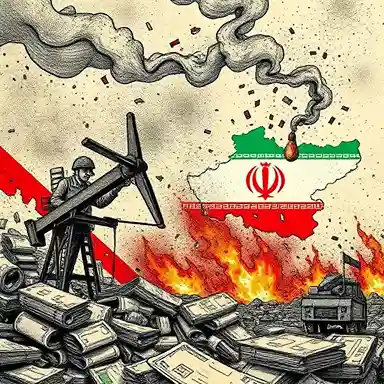
Iran War: Global Markets Hit by Oil Shock & Inflation
As the US-Israeli conflict with Iran enters its fifth week (launched February 28, 2026), global markets are grappling with the largest energy supply disruption in history. Iranian retaliatory strikes and the effective closure of the Strait of Hormuz — through which ~20-25% of global seaborne oil and one-fifth of LNG shipments pass — have triggered sharp spikes in energy prices, rattled equities, and heightened recession fears worldwide.
Energy Markets in Turmoil
Oil and gas prices have surged dramatically, reshaping the global energy landscape:
- Brent crude: Up more than 40-55% since late February, trading around $106-$112 per barrel as of late March (from ~$72 pre-war). Brief spikes reached $120, with some analysts warning of $130-$150 in prolonged scenarios.
- WTI crude: Similarly elevated, near $90-$100 per barrel.
- LNG and European gas: Prices up nearly 60%, with European benchmarks doubling due to halted shipments and force majeure declarations by major exporters like QatarEnergy.
This represents the biggest shock to global oil supplies on record, per the International Energy Agency. Disruptions to Gulf energy infrastructure have compounded the issue, affecting not just crude but downstream products. Oil majors warn that prices may not return to pre-war levels soon, even if fighting eases, due to restocking and lingering risks.
Equities and Financial Markets Hit Hard
Global stocks have declined amid uncertainty, though some relief came from ceasefire talks in late March:
- Major indices fell 5.5%+ overall since the war began, with Asian markets worst affected. The Dow, S&P 500, and European benchmarks saw sharp drops; emerging markets like South Korea’s KOSPI and Pakistan’s KSE 100 triggered circuit breakers with double-digit single-day losses.
- Recent sessions showed partial recovery on de-escalation hopes (e.g., S&P 500 up 0.5%+ on March 25), but volatility persists.
- Bonds sold off; the US dollar strengthened as a safe-haven. Airline and cyclical stocks suffered, while defense-related names saw mixed moves.
Gold, traditionally a refuge, has paradoxically declined 14-17% since the war started (spot prices now ~$4,300-$4,500/oz), partly due to higher oil-driven inflation expectations and rate-hike fears overriding safe-haven demand.
Broader Economic Fallout
Higher energy costs are feeding into inflation and slowing growth:
- Inflation risk: Analysts project +0.5-0.7 percentage points globally. Europe and Asia face acute pressure; Germany saw gasoline prices jump 20%+.
- Growth impact: Global GDP could be shaved by 0.1-0.6% in H1 2026 (or more if prolonged), per Goldman Sachs, J.P. Morgan, and others. Recession risks rise in energy-import-heavy economies.
- Commodities and food: Fertilizer prices (e.g., urea) up ~30%; soybean oil at two-year highs. Developing nations in Africa and Asia face the harshest hits to food security and agriculture.
- Regional variations: Gulf states and Iran suffer direct damage. Emerging markets see currency pressures from a stronger dollar. Advanced economies absorb the shock better but still face higher borrowing costs and tighter policy.
Outlook: Duration Is Key
- Short war/ceasefire: Price spikes likely temporary; oil could ease toward $70-80/bbl later in 2026 with minimal GDP hit.
- Prolonged conflict: Sustained $100+ oil, deeper inflation, and broader slowdown — potentially echoing past energy crises.
- Markets are pricing this primarily as an inflationary shock so far, but growth downside risks loom if disruptions persist. Central banks face a dilemma: fight inflation or support growth.
The conflict’s full economic price tag is still unfolding, with cascading effects on supply chains, trade routes, and geopolitics. Businesses worldwide are already seeing higher input costs, squeezed margins, and disrupted shipping.
For ongoing coverage and updates tailored to global investors and policymakers, www.worldreport.press will continue monitoring this fast-evolving story. Stay tuned for sector-specific analysis and scenario forecasts.