



786 Significance in Islam and Global Religions

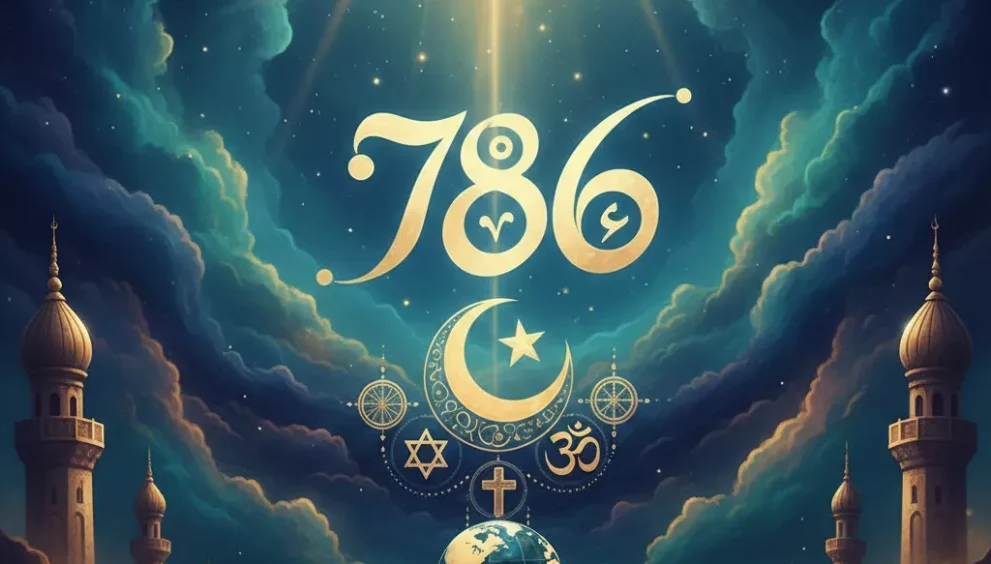
786 Significance in Islam and Global Religions
title: “786: Understanding Its Significance in Islam and Global Religious Traditions” description: “Explore the meaning of 786 in Islamic tradition and its recognition across world religions. A comprehensive guide to this sacred number’s cultural and spiritual significance for global audiences.” author: “World Report Press” date: “2026-02-10” categories: [“Religion”, “Culture”, “Global Affairs”, “Interfaith Understanding”] tags: [“786 meaning”, “Islamic traditions”, “religious symbolism”, “world religions”, “cultural heritage”, “interfaith dialogue”] keywords: “786 meaning, what is 786, Bismillah meaning, Islamic numerology, religious numbers, 786 Islam explanation, sacred numbers world religions, Muslim traditions worldwide, interfaith understanding” featured_image: “/images/786-global-religious-significance.jpg”
786: Understanding Its Significance in Islam and Global Religious Traditions
A comprehensive exploration of the number 786, its profound meaning in Islamic culture, and its recognition across world religions—presented for a global audience.
Introduction: A Number That Transcends Borders
In an increasingly interconnected world, understanding religious and cultural traditions has never been more important. The number 786 serves as a fascinating case study in how numerical symbolism carries deep spiritual meaning across cultures and continents. For over 1.8 billion Muslims worldwide, this three-digit number represents something far greater than its numerical value—it embodies faith, tradition, and divine blessings.
Whether you’re encountering 786 on jewelry, business signage, vehicle license plates, or wedding invitations across Muslim-majority nations and diaspora communities, this number carries rich historical and spiritual significance that deserves deeper understanding.
This article provides a comprehensive, accessible exploration of 786 for readers worldwide—from those within Muslim communities seeking deeper knowledge to non-Muslims interested in understanding global religious practices.
What Does 786 Mean? The Foundation
The Islamic Connection
In Islamic tradition, 786 is the numerical representation of the Arabic phrase:
“Bismillah al-Rahman al-Rahim”
(بِسْمِ ٱللَّٰهِ ٱلرَّحْمَٰنِ ٱلرَّحِيمِ)
English translation: “In the name of God, the Most Gracious, the Most Merciful”
This phrase, known as the Basmala or Bismillah, holds immense importance in Islamic practice. It appears at the beginning of 113 out of 114 chapters (Surahs) in the Quran, Islam’s holy scripture. Muslims around the world recite this phrase before meals, at the start of important tasks, and throughout daily life as an invocation of God’s blessings and guidance.
Why Numbers? The Historical Context
The connection between 786 and Bismillah comes from an ancient Arabic alphanumeric system called Abjad (also known as Gematria in Jewish tradition or Isopsephy in Greek culture). This system assigns numerical values to each letter of the Arabic alphabet.
How 786 is calculated:
| Arabic Phrase | Abjad Value |
|---|---|
| Bismillah (بِسْمِ ٱللَّٰهِ) | 102 |
| al-Rahman (ٱلرَّحْمَٰنِ) | 329 |
| al-Rahim (ٱلرَّحِيمِ) | 355 |
| Total | 786 |
This numerical system has historical roots stretching back centuries and was used for various purposes including poetry, record-keeping, chronology, and mystical studies across the Arab world and beyond.
Historical Origins: From Ancient Practice to Modern Tradition
The Abjad System: Ancient Roots
The Abjad numerology system predates Islam and was used throughout the Arabic-speaking world for practical and mystical purposes. Similar systems existed in other ancient cultures:
- Hebrew Gematria: Jewish tradition of assigning numerical values to Hebrew letters
- Greek Isopsephy: Ancient Greek practice of calculating numerical values of words
- Sanskrit Numerology: Hindu tradition of numerical symbolism in sacred texts
Colonial Era Popularization
The widespread use of 786 as a substitute for Bismillah gained particular momentum during the British colonial period in the Indian subcontinent (19th-20th centuries). Historical records suggest several reasons for this practice:
- Protection of Sacred Text: Muslims wanted to prevent the desecration or disrespectful handling of Arabic religious text by non-Muslims who might not understand its significance
- Linguistic Practicality: In multilingual regions where not everyone could read or write Arabic, the number provided a universally recognizable symbol
- Administrative Convenience: British colonial officials and local populations found numerical codes easier to process in official documents
- Cultural Preservation: The practice became a way to maintain religious identity while navigating colonial administrative systems
Geographic Spread
From its South Asian origins, the practice of using 786 spread through:
- Migration patterns: South Asian diaspora communities worldwide
- Trade routes: Muslim merchants and traders across Asia and Africa
- Cultural exchange: Interfaith communities in pluralistic societies
- Modern globalization: Digital communication and social media
Global Usage: Where and How 786 Appears Worldwide
South Asia (India, Pakistan, Bangladesh, Sri Lanka, Nepal)
Prevalence: Extremely widespread and deeply embedded in cultural practice
Common uses:
- Wedding invitation cards and ceremonial announcements
- Business letterheads and company logos
- Vehicle registration plates (often purchased at premium prices)
- Home and office decorations
- Beginning of official documents and letters
- Mobile phone numbers (considered auspicious)
- Store names and commercial signage
Middle East and North Africa
Prevalence: Limited to rare usage; Arabic Bismillah strongly preferred
Context: Arab Muslims generally write the full Arabic phrase rather than using numerical substitution. The practice is largely unknown in countries like Saudi Arabia, Egypt, Jordan, UAE, and throughout the Arabian Peninsula.
Southeast Asia (Indonesia, Malaysia, Brunei, Singapore)
Prevalence: Moderate, with regional variations
Context: Some communities, particularly those with historical South Asian connections through trade and migration, recognize 786, but it’s less common than in South Asia.
Central Asia (Kazakhstan, Uzbekistan, Turkmenistan, Kyrgyzstan)
Prevalence: Minimal
Context: Traditional Islamic practices predominate with little use of numerical substitutes.
Western Countries (USA, UK, Canada, Australia, Europe)
Prevalence: Present in diaspora communities, especially South Asian Muslims
Context: Usage varies by ethnic background. South Asian Muslim communities may use 786 in cultural contexts, while Arab, Turkish, and Iranian Muslim communities typically do not.
Africa (East, West, and Southern Africa)
Prevalence: Limited, with some recognition in areas of South Asian influence
Context: East African countries with historical Indian Ocean trade connections may show some familiarity with the practice.
Religious and Scholarly Perspectives
Islamic Scholarly Views: The Debate
The use of 786 has generated diverse opinions among Islamic scholars worldwide, reflecting the religion’s rich tradition of scholarly discourse and interpretation.
Traditional/Conservative Position
Main argument: The number 786 has no basis in Islamic scripture (Quran) or the teachings and practices of Prophet Muhammad (peace be upon him).
Key points:
- Prophet Muhammad never used numerical codes for religious phrases
- The companions (Sahaba) of the Prophet wrote Bismillah in Arabic script
- Numerical substitution is an innovation (bid’ah) without religious precedent
- The spiritual power lies in the actual Arabic words, not numbers
- Using 786 may confuse younger generations about authentic Islamic practice
Recommendation: Avoid using 786; write and recite the full Arabic Bismillah
Moderate/Pragmatic Position
Main argument: While 786 is not part of original Islamic tradition, it can be accepted as a cultural practice if properly understood.
Key points:
- Cultural practices are permissible when they don’t contradict Islamic principles
- The intention (niyyah) behind using 786 is to honor God, which is positive
- Can serve as a bridge in multicultural societies
- Should never replace the actual recitation and writing of Bismillah
- Educational efforts should focus on teaching the original Arabic phrase
Recommendation: Cultural use acceptable, but prioritize authentic Islamic practice
Contemporary Scholarly Consensus
Most contemporary Islamic scholars worldwide agree on these principles:
- The original Arabic Bismillah is always superior and should be used in all religious contexts
- 786 is a cultural phenomenon, not a religious requirement
- Education is essential: Muslims should learn the actual Arabic phrase and its meaning
- Context matters: Religious settings require authentic practice; cultural settings allow more flexibility
- Intention is important: Using 786 should not stem from superstition or the belief that numbers have inherent power
786 in Other Religious and Cultural Contexts
Sikhism: Shared Geography, Distinct Meanings
While 786 is not a traditional Sikh sacred number, the historical and geographical proximity between Sikh and Muslim communities in Punjab (India/Pakistan) has led to some cultural awareness and occasional shared usage.
Sikh sacred numbers:
- Ik (1): Represents Ik Onkar (One Universal Creator)
- 5: The five beloved ones (Panj Pyare)
- Multiples of 5: Significant in Sikh practice and tradition
Context of 786: Some Sikh individuals in Punjab may recognize 786 due to cultural coexistence, but it carries no theological significance in Sikhism itself.
Hinduism: Cultural Overlap in Pluralistic Societies
Hindu tradition has its own rich numerological system with specific sacred numbers:
Traditional Hindu sacred numbers:
- 108: Most sacred number (beads on a mala, Upanishads, etc.)
- 9: Divine number representing Brahma, Vishnu, and Shiva
- 7: Seven chakras, seven sages (Saptarishi)
- 3: Trimurti (trinity of Brahma, Vishnu, Shiva)
786 in Hindu contexts: Recognition of 786 exists primarily in regions with significant Muslim populations (India, Bangladesh, Pakistan) due to centuries of cultural exchange. However, 786 has no traditional Hindu theological significance.
Judaism and Christianity: Similar Alphanumeric Traditions
While 786 specifically relates to Islamic practice, other Abrahamic religions have their own alphanumeric traditions:
Jewish Gematria:
- Hebrew letters assigned numerical values
- Used for biblical interpretation and mystical study (Kabbalah)
- Example: Chai (חי) = 18, symbolizing life
Christian Numerology:
- Numbers like 7 (perfection), 12 (divine government), 40 (trial/testing)
- Some denominations use Greek isopsephy for biblical study
- Generally less emphasized than in Jewish or Islamic mystical traditions
Common Misconceptions: Setting the Record Straight
Myth 1: “786 is a lucky number”
Reality: In authentic Islamic belief, there is no concept of “luck” in the conventional sense. Everything happens by God’s will (Qadr). The significance of 786 lies solely in what it represents—Bismillah—not in any magical or lucky properties of the number itself.
Myth 2: “Writing 786 gives the same blessings as reciting Bismillah”
Reality: Islamic scholars agree that reciting the actual Arabic phrase “Bismillah al-Rahman al-Rahim” carries spiritual significance that cannot be replicated by writing a number. The blessings come from invoking God’s names, not from numerical representation.
Myth 3: “786 appears in the Quran or Islamic holy texts”
Reality: The number 786 does not appear in the Quran, Hadith (sayings of Prophet Muhammad), or any classical Islamic texts. It is a cultural development that emerged centuries after Islam’s foundational period.
Myth 4: “All Muslims worldwide use and understand 786”
Reality: The practice is predominantly South Asian and is largely unknown or unused in Arab countries, Turkey, Iran, Central Asia, and many other Muslim-majority regions. It represents regional cultural practice, not universal Islamic tradition.
Myth 5: “Using 786 is forbidden (haram) in Islam”
Reality: Most scholars do not classify it as forbidden, but rather as discouraged (makruh) or simply culturally neutral. The emphasis is on preference for authentic practice rather than prohibition of cultural customs.
Myth 6: “786 has mystical or supernatural powers”
Reality: From an orthodox Islamic perspective, attributing power to numbers themselves borders on superstition. Only God has power, and blessings come through faith and righteous actions, not through numbers.
Modern Applications: 786 in the 21st Century
Digital Age and Social Media
In the era of smartphones and global connectivity, 786 has found new expressions:
Online presence:
- Social media usernames and profile names (Instagram, Twitter, TikTok)
- Email addresses and digital identities
- WhatsApp status messages and display names
- YouTube channel names and online businesses
- Hashtags in Muslim digital communities
Technology considerations: Modern devices easily support Arabic script through Unicode, making the full Bismillah more accessible than ever. Islamic educators increasingly encourage using actual Arabic text rather than numerical substitutes in digital spaces.
Commercial and Business Applications
The number 786 has significant commercial implications in Muslim-majority markets:
Premium pricing:
- Vanity phone numbers: Mobile numbers containing 786 sell for substantially higher prices in Pakistan, India, and Bangladesh
- License plates: Vehicle registration numbers with 786 often command auction premiums
- Real estate: Property addresses including 786 may be marketed as “auspicious”
- Business registration: Company numbers and trade licenses featuring 786
Marketing and branding:
- Halal food products featuring 786 in packaging
- Muslim-owned businesses incorporating 786 in brand names
- Wedding and event planning services using 786 in marketing
- Islamic financial products and services
Economic impact: This commercial value demonstrates how cultural-religious symbols intersect with market economics in Muslim-majority societies.
Education and Interfaith Dialogue
Understanding 786 serves important functions in our globalized world:
For Muslim educators:
- Teaching authentic Islamic practice while respecting cultural heritage
- Helping younger generations understand tradition versus religion
- Promoting Arabic language learning and Quranic literacy
For interfaith understanding:
- Building bridges through cultural literacy
- Reducing stereotypes and misconceptions about Muslim practices
- Demonstrating the diversity within global Muslim communities
For academic study:
- Examining cultural evolution within religious traditions
- Understanding migration patterns and diaspora communities
- Studying the intersection of religion, culture, and identity
Practical Guidelines for Global Audiences
For Muslims: Balancing Tradition and Authenticity
Recommended approach:
- Learn the original: Prioritize learning to write and pronounce “Bismillah al-Rahman al-Rahim” in Arabic
- Teach children correctly: Ensure the next generation knows the actual phrase, not just the number
- Religious contexts: Always use the full Arabic Bismillah in prayers, Quran recitation, and formal religious settings
- Cultural flexibility: Using 786 in cultural contexts (social gatherings, informal communications) is generally acceptable
- Avoid superstition: Remember that numbers have no inherent power; all blessings come from God alone
What scholars recommend:
- First choice: Write and recite the full Arabic Bismillah
- Second choice: Write the English translation “In the name of God, the Most Gracious, the Most Merciful”
- Cultural option: Use 786 in informal/cultural contexts only, with proper understanding
For Non-Muslims: Understanding and Respect
What to know:
- Recognition: If you see 786 in Muslim contexts, understand it represents “In the name of God, the Most Gracious, the Most Merciful”
- Respect: Treat items or documents bearing 786 with the same respect you would give religious texts
- Context: Recognize this as a regional cultural practice, not a universal Islamic requirement
- Learning opportunity: Use this as a starting point to learn about Islamic traditions and practices
- Diversity awareness: Understand that Muslim practices vary significantly across different regions and cultures
Appropriate interactions:
- Feel free to ask Muslims about the meaning if you encounter 786
- Avoid treating 786 as exotic or mysterious—it’s simply a cultural-religious symbol
- Recognize the diversity of Muslim practices worldwide
- Show respect for cultural traditions even if they’re unfamiliar
For Businesses and Organizations
Working in Muslim-majority markets:
- Understand local preferences regarding 786 usage
- Be aware that significance varies by region (strong in South Asia, minimal in Arab countries)
- Respect cultural sensitivities when handling documents or materials bearing 786
- Consult local Muslim communities or scholars for specific guidance
Interfaith workplaces:
- Recognize 786 as a legitimate religious-cultural expression
- Allow employees to use 786 in personal contexts if desired
- Promote understanding through cultural awareness training
- Foster inclusive environments that respect diverse religious practices
Regional Deep Dive: How 786 Manifests Globally
Pakistan: Deepest Cultural Integration
Usage level: Extremely high—among the world’s most widespread
Unique aspects:
- Government offices frequently use 786 in official correspondence
- Pakistan International Airlines (PIA) historically used flight numbers avoiding sequences offensive in South Asian culture
- Mobile phone companies market “786 numbers” as premium products
- Wedding industry standard: 786 appears on virtually all Muslim wedding invitations
India: Complex Multifaith Context
Usage level: High among Muslim communities, recognized by other religious groups
Unique aspects:
- Symbol of Muslim identity in highly pluralistic society
- Used across socioeconomic classes and educational levels
- Sometimes appears in Hindu-Muslim business partnerships as gesture of inclusion
- Educational institutions debate its role in Islamic curriculum
Bangladesh: Post-Colonial Continuation
Usage level: Very high, similar to Pakistan
Unique aspects:
- Integration in Bengali Muslim cultural practices
- Used in official government documents and business
- Strong presence in rural and urban settings alike
United Arab Emirates and Gulf States: Minimal Usage
Usage level: Very low—virtually absent from local practice
Unique aspects:
- Arabic Bismillah universally preferred
- 786 may appear in South Asian expatriate communities
- Local Emiratis and Arabs generally unfamiliar with the practice
- Islamic centers and mosques use Arabic text exclusively
United Kingdom: Diaspora Dynamics
Usage level: Moderate in South Asian Muslim communities
Unique aspects:
- Generational divide: older immigrants more likely to use, younger generation less familiar
- Appears in South Asian Muslim businesses, restaurants, and shops
- British-born Muslims increasingly prefer Arabic script or English translation
- Educational efforts focus on Arabic literacy
United States and Canada: Diverse Muslim Communities
Usage level: Low to moderate, depending on ethnic community
Unique aspects:
- Recognized primarily in Pakistani, Indian, and Bangladeshi communities
- Arab American Muslims generally don’t use 786
- Islamic schools debate whether to teach it as cultural history or ignore it
- Social media usage among South Asian diaspora youth
The Future of 786: Evolving Traditions in a Global World
Generational Shifts
Trends among younger Muslims worldwide:
- Increased Arabic literacy: Greater access to Arabic language learning through apps and online platforms
- Digital accessibility: Unicode support makes Arabic script easy to use on all devices
- Global Muslim identity: Younger Muslims often identify with pan-Islamic rather than regional practices
- Educational emphasis: Islamic schools worldwide prioritize teaching original Arabic phrases
- Cultural pride vs. religious authenticity: Balancing respect for heritage with commitment to authentic practice
Technology’s Impact
How modern technology affects 786 usage:
- Easier alternatives: Arabic keyboards and Unicode make typing Bismillah simple
- Visual appeal: Digital Islamic calligraphy apps offer beautiful ways to display Bismillah
- Educational resources: YouTube, apps, and online courses teach proper pronunciation and meaning
- Social media influence: Global Muslim influencers tend to use Arabic script rather than numbers
- Cross-cultural exchange: Muslims from different regions connect online, highlighting regional variations
Scholarly Guidance Evolution
Contemporary Islamic scholarship trends:
- Greater emphasis on returning to Quranic and Prophetic sources
- Recognition of cultural practices while prioritizing authentic tradition
- Increased accessibility of scholarly opinions through digital platforms
- Interfaith dialogue creating new contexts for explaining Islamic practices
- Balance between respecting heritage and promoting best practices
Conclusion: A Number, A Tradition, A Learning Opportunity
The story of 786 is ultimately a story about the intersection of faith, culture, history, and human creativity. It demonstrates how religious communities adapt and evolve while maintaining connection to sacred foundations.
For Muslims worldwide:
Understanding 786’s context allows for informed choices that honor both cultural heritage and religious authenticity. The scholarly consensus is clear: while 786 may serve cultural purposes, the original Arabic Bismillah remains the gold standard for religious practice. Teaching children the actual phrase, understanding its profound meaning, and reciting it with consciousness creates deeper spiritual connection than any numerical substitute.
For non-Muslims seeking understanding:
The 786 phenomenon offers insight into the rich diversity of global Muslim practices and the importance of distinguishing between religious requirements and cultural traditions. It reminds us that Islam, like all major world religions, expresses itself differently across cultures and regions—a diversity that enriches rather than diminishes the faith.
For everyone in our interconnected world:
Learning about practices like 786 builds the cultural literacy necessary for respectful coexistence in diverse societies. Whether you encounter this number on a storefront in London, a wedding invitation in Karachi, or a social media profile, you now understand its deeper significance.
As we navigate an increasingly globalized world, such understanding becomes not just interesting but essential. The number 786 may be simple, but the traditions, debates, and cultural exchanges it represents reflect the beautiful complexity of human religious experience across continents and centuries.
Additional Resources for Further Learning
For Understanding Islam:
- Introduction to Islamic Beliefs and Practices
- The Five Pillars of Islam Explained
- Quran: Structure, Themes, and Global Significance
- Prophet Muhammad: Historical Biography for Modern Readers
For Interfaith Understanding:
- Common Ground: Shared Values Across World Religions
- Sacred Numbers in Global Religious Traditions
- Understanding Religious Symbolism in Multicultural Societies
- Building Bridges: Practical Interfaith Dialogue
For Cultural Literacy:
- South Asian Muslim Heritage and Traditions
- The Islamic World: Regional Diversity and Unity
- Migration Stories: Muslim Diaspora Communities Worldwide
- Religion and Identity in the 21st Century
About World Report Press
World Report Press delivers in-depth, accurate, and accessible journalism on global affairs, cultural traditions, religious practices, and international developments. Our mission is to foster understanding across borders and build bridges between diverse communities through informed, balanced reporting.
We believe that in our interconnected world, knowledge is the foundation of respect, and understanding is the pathway to cooperation. Whether covering religion, politics, economics, or culture, we strive to present complex topics in ways that educate and enlighten readers worldwide.
For more articles on world religions, cultural traditions, and global affairs, visit www.worldreport.press
Related Coverage:
- [Understanding Global Muslim Communities: Diversity Beyond Stereotypes]
- [Sacred Symbols in World Religions: A Comparative Study]
- [South Asia’s Religious Tapestry: Coexistence and Conflict]
- [Digital Faith: How Technology Transforms Religious Practice]
- [The Role of Numbers in Spiritual Traditions Worldwide]
Published by World Report Press | International Desk
Last Updated: February 10, 2026
Reading Time: 18 minutes
Share this article: [Facebook] [Twitter] [LinkedIn] [WhatsApp] [Email] [Reddit]
Follow us for more
- Latest tech news
https://worldreport.press/category/tech-news/ - Latest Grok Imagine 2026 update xAI rolls out 10-second videos
https://worldreport.press/tech-news/latest-grok-imagine-2026-update-xai-rolls-out-10-second-videos/ - How AI is reshaping banking in 2026 fewer branches smarter operations
https://worldreport.press/tech-news/how-ai-is-reshaping-banking-in-2026-fewer-branches-smarter-operations/ - Major worldwide news stories recap last week
https://worldreport.press/tech-news/major-worldwide-news-stories-recap-last-week/ - Breaking ChatGPT linked to 9 reported deaths including 5 alleged suicides
https://worldreport.press/tech-news/breaking-chatgpt-linked-to-9-reported-deaths-including-5-alleged-suicides-openai-under-fire-amid-lawsuits-and-musk-altman-clash/