



2026 War Possibilities: Global Flashpoints, Countries Involved, and Underlying Reasons

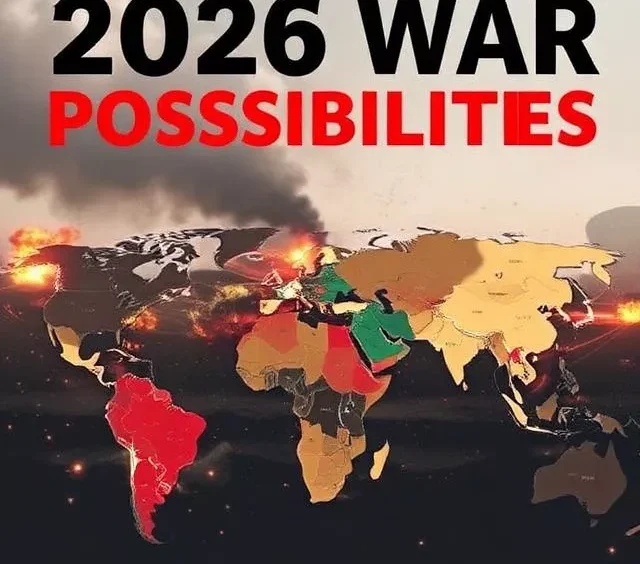
2026 War Possibilities: Global Flashpoints, Countries Involved, and Underlying Reasons
In a world teetering on the edge of multipolarity, 2026 could mark a pivotal year where simmering tensions erupt into open conflict—or diplomacy prevails against the odds. With ongoing wars in Ukraine and Sudan claiming thousands of lives, and new risks emerging from AI-driven warfare to resource scrambles, experts from the International Crisis Group, Council on Foreign Relations (CFR), and ACLED warn of heightened global instability. From great-power rivalries to regional proxy battles, this post dives into potential war scenarios across continents, analyzing countries at risk and the root causes fueling them. Could Trump’s second term ignite or douse these fires? Read on for an intriguing look at the battles that might define our future.
Europe: The Shadow of Russia’s Expansion and NATO’s Resolve
Europe remains a powder keg, with the Russia-Ukraine war entering its fifth year and showing no signs of abating. According to CFR’s 2026 conflict assessment, a direct Russia-NATO clash has an “even chance” of occurring, potentially drawing in multiple alliance members.
- Russia vs. Ukraine (and potentially NATO allies like Poland, Baltic States): Reasons include territorial disputes over Donbas and Crimea, Russia’s imperial ambitions under Putin, and energy resource control. Escalation risks rise if Ukraine’s defenses falter amid reduced Western aid, leading to Russian advances or cross-border incidents. Probability: High, with experts predicting the conflict drags into 2027 without a ceasefire.
- Russia vs. Nordic/Arctic Nations (Norway, Sweden, Finland, Canada, US): Arctic militarization heats up over melting ice revealing new shipping routes and resources. Reasons: Competition for oil, gas, and minerals; Russia’s nuclear submarine patrols could spark incidents.
Other tensions: Moldova and Georgia face Russian hybrid threats, while Belarus’s alignment with Moscow could pull it into broader conflicts.
Asia: Superpower Standoffs and Border Brinkmanship
Asia hosts some of 2026’s most alarming flashpoints, with CFR rating a Taiwan Strait crisis as highly likely. China’s military buildup and US alliances amplify risks across the region.
- China vs. Taiwan (with US, Japan, Philippines involvement): Root causes: Taiwan’s semiconductor dominance, China’s unification claims, and US defense commitments. A blockade or invasion could stem from economic pressures or Xi Jinping’s legacy push, potentially escalating to cyber and naval warfare.
- China vs. India (along Himalayan border): Ongoing skirmishes over disputed territories like Ladakh; reasons include water resources from shared rivers and strategic infrastructure rivalry. Could involve Bhutan or Nepal indirectly.
- India vs. Pakistan: Nuclear-armed neighbors risk escalation over Kashmir; water disputes from Indus River and terrorism accusations fuel tensions. A major incident could draw in Afghanistan or China.
- North Korea vs. South Korea (with US, Japan): Kim Jong-un’s missile tests and potential nuclear provocations; reasons: Regime survival, sanctions evasion, and reunification rhetoric. Trump’s “peace deal” talks add unpredictability.
Southeast Asia sees South China Sea disputes pitting China against Vietnam, Philippines, Malaysia, Indonesia, and Brunei over islands and fisheries—potentially sparking naval clashes.
Middle East: Proxy Wars and Sectarian Strife
The Middle East’s volatility persists, with Stimson Center highlighting Iran and Gaza as explosive risks. Post-2025 escalations leave the region primed for renewal.
- Israel vs. Iran (proxies in Lebanon, Syria, Yemen): Reasons: Nuclear ambitions, regional hegemony, and retaliation cycles. Hezbollah (Lebanon) or Houthis (Yemen) could ignite wider war, involving Saudi Arabia, UAE, or even Iraq.
- Syria Internal Conflict (renewed civil war involving Turkey, Israel, Kurds): ACLED warns of sectarian violence derailing stability; drought, economic collapse, and power vacuums post-Assad could draw in Russia, US, and Jordan.
- Israel vs. Palestine (Gaza/West Bank): Ongoing occupation and settlements; humanitarian crises could explode if peace talks fail, pulling in Egypt or Qatar.
Broader: Saudi Arabia-Iran rivalry extends to Bahrain, Oman, and Kuwait via proxy militias.
Africa: Resource Wars and Instability Hotspots
Africa faces over a dozen active conflicts, per ACLED’s Watchlist, with climate change exacerbating resource fights.
- Sudan Civil War (RSF vs. SAF, involving Egypt, UAE, Chad): Famine and gold mines drive fighting; could spill into South Sudan or Ethiopia.
- Sahel Region (Mali, Niger, Burkina Faso vs. Jihadists, with Russia/Wagner involvement): Islamist insurgencies and coups; reasons: Mineral wealth (uranium, gold) and anti-Western sentiment.
- Ethiopia Internal/Tigray (with Eritrea, Somalia): Dam disputes over Nile River threaten Egypt and Sudan.
- Democratic Republic of Congo vs. Rwanda (M23 rebels): Mineral-rich eastern conflicts over coltan and gold, involving Uganda and Burundi.
Other risks: Libya’s oil-fueled divisions could reignite, drawing Tunisia or Algeria; Somalia’s Al-Shabaab threats spill to Kenya and Tanzania.
Americas: Border Disputes and Gang Violence
The Western Hemisphere isn’t immune, with potential escalations in Latin America.
- Venezuela vs. Guyana (Essequibo region): Oil discoveries fuel territorial claims; Brazil could mediate or intervene.
- Haiti Gang Wars (internal, with potential UN/Dominican Republic involvement): Turf battles and humanitarian collapse; reasons: Political vacuum and arms trafficking.
- US-Mexico Border Tensions: Drug cartels and migration could strain relations, though unlikely to become armed conflict.
Further south: Colombia’s rebel groups risk clashes with Ecuador or Panama.
Global Wildcards: Cyber, Nuclear, and Emerging Threats
Beyond borders, 2026 risks transcend regions:
- US-China Cyber/Economic War: Trade disputes escalate to hacks on critical infrastructure, affecting allies like Australia, UK, and EU nations.
- Nuclear Proliferation Risks: Iran, North Korea, or even Saudi Arabia advancing programs; accidental escalations involve Pakistan, India, or Russia.
- Africa-Asia Resource Scramble: China’s Belt and Road debts spark unrest in Pakistan, Sri Lanka, Kenya, or Zambia.
Experts like those at POLITICO predict “black swan” events, such as AI-fueled flash crashes or Syrian chaos amplifying regional wars.
Why 2026? The Perfect Storm of Factors
Underlying reasons across these scenarios include climate-induced resource scarcity (water, food), economic inequality, great-power competition (US-China-Russia triangle), and populist leaders like Trump pushing bold diplomacy—or brinkmanship. ACLED notes armed groups proliferating, with conflicts now at post-WWII highs.
Yet, hope flickers: Diplomatic breakthroughs in Ukraine or Taiwan could avert disaster, emphasizing multilateral forums like the UN.
As we navigate this uncertain year, understanding these risks is key to advocating for peace. What do you think—will 2026 bring war or resolution? Share in the comments.
Stay ahead with World Report Press for real-time geopolitical analysis, conflict predictions, and global news insights.
Follow us for more
- Global news updates
https://worldreport.press/category/global/ - Bengaluru ranked second most congested city worldwide in 2025
https://worldreport.press/global/bengaluru-ranked-second-most-congested-city-worldwide-in-2025-tomtom-traffic/ - Mental health crisis global overview key insights January
https://worldreport.press/global/mental-health-crisis-global-overview-key-insights-january/ - New cancer vaccine update 2026 scientists report promising results January 22 2026
https://worldreport.press/global/new-cancer-vaccine-update-2026-scientists-report-promising-results-january-22-2026/ - How to create an AWS free tier account complete
https://worldreport.press/global/how-to-create-an-aws-free-tier-account-complete/