




Germany & EU Hit by Trump 2026 Tariffs: Greenland Dispute & Economic Fallout

Germany & EU Hit by Trump 2026 Tariffs: Greenland Dispute & Economic Fallout
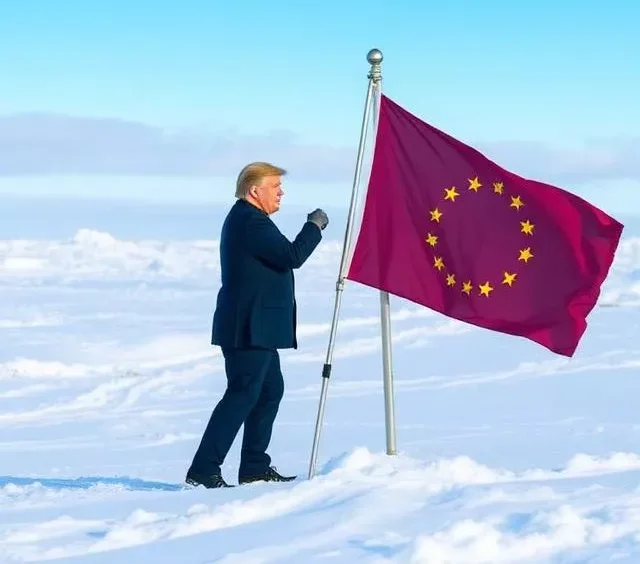
As President Donald Trump ramps up pressure on Europe to cede Greenland, Germany finds itself at the epicenter of a brewing transatlantic storm. Starting February 1, 2026, a 10% tariff on imports from Germany, France, the Netherlands, and other EU nations will take effect, escalating to 25% by June unless Denmark agrees to sell the Arctic island. This aggressive tactic, labeled “economic blackmail” by EU leaders, has prompted emergency meetings in Brussels and sparked fears of a full-blown trade war. For Germany, Europe’s export powerhouse, the tariffs threaten billions in losses, particularly in the auto sector, while the EU scrambles for unity and alternative strategies like accelerating the Mercosur trade deal.
Trump tariffs Germany 2026 are dominating headlines across the continent, with EU Trump Greenland tariffs signaling a potential rupture in post-WWII alliances. As Germany US trade war January 2026 risks mount, this article examines the dispute’s origins, Germany’s pivotal role, devastating export impacts, EU’s defiant response, and countermeasures like the Mercosur pact. Backed by trade stats from Eurostat and quotes from Chancellor Olaf Scholz and EU Commission President Ursula von der Leyen, we explore the high-stakes implications for European economies in mid-January 2026.
Trump’s Greenland Dispute: Roots and Tariff Threats
The crisis traces back to Trump’s longstanding obsession with Greenland, first voiced in 2019 as a “strategic real estate acquisition.” Now, in his second term, Trump has weaponized tariffs to force Denmark’s hand, tying the island’s vast resources—estimated at 50 billion barrels of oil and critical rare earth minerals—to U.S. national security. In a January 15, 2026, Fox News interview, Trump declared, “Europe’s been freeloading on our defense while sitting on Arctic gold. Greenland belongs with America—pay up or face the tariffs.”
The targeted 10-25% tariffs hit eight EU countries, but Germany, as the bloc’s largest economy and a vocal critic, bears the brunt. German exports to the U.S. totaled €130 billion in 2025, per Eurostat, with autos comprising nearly half. The phased implementation—10% from February 1—aims to coerce negotiations, but EU officials see it as extortion. This links to broader U.S. maneuvers, including control over Venezuela’s oil reserves post-2025 regime change, creating what Trump calls an “energy empire” from South America to the Arctic.
Emergency EU meetings convened on January 17 in Brussels, where leaders decried the move as a violation of WTO principles. “This isn’t diplomacy; it’s imperialism,” von der Leyen stated in a post-meeting presser. The tariffs exacerbate existing strains, including NATO funding disputes and U.S. withdrawal from climate accords, positioning Germany as the EU’s frontline defender.
Germany’s Role: Leading the Charge Against U.S. Pressure
Germany’s prominence in this dispute stems from its economic clout and historical transatlantic ties. Chancellor Olaf Scholz, who dismissed Trump’s Greenland idea as “ludicrous” in 2019, has emerged as the EU’s de facto spokesperson. In a January 18 address to the Bundestag, Scholz affirmed, “Germany will not yield to blackmail. Our alliance with Denmark and commitment to European sovereignty are non-negotiable.”
As Europe’s top exporter, Germany faces disproportionate pain. The tariffs target high-value goods like Mercedes-Benz and BMW vehicles, pharmaceuticals from Bayer, and machinery from Siemens. A report from the ifo Institute in Munich projects €15-25 billion in annual losses if tariffs reach 25%, potentially shaving 0.7% off Germany’s 2026 GDP. This comes amid a sluggish recovery from the 2022 energy crisis, with German unemployment already ticking up to 6.2% in December 2025.
Scholz’s government has mobilized diplomacy, coordinating with French President Emmanuel Macron and Dutch Prime Minister Dick Schoof—both tariff targets—to present a united front. Germany’s role extends to NATO, where it hosts U.S. troops and contributes €100 billion annually to defense. Analysts at the German Council on Foreign Relations warn that fraying ties could embolden Russia in the Arctic, where Moscow has ramped up military presence.
Public sentiment in Germany is overwhelmingly against concessions. A January 2026 ARD poll shows 78% of Germans viewing the tariffs as “unjust aggression,” fueling anti-Trump protests in Berlin and Frankfurt. Business leaders, like Volkswagen CEO Oliver Blume, echoed this in a Handelsblatt op-ed: “These tariffs jeopardize jobs and innovation—Europe must stand firm.”
Auto and Export Losses: A Hammer Blow to German Industry
The automotive sector, Germany’s industrial backbone, stands to suffer most from Trump tariffs Germany 2026. U.S. imports of German cars hit €60 billion in 2025, with brands like Audi and Porsche dominating luxury segments. A 10% tariff could add €2,000-5,000 to vehicle prices, eroding competitiveness against U.S. rivals like Tesla and Ford.
The Verband der Automobilindustrie (VDA) estimates 150,000 jobs at risk if sales drop 10-15%, as projected by Deloitte. Factories in Wolfsburg and Stuttgart could face production cuts, rippling through supply chains employing millions. “This is a direct assault on our export model,” VDA President Hildegard Müller told ZDF News on January 19.
Beyond autos, chemical exports (€20 billion) and machinery (€15 billion) face hikes, inflating U.S. costs and potentially shifting demand to Asian competitors. Small and medium enterprises (SMEs), which form 60% of German exporters, are particularly vulnerable—many lack diversification. The Kiel Institute for the World Economy forecasts a 5% decline in overall EU-U.S. trade volume, with Germany absorbing 40% of the hit.
These losses compound global challenges, including slowing Chinese demand and EV transition costs. German Finance Minister Christian Lindner warned in a cabinet briefing that inflation could rise 0.5-1%, pressuring the ECB to hold rates steady.
EU Unity Against “Blackmail”: A Coordinated Response
In the face of EU Trump Greenland tariffs, the bloc has rallied with unprecedented solidarity. Von der Leyen, in a January 17 EU Parliament speech, branded the tariffs “economic blackmail” and vowed retaliation. “We will not be divided—Europe speaks with one voice,” she asserted, announcing plans for mirror tariffs on U.S. products like Boeing aircraft and agricultural goods.
This unity draws from past trade spats, like the 2018 steel tariffs, where the EU imposed €2.8 billion in countermeasures. Now, with Greenland’s sovereignty at stake, France and the Netherlands align closely with Germany. Macron proposed an “EU Arctic Fund” to bolster Danish-Greenland ties, investing €5 billion in sustainable development.
Nordic-Baltic states, including non-EU Norway, have joined condemnations, fearing Arctic destabilization. A joint EU-Denmark statement on January 18 rejected any sale, emphasizing indigenous rights and climate priorities. “Blackmail won’t work—it’s a relic of the past,” Danish PM Mette Frederiksen said during a virtual summit.
Internally, the EU is fast-tracking legal challenges at the WTO, where experts predict a favorable ruling within months. Meanwhile, diplomatic channels remain open, with Scholz scheduling a February call with Trump to de-escalate.
Links to Mercosur Deal as Counter-Strategy
As a bulwark against U.S. isolationism, the EU is accelerating the Mercosur trade agreement with South American nations like Brazil and Argentina. Long stalled over environmental concerns, the deal—covering €100 billion in annual trade—could offset tariff losses by opening new markets for German autos and chemicals.
Von der Leyen highlighted this in Brussels: “Mercosur is our strategic pivot—diversifying away from overreliance on the U.S.” Ratification talks, revived in late 2025, aim for a 2026 signing, potentially adding €13 billion to EU exports. For Germany, it means access to lithium and soybeans, crucial for EVs and agriculture.
This counter-strategy ties into broader diversification, including enhanced Asia-Pacific pacts. A European Commission report estimates Mercosur could mitigate 20-30% of tariff impacts, bolstering resilience. Critics, like Greenpeace, warn of deforestation risks, but proponents argue it’s essential amid Germany US trade war January 2026.
Trade War Risks and Broader Economic Fallout in January 2026
The specter of escalation looms large. If retaliatory tariffs spiral, global growth could falter, with the IMF projecting a 0.4% dip in 2026 GDP. EU inflation might climb 1%, hitting consumers with higher prices on American tech and energy.
For NATO, the fallout is existential. Germany’s defense spending, at 2.1% of GDP, underscores its commitment, but Trump’s tactics risk alliance fractures. “This could push Europe toward strategic autonomy,” noted a Stiftung Wissenschaft und Politik analysis.
Markets reflect the turmoil: The DAX index fell 2.3% on January 16, with auto stocks down 5%. The euro weakened to 1.04 against the dollar, per ECB data.
Outlook: Navigating the Crisis
As January 2026 unfolds, Germany and the EU stand at a crossroads. Unity against blackmail, coupled with strategies like Mercosur, offers a path forward, but resolution hinges on diplomacy. Will Trump back down, or will tariffs ignite a trade war? will track developments in this pivotal saga.

