



The Karthika Puranam: A Sacred Narrative for Global Hindus

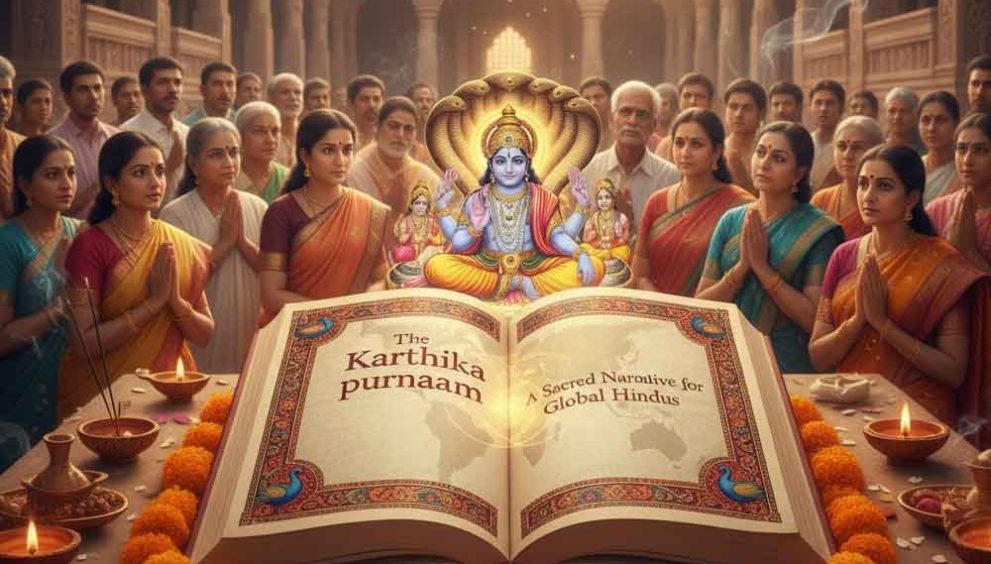
A comprehensive guide to one of Hinduism’s most celebrated spiritual traditions
Introduction: Understanding Karthika Month
For millions of Hindus across the globe—from India to Southeast Asia, from the Caribbean to North America, from Africa to Australia—the month of Karthika (typically October-November in the Gregorian calendar) holds profound spiritual significance. The Karthika Puranam, an ancient Hindu text, explains the divine origins and transformative power of this sacred month.
This comprehensive narrative, preserved through generations, tells the story of Lord Kartikeya (known by various names including Skanda, Murugan, Subramanya, and Kumara), the divine warrior who restored cosmic balance, and explains why lighting lamps during this month brings spiritual merit and divine blessings.
The Cosmic Crisis: When Heaven Fell to Darkness
The Demon King’s Rise to Power
The story begins in an age when the balance between good and evil was threatened. Tarakasura, a powerful demon king (asura), had performed intense austerities to please Lord Brahma, the creator deity. Impressed by his penance, Brahma granted him a boon.
With cunning strategy, Tarakasura requested near-invincibility: “Let me be immortal, but if I must die, let it only be at the hands of a son of Lord Shiva.” This seemed a safe bet, as Shiva—the ascetic deity of destruction and transformation—had renounced worldly life after the death of his first consort, Sati, and showed no interest in marriage or family.
Armed with this virtually unbreakable protection, Tarakasura launched a campaign of conquest across the three worlds (earth, heaven, and the netherworld). His demon armies drove the Devas (celestial beings) from their heavenly abode, seized control of sacred cosmic functions, and even stole the Amrita—the nectar of immortality that sustained the gods.
The Devas’ Desperate Plea
Indra, king of the Devas, and his fellow celestials found themselves powerless. They approached Lord Brahma, who revealed the only solution: Lord Shiva must marry and father a son powerful enough to defeat Tarakasura. But how could they persuade the great ascetic to abandon his meditation and embrace worldly life?
The Divine Romance: Shiva and Parvati
Parvati’s Devotion
Meanwhile, in the majestic Himalayas, Parvati—daughter of Himavan (the personified mountain range) and herself a reincarnation of Sati—had grown into a young woman of extraordinary beauty and spiritual depth. From childhood, she had felt an inexplicable connection to Lord Shiva and devoted herself to winning his heart.
Following the advice of the divine sage Narada, Parvati embarked on severe austerities. She served Shiva during his meditation in the forest, bringing flowers and performing rituals. She endured scorching heat, freezing cold, and torrential rains without complaint. Yet Shiva, absorbed in cosmic consciousness, remained unmoved.
The Sacrifice of Kamadeva
Desperate, the Devas enlisted Kamadeva, the god of love (similar to Cupid in Western mythology), for a delicate mission. Accompanied by his wife Rati and Vasanta (the personified spring season), Kama entered Shiva’s meditation grove.
As Parvati approached with offerings, Kama released his flower-tipped arrow of desire toward Shiva. The arrow struck, and for a moment, Shiva’s consciousness flickered toward the material world. But the great yogi immediately recognized the disturbance.
In a flash of divine anger, Shiva opened his third eye—the eye of wisdom and destruction. A searing flame burst forth, instantly reducing Kamadeva to ashes. Rati wept for her beloved husband, and the Devas trembled at what they had caused.
However, Shiva was also moved by Parvati’s unwavering devotion. Later, he would restore Kamadeva as a bodiless force (showing that love/desire exists without physical form), but more importantly, he agreed to test Parvati further.
The Ultimate Union
After Parvati performed even more intense penances—meditating without food or water, standing on one leg, enduring all hardships—Shiva finally accepted her devotion. Their celestial wedding became one of the most celebrated events in Hindu mythology, attended by all gods, sages, celestial musicians, and divine beings.
Yet even after their marriage, no child was born. The cosmic dilemma remained unresolved, and Tarakasura’s tyranny continued.
The Birth of the Divine Warrior
The Sacred Spark
According to the Puranam, the divine union of Shiva and Parvati produced an energy so powerful and intense that it could not be contained in normal form. A brilliant spark of cosmic fire emerged—representing the combined power of consciousness (Shiva) and energy (Shakti/Parvati).
This divine spark passed through several custodians:
Agni, the Fire God, first received it but found the energy too overwhelming to hold.
Ganga, the Sacred River Goddess, then carried the spark in her flowing waters, but even she could not contain it indefinitely.
Finally, Ganga deposited the divine essence in a forest of reeds (Saravana) on Mount Meru, where it manifested as six separate flames of incredible radiance.
The Krittikas’ Nurture
Six divine maidens—the Krittikas, who are also the stars of the Pleiades constellation—discovered the flames and were moved by maternal instinct. Each nurtured one flame, which transformed into a beautiful infant boy. The babies possessed extraordinary features: radiant faces, multiple arms bearing divine weapons, and an aura of invincible power.
When Parvati learned of these children, she rushed to see them. As the Divine Mother embraced all six infants, they miraculously merged into one extraordinary being with six faces (Shanmukha), twelve arms, and the combined power of all six flames.
Names and Forms Across Cultures
This divine child is known by various names across the Hindu world:
- Kartikeya (after his foster mothers, the Krittikas)
- Skanda (the leaping one, representing his martial prowess)
- Murugan (the young, handsome one—popular in Tamil culture)
- Subramanya (the auspicious offspring of Brahma)
- Kumara (the young god)
- Shanmukha (six-faced)
- Guha (the mysterious one)
In South India, particularly Tamil Nadu, he is celebrated primarily as Murugan. In North India, he is more commonly known as Kartikeya or Skanda. Southeast Asian Hindu communities, especially in Malaysia, Singapore, and Mauritius, celebrate him during the dramatic Thaipusam festival.
The Great War: Divine vs. Demonic
Kartikeya Assumes Command
As the child grew (rapidly, as divine beings do), his extraordinary abilities became apparent. He mastered all weapons, understood all scriptures, and displayed strategic genius beyond any mortal or immortal warrior.
When Indra and the Devas approached him with their plight, the young god immediately understood his cosmic purpose. Lord Shiva gifted him the sacred vel (spear)—an invincible weapon representing divine knowledge piercing ignorance. Parvati blessed him with her protection. Agni presented him with a magnificent peacock (Paravani) as his mount, symbolizing the ego being controlled and directed toward righteous purpose.
Kartikeya assumed leadership of the celestial armies (becoming Devasena-pati, commander of the gods’ forces) and prepared for war.
The Epic Battle
The war between the Devas and Tarakasura’s demon forces shook all three worlds. The Puranam describes battles of cosmic proportions:
- Armies numbering in the millions clashed across multiple realms
- Divine weapons created explosions that reshaped landscapes
- Powerful demons fell before Kartikeya’s strategic brilliance
- The young god demonstrated not just martial prowess but wisdom, knowing when to fight and when to show mercy
Tarakasura, realizing the prophecy was unfolding, summoned all his remaining power. The final confrontation between the demon king and the divine youth became the stuff of legend.
Victory and Restoration
In the climactic moment, Kartikeya hurled his vel with perfect precision. The divine spear pierced Tarakasura’s heart, ending his reign of terror. Some versions of the story say that at the moment of death, the demon attained liberation, as being killed by the divine brings moksha (spiritual release).
With the demon king’s fall, cosmic order was restored. The Devas returned to heaven, righteousness was reestablished, and the universe could function properly again. Kartikeya was celebrated as the eternal commander of the forces of good, the remover of obstacles, and the god of war, valor, and wisdom.
The Sacred Month of Karthika: Origins and Significance
Why We Light Lamps
Following his victory, Lord Kartikeya instructed both divine beings and humans to commemorate these events by lighting lamps throughout the month when these cosmic events occurred. This month, called Karthika, became sacred for several reasons:
- Celebrating Victory: The lamps represent the triumph of light over darkness, good over evil, and knowledge over ignorance.
- Honoring Divine Birth: Lighting lamps commemorates the miraculous birth of Lord Kartikeya and the divine intervention that saved the cosmos.
- Dispelling Spiritual Darkness: Just as physical lamps dispel darkness, spiritual practice during this month removes the darkness of ignorance from our consciousness.
Karthika Deepam: The Festival of Lights
The full moon day of Karthika month (Karthika Purnima) holds special significance for another divine manifestation. On this day, according to tradition, Lord Shiva appeared as an infinite pillar of light (Jyotirlinga) to resolve a cosmic dispute.
The Story: Lord Brahma and Lord Vishnu were debating who held supreme authority in the universe. Suddenly, a massive column of blazing light appeared before them, stretching infinitely upward and downward. A voice challenged them to find its beginning or end.
Vishnu transformed into a boar and dived downward for thousands of years but found no bottom. Brahma became a swan and flew upward for thousands of years but found no top. Exhausted, they returned and acknowledged their limitations.
Then Lord Shiva manifested from the pillar, revealing that the infinite light represented his formless, boundless nature—beyond beginning or end, pervading all existence. This event taught both gods the lesson of humility and the ultimate truth of the infinite divine.
On Karthika Purnima, devotees light countless lamps to honor this manifestation of divine light. In Tiruvannamalai, Tamil Nadu, a massive lamp called Mahadeepam is lit atop Annamalai Hill, visible for miles around, symbolizing this cosmic event.
Universal Teachings: Stories from the Puranam
The Karthika Puranam contains numerous stories illustrating spiritual principles. Here are some beloved narratives that convey timeless wisdom:
The Poor Woman’s Devotion
The Story: In a small village lived a destitute widow named Sumati. She could barely feed herself, living on alms and occasional work. When Karthika month arrived, she learned from a traveling sage about the merit of lighting lamps.
Sumati desperately wanted to participate but had no money for oil. With determination, she spent the entire month collecting tiny drops of oil that spilled from vendors’ containers at the marketplace. Finally, she gathered enough to fill a small earthen lamp.
On Karthika Purnima, she lit her lamp at the local Shiva temple with pure devotion, tears of joy streaming down her face. That night, Lord Shiva appeared in her dream, deeply moved by her sacrifice and sincerity. He blessed her with both material prosperity and spiritual wisdom.
The Lesson: This story teaches that God values the purity of devotion over the grandeur of offerings. A sincere heart matters more than material wealth. It resonates particularly with those who worry they cannot afford elaborate religious observances.
The Hunter’s Accidental Redemption
The Story: Guruswami was a ruthless hunter who killed animals without remorse, violating the principle of ahimsa (non-violence). His bad karma accumulated daily, darkening his soul.
One Karthika day, while hunting deep in the forest, he carried animal fat and oil in a leather pouch. Climbing a tree to wait for prey, he accidentally punctured the bag, and oil dripped onto an anthill below. Unknown to him, this anthill housed a natural Shiva linga (sacred stone form).
As evening came, sparks from his flint accidentally ignited the oil-soaked anthill, creating a lamp before the Shiva linga. Though completely unintentional, this act of lighting a lamp during Karthika month initiated his spiritual transformation.
That night, he had a vivid dream of Lord Shiva showing him the suffering he’d caused to countless creatures. Overcome with remorse and awakened by this divine grace, Guruswami abandoned hunting, became vegetarian, and spent his remaining years serving animals and protecting forests.
The Lesson: This story demonstrates that even unintentional good deeds during the sacred month can trigger spiritual awakening. It also shows that transformation is possible for anyone, regardless of their past actions. The power of Karthika’s grace is so great that it can reach even those who aren’t consciously seeking it.
The Arrogant Merchant’s Empty Ritual
The Story: Dhanapati was a wealthy merchant known for his ostentatious displays of piety. During Karthika month, when a respected sage visited his town and explained the importance of lamp lighting, Dhanapati saw an opportunity to showcase his wealth.
He organized an elaborate ceremony with thousands of expensive golden lamps, imported aromatic oils, and hired priests for grand rituals. He invited everyone to witness his “devotion,” secretly enjoying their admiration.
Meanwhile, in the poorest quarter of town, a widow named Lakshmi could afford only one small earthen lamp and borrowed oil from a neighbor. But she lit it with pure love for the Divine, tears of devotion in her eyes, asking only that others might be blessed.
The sage, possessing spiritual vision, saw the true spiritual merit of each offering. He declared that the widow’s single lamp earned infinite merit, while the merchant’s thousands earned nothing, for they were lit with pride rather than devotion.
The Lesson: This story teaches that God sees the heart, not the external display. Rituals performed with ego, pride, or for social recognition are spiritually worthless. It’s a crucial reminder in our modern age of social media, where people often document religious practices for approval rather than spiritual growth.
The Lazy Student’s Transformation
The Story: Vidyadhara was a Brahmin boy who showed no interest in his studies despite his father being a renowned scholar. He spent his days playing and avoiding responsibilities, causing his parents great distress.
During Karthika month, his mother was busy preparing for evening prayers. She called Vidyadhara and asked him to light the household lamp while she finished cooking. The boy, though annoyed at being disturbed from his games, reluctantly lit the lamp before the family deity.
This simple act, performed during the sacred month even without devotion, planted a seed of transformation. Within days, Vidyadhara found himself drawn to the family’s scriptures. Gradually, his interest in learning blossomed. He eventually became a great scholar and sage, teaching thousands of students.
Years later, when asked about his transformation, he recalled that singular moment of lighting the Karthika lamp as the turning point when divine grace entered his life.
The Lesson: Small actions during auspicious times can have profound, life-altering effects. The story encourages parents and teachers not to lose hope with children who seem spiritually disinterested. It also reminds us that our casual actions during sacred times may be more significant than we realize.
Global Hindu Observances: Karthika Around the World
India: Regional Variations
Tamil Nadu: The Karthikai Deepam festival at Tiruvannamalai attracts millions of pilgrims who perform Girivalam—circumambulation of the sacred Annamalai hill. The lighting of the Mahadeepam on the hill’s summit is a spectacular event visible across the region.
Kerala: Devotees light traditional nilavilakku (brass lamps) and celebrate with special offerings to Lord Murugan at Sabarimala and other temples.
Karnataka: Karthika month emphasizes worship of Lord Vishnu as Damodara, with special arati ceremonies and lamp processions.
Andhra Pradesh & Telangana: Women observe strict Karthika Masam rituals, lighting lamps daily, visiting Shiva temples, and performing elaborate pujas.
North India: In Varanasi and other holy cities, Karthika Purnima is celebrated as Dev Deepavali (Diwali of the Gods), with spectacular lamp-lighting ceremonies along the Ganges ghats.
Southeast Asia
Malaysia & Singapore: The Tamil Hindu community celebrates Karthika month with temple festivals and prepares for Thaipusam, where devotees honor Lord Murugan through kavadi-bearing processions.
Indonesia: In Bali and Hindu communities across the archipelago, lamp lighting continues as part of the broader Balinese Hindu calendar of observances.
Thailand: Thai Hindus maintain traditional lamp-lighting practices at Brahmin temples in Bangkok and other cities.
The Caribbean
Trinidad & Tobago, Guyana, Suriname: Indo-Caribbean Hindus observe Karthika month with traditional lamp lighting, temple visits, and community prayers, maintaining practices their ancestors brought from India generations ago.
African Hindu Communities
Mauritius: With a significant Hindu population, Mauritius celebrates Karthika month with island-wide temple ceremonies, particularly at the sacred lake of Grand Bassin (Ganga Talao).
South Africa: Hindu communities, particularly in Durban and Johannesburg, organize community lamp-lighting ceremonies and temple festivals.
Western Diaspora
North America: Hindu temples across the United States and Canada organize Karthika month celebrations, often condensing daily observances into weekend community events to accommodate work schedules.
United Kingdom: British Hindu communities maintain lamp-lighting traditions, with major temples in London, Leicester, and Birmingham organizing special Karthika programs.
Australia: Hindu communities down under celebrate Karthika month with adapted timing and temple ceremonies in Sydney, Melbourne, and other cities.
Practical Guide: Observing Karthika Month in Modern Life
For Traditional Observers
Daily Routine:
- Wake before sunrise (ideally during Brahma Muhurta, 4-6 AM)
- Take a cleansing bath
- Light lamps using sesame oil, ghee, or coconut oil
- Perform morning prayers and mantra recitation
- Visit temples when possible
- Practice charity through food donation or service
- Light lamps again at dusk
- Read or listen to sacred texts
Weekly Fasts:
- Mondays (Somavara): Fast and worship of Lord Shiva
- Thursdays: Worship of Lord Vishnu and Goddess Lakshmi
- Saturdays: Prayers to Lord Hanuman
- Ekadashi (11th lunar day): Strict fast dedicated to Lord Vishnu
For Working Professionals and Busy Families
Not everyone can follow traditional practices in their entirety, especially in fast-paced modern life or non-Hindu majority countries. Here are adapted observances:
Minimal Daily Practice:
- Light at least one lamp at your home shrine or prayer area morning and evening
- Spend 10-15 minutes in prayer, meditation, or reading spiritual texts
- Practice one conscious act of kindness daily
- Eat vegetarian meals when possible, at least on specific days
Weekend Intensification:
- Visit temples on Saturdays and Sundays
- Participate in community prayers
- Practice longer meditation or chanting sessions
- Engage in volunteer service (seva)
For Families with Children:
- Involve children in lamp lighting, making it a family ritual
- Tell them stories from the Karthika Puranam appropriate for their age
- Create art projects around the themes of light and goodness
- Visit temples together to build cultural connections
Eco-Conscious Observance
Modern Hindus are increasingly aware of environmental responsibility. Sustainable practices include:
- Use traditional clay lamps (diyas) instead of plastic or metal
- Choose organic, cold-pressed sesame oil, ghee, or coconut oil over paraffin
- Make cotton wicks at home rather than synthetic ones
- Plant trees as acts of spiritual merit
- Reduce waste during celebrations
- Practice energy conservation as a form of light consciousness
Digital Age Adaptations
For Hindus far from temples or community:
- Join online satsangs and virtual temple ceremonies
- Use apps for timing prayers and tracking observances
- Connect with global Hindu communities through social media
- Access sacred texts and commentaries digitally
- Listen to Karthika Puranam recitations via podcasts
- Practice virtual darshan (viewing of deities) when physical temple visits aren’t possible
However, remember that digital participation should supplement, not replace, personal practice. The act of physically lighting a lamp carries its own irreplaceable spiritual significance.
The Sacred Science of Lamp Lighting
The Spiritual Symbolism
In Hindu philosophy, the lamp (deepa) represents multiple spiritual truths:
The Flame symbolizes the eternal soul (Atman), unchanging and self-luminous, just like our true consciousness.
The Oil represents our accumulated karma and vasanas (mental impressions). As the oil burns away, our karmic burdens are purified.
The Wick symbolizes the ego (ahamkara). Just as the wick must burn to give light, the ego must dissolve for spiritual illumination to occur.
The Light represents knowledge (jnana), dispelling the darkness of ignorance (avidya).
The Warmth symbolizes divine grace and compassion radiating outward.
The Psychological Benefits
Modern psychology recognizes the therapeutic value of lamp-lighting rituals:
- Mindfulness: The act of lighting a lamp brings you into the present moment
- Stress Reduction: The gentle flame has a calming effect on the nervous system
- Routine and Structure: Daily rituals provide psychological stability
- Sense of Purpose: Religious observances give meaning and direction
- Community Connection: Shared practices strengthen social bonds
- Meditation Aid: The steady flame serves as an excellent focus point for meditation
The Physics and Chemistry
There’s also practical science behind lamp lighting:
- Natural oils like sesame and ghee produce negative ions when burned, which can improve air quality
- The warm light spectrum of oil lamps is easier on the eyes than harsh electric lighting
- Traditional clay lamps are completely biodegradable and eco-friendly
- The ritual creates a pleasant, calming atmosphere conducive to prayer and meditation
Essential Mantras and Prayers
The Lamp Prayer (Deepa Shloka)
Sanskrit: शुभं करोति कल्याणमारोग्यं धनसम्पदः । शत्रुबुद्धिविनाशाय दीपज्योतिर्नमोऽस्तुते ॥
Transliteration: Shubham karoti kalyanam arogyam dhana sampadah Shatru buddhi vinashaya deepa jyotir namostute
Translation: “O Divine Lamp, you bring auspiciousness, welfare, health, and prosperity. You destroy the intellect of enemies (negative forces). I bow to your light.”
Kartikeya Mantras
Simple Mantra: ॐ सरवणभवाय नमः Om Saravanabhavaya Namah
Meaning: “Salutations to the one born in the Saravana forest” (referring to Kartikeya’s birth)
Shadakshara Mantra (Six-Syllable Mantra): ॐ शं षं सं हं क्षं रं Om Sham Sham Sam Ham Ksham Ram
Meaning: These seed syllables represent the six faces of Lord Kartikeya and invoke his complete energy.
Shiva Mantras for Karthika
Panchakshara Mantra: ॐ नमः शिवाय Om Namah Shivaya
Meaning: “I bow to Shiva” (the auspicious one)
Mahamrityunjaya Mantra: ॐ त्र्यम्बकं यजामहे सुगन्धिं पुष्टिवर्धनम् । उर्वारुकमिव बन्धनान्मृत्योर्मुक्षीय माऽमृतात् ॥
Om Tryambakam Yajamahe Sugandhim Pushti Vardhanam Urvarukamiva Bandhanan Mrityormukshiya Mamritat
Meaning: “We worship the three-eyed one (Shiva) who is fragrant and nourishes all beings. May he liberate us from death (ignorance) and lead us to immortality, just as a ripe cucumber is released from its vine.”
Vishnu Mantras for Karthika
Damodara Ashtakam: A special prayer to Lord Krishna (Vishnu) as Damodara, particularly important in Karthika month.
Vishnu Sahasranama: Reciting the thousand names of Vishnu during Karthika is considered highly auspicious.
The Deeper Philosophy: Understanding the Symbolism
The Three Levels of Meaning
Hindu scriptures traditionally operate on three levels:
Adhibhautika (Physical Level): The literal story of gods, demons, battles, and miracles. This engages the imagination and provides cultural narratives.
Adhidaivika (Cosmic Level): The symbolic representation of cosmic forces, natural laws, and universal principles. The battle between Devas and Asuras represents the eternal interplay of opposing forces in nature.
Adhyatmika (Spiritual Level): The internal, psychological, and spiritual meaning. The true battle is within each person, between higher consciousness and lower instincts.
Kartikeya as Inner Consciousness
At the deepest level, Lord Kartikeya represents the awakened spiritual consciousness born from the union of wisdom (Shiva) and dynamic energy (Shakti). His six faces symbolize:
- Wisdom (Jnana)
- Detachment (Vairagya)
- Power (Shakti)
- Wealth (Aishwarya)
- Devotion (Bhakti)
- Liberation (Moksha)
His victory over Tarakasura represents consciousness overcoming the demon of ego and ignorance.
The Lamp as the Self
The instruction to light lamps throughout Karthika month is not merely ritual but a profound spiritual teaching: each person must become a lamp, illuminating the darkness around them through wisdom, compassion, and righteous action.
The Brihadaranyaka Upanishad states: “From darkness, lead me to light; from ignorance, lead me to knowledge; from death, lead me to immortality.” The Karthika lamp embodies this prayer.
The Eternal Flame
Hindu philosophy teaches that the divine light is eternal and inextinguishable. No matter how much darkness exists, one lamp can begin dispelling it. This is why a single lamp lit with devotion is said to have infinite merit—it represents the awakening of the eternal light within.
Karthika Month and Global Unity
A Universal Message
While rooted in Hindu tradition, the Karthika Puranam’s core message resonates universally:
- Light triumphs over darkness
- Good ultimately prevails over evil
- Devotion and sincerity matter more than wealth or status
- Small acts of goodness have great power
- Spiritual practice brings transformation
- We must fight our inner demons before judging external enemies
Interfaith Appreciation
Many non-Hindus who learn about Karthika traditions find beauty in the lamp-lighting practice and the emphasis on bringing light to the world. Some organizations have created interfaith lamp-lighting ceremonies where people of various faiths come together to celebrate light as a universal symbol.
Environmental and Social Consciousness
Modern interpretations of Karthika observances increasingly emphasize:
- Environmental Protection: Light represents consciousness of our environmental responsibilities
- Social Justice: Battling the “demons” of poverty, inequality, and injustice
- Education: Dispelling the darkness of ignorance through learning and teaching
- Compassion: Bringing the light of kindness to those suffering
Common Questions from Global Hindus
“I can’t follow all traditional practices. Is my observance still valid?”
Absolutely. The scriptures consistently teach that sincere devotion matters more than elaborate ritual. Even lighting a single lamp with love and faith during Karthika month brings merit. Start with what you can manage and gradually expand your practice if desired.
“Can women observe Karthika rituals during menstruation?”
This varies by tradition and personal belief. Progressive Hindu scholars emphasize that natural biological processes should not exclude women from worship. Many modern Hindu women continue their practices throughout their cycle. Ultimately, this is a personal decision based on your tradition and comfort level.
“We don’t have access to traditional materials. Can we use electric lamps?”
Traditional oil lamps are preferred because of their symbolic significance and the meditative act of preparation and lighting. However, if oil lamps are not practical or allowed (in dormitories, apartments with fire restrictions), a devotional attitude with electric lamps is acceptable. God values the heart’s intention.
“How do I explain these practices to my non-Hindu children’s friends or colleagues?”
You might say: “During this holy month, we light lamps to symbolize knowledge overcoming ignorance and goodness triumphing over evil. It’s our way of bringing more light—both literally and spiritually—into the world. The practice comes from ancient stories about divine heroes who protected the universe from destructive forces.”
“Is it okay to adapt traditional practices to fit modern life?”
Yes. Hinduism has always adapted across times, places, and circumstances. The essence matters more than the exact form. A working professional in New York City will naturally practice differently than a retired person in a Varanasi ashram, and both are valid. Focus on sincerity, consistency at your level, and genuine spiritual growth.
“Can non-Hindus participate in Karthika observances?”
Hinduism generally welcomes sincere seekers. Non-Hindus interested in these practices from respect and genuine spiritual interest are typically welcome to light lamps, visit temples during festivals, and learn about the traditions. However, approaching with humility and respect for the culture is essential.
The Lasting Impact: Karthika in Daily Life
Beyond the Month
While Karthika month is special, its teachings apply year-round:
- Continue lighting at least one lamp daily at your home shrine
- Practice the values learned: devotion, humility, charity, and righteousness
- Remember that each day offers opportunities to dispel darkness through good actions
- Maintain the spiritual momentum gained during the month
Personal Transformation
Many Hindus report that sincere observance of Karthika month becomes a turning point in their spiritual journey:
- Deepened connection with the Divine
- Greater peace and mental clarity
- Strengthened family bonds through shared practices
- Renewed commitment to spiritual growth
- Enhanced appreciation for Hindu heritage
Community Strengthening
Karthika observances often strengthen Hindu communities:
- Temple congregations grow during this month
- Cultural transmission to younger generations increases
- Community service projects expand
- Interfaith understanding develops through shared lamp-lighting events
Conclusion: Carrying the Light Forward
The Karthika Puranam tells us that when Lord Kartikeya defeated Tarakasura and restored cosmic order, he instructed all beings to celebrate with lights. These lamps would serve as eternal reminders that:
- Darkness, no matter how powerful, is temporary – Light always returns
- Each person can be a source of illumination – You don’t need extraordinary abilities to make a positive difference
- Devotion transforms lives – Sincere spiritual practice changes us from within
- Good ultimately prevails – Though the battle may be long, righteousness wins
- The Divine supports those who fight for truth – We’re never alone in our struggles
For Hindus worldwide—whether in ancestral lands or diaspora communities, whether surrounded by fellow Hindus or isolated in distant places—Karthika month offers an annual opportunity to reconnect with ancient wisdom, strengthen spiritual practice, and join millions of others in a timeless tradition.
As you light your Karthika lamp, remember that you’re participating in a practice that spans millennia and continents. Your small flame joins billions of others—past, present, and future—creating an unbroken chain of light across space and time.
In our modern world of uncertainty, division, and rapid change, the simple act of lighting a lamp becomes a powerful statement: I choose light over darkness, hope over despair, unity over division, and love over hate.
May the light of Karthika illuminate your path, dispel the darkness of ignorance, and guide you toward eternal truth.
ॐ शान्तिः शान्तिः शान्तिः Om Shanti Shanti Shanti Peace, Peace, Peace
This comprehensive guide is provided for the global Hindu community’s spiritual education and inspiration. May it support your Karthika observances and deepen your connection to this beautiful tradition.
For more Hindu traditions, festivals, and spiritual wisdom, visit www.worldreport.press